
Complete Guide · Nipple Piercing
Nipple Piercing:
The Complete Guide
Pain, real healing time, jewelry, aftercare, and the questions most guides don't answer clearly — breastfeeding safety, chest binding, and piercing timing around top surgery.
Typical full healing time — longer than most piercings
Average pain rating from professional piercer consensus
Typical initial soreness period after piercing
The most widely recommended starter material
Avoid piercing during pregnancy or breastfeeding
Nipple piercings heal on a longer, more particular timeline than almost any other piercing on this site, and they come with a few genuinely important safety questions that a lot of guides skate past — pregnancy, breastfeeding, and for a meaningful number of readers, chest binding and timing around top surgery. This guide covers the mechanics and the questions that actually matter before you book.
What Is a Nipple Piercing?
A nipple piercing passes a piece of jewelry through the base of the nipple, most commonly horizontally. It's one of the more established piercing types, done by professional piercers using the same sterile, needle-based technique as an ear or nose piercing — never a piercing gun, which can't be properly sterilized and isn't suitable for this kind of tissue.
Nipple tissue is denser and more nerve-rich than most piercing sites, and it's directly connected to the milk duct system — which is why this guide spends more time than usual on healing, jewelry choice, and a few specific safety considerations.
Jewelry Styles & Placement
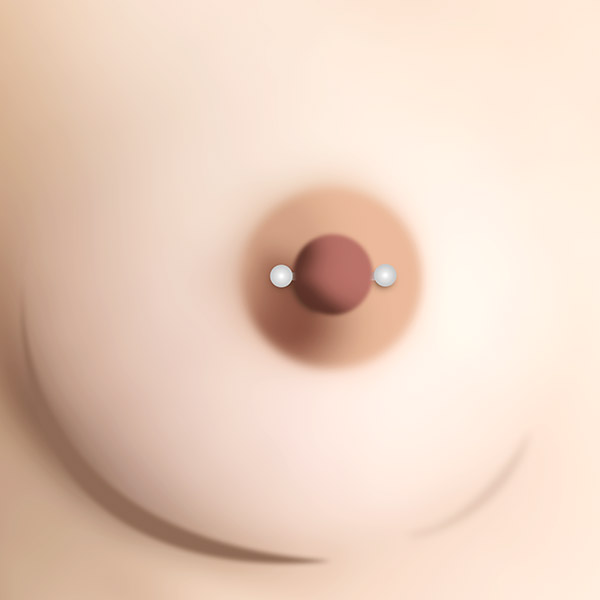
Most nipple piercings are placed horizontally through the base of the nipple, though vertical placement is possible depending on individual anatomy — your piercer will assess this with you before marking anything.
Straight or Curved Barbell
The most common starter jewelry. Sits securely with minimal movement during healing, which is part of why it's the default recommendation for a fresh piercing.
Captive Bead Ring / Seamless Ring
A circular option many people prefer once fully healed. Rings move more than barbells during the healing period, which is why most piercers start you on a barbell first.
Nipple Shield
A larger, more decorative style layered over healed piercings — not a starter option, and not something to introduce until healing is fully confirmed.
Magnetic "Piercing" Jewelry
Not an actual piercing — clip-on jewelry using magnets to simulate the look. Worth knowing this exists as a non-permanent alternative if you're undecided.
Does a Nipple Piercing Hurt?
Yes, more than most ear or facial piercings — this is a dense, nerve-rich area, and it's honest to set that expectation upfront. The piercing itself is quick, but soreness typically continues for about a week afterward, and the area can stay sensitive on and off for longer while it heals.
Some bleeding, itching, mild swelling, or light discharge in the first days is normal. If pain is sharply increasing rather than gradually easing, that's worth a check-in with your piercer.
How a Nipple Piercing Is Done
Step 1 — Consultation
Your piercer discusses placement (horizontal is standard, vertical is anatomy-dependent) and jewelry options, and should directly ask whether you're pregnant or breastfeeding.
Step 2 — Sterile Setup
Single-use needle opened from sealed packaging in front of you, implant-grade jewelry from an autoclaved pouch, fresh gloves.
Step 3 — Marking Placement
Entry and exit points are marked and checked with you before anything happens — take the time here to confirm symmetry and position.
Step 4 — The Piercing
A hollow needle passes through in a couple of seconds. It's a sharp, brief sensation rather than a sustained one.
Step 5 — Jewelry & Aftercare Briefing
Starter barbell is inserted immediately, and you'll get written aftercare instructions plus a rundown of what's normal versus what needs attention.
Nipple Piercing Healing Timeline
Nipple tissue heals more slowly than almost any other common piercing site. Surface improvement happens over the first few weeks, but full healing — including internally — commonly takes up to 6 months.
| Stage | Typical Timeframe | What's Normal |
|---|---|---|
| Acute soreness | 1–2 weeks | Tenderness, possible bleeding, itching, mild swelling |
| Surface settling | 6–10 weeks | Discomfort fades, occasional discharge or crust is still normal |
| Continued internal healing | Up to 6 months | Deeper tissue is still healing even once the surface looks fine |
| Jewelry changes | Only once your piercer confirms full healing | Changing too early is a common cause of irritation and rejection |
Jewelry & Materials
Because nipple jewelry sits in a healing wound in direct contact with internal tissue for months, material and certification matter more here than for most piercings. A reputable piercer should be able to show you mill certificates confirming your jewelry meets recognized biocompatibility standards.
| Material | Rating | Notes |
|---|---|---|
| Implant-Grade Titanium (ASTM F136) | Best Choice | Lightweight, biocompatible, good for sensitive skin |
| Surgical Steel (ASTM F138) | Good Standard | Widely used, biocompatible — confirm certification |
| Niobium | Good Option | Similar profile to titanium, no formal ASTM code but long track record |
| 14k+ Solid Gold (nickel-free) | OK If Verified | Confirm nickel-free and biocompatible — ask directly |
| Platinum | Excellent, Less Common | Great biocompatibility, less widely available and pricier |
| Gold-Plated / Gold-Filled | Avoid | Plating can chip into the healing piercing |
Nipple Piercing Aftercare
DO
- Wash hands before touching the area
- Rinse gently with sterile saline or a warm saltwater soak
- Pat dry with a clean paper towel, not a cloth towel
- Wear a soft, non-restrictive bra, sports bra, or cotton shirt
- Check in with your piercer if anything feels off
DON'T
- Let jewelry snag on clothes, towels, or sheets
- Use alcohol, hydrogen peroxide, or harsh antibacterial soap
- Change jewelry before your piercer confirms full healing
- Wear tight, restrictive tops or binders directly over it while healing
- Ignore discharge that's getting worse rather than better
For the full daily routine, see our Complete Aftercare Guide and Saline Solution Guide.
Nipple Piercings, Chest Binding & Top Surgery
This is information most nipple piercing guides skip entirely, and it matters for a real share of people considering this piercing.
If You Bind Your Chest
Getting pierced while you bind is generally fine — the timing is what matters. Most piercers recommend avoiding tight binding directly over the piercing for up to about 6 months while it heals, since sustained pressure and friction raise infection and irritation risk during that window.
Piercing Before Top Surgery
Having existing nipple piercings before top surgery isn't a problem. All jewelry needs to come out before the procedure, and it's worth telling your surgeon about your piercing history in advance — the small scars from healed piercings factor into how they plan symmetry.
Piercing After Top Surgery — With Grafts
Surgical guidance commonly points toward waiting 6 to 12 months after surgery if you had nipple grafts, since graft tissue needs extra time to fully establish its blood supply. Always confirm timing with your surgeon rather than a general rule.
Piercing After Top Surgery — Without Grafts
Healing is generally faster without grafts, and piercing around 3 months post-op is commonly discussed as a starting point — again, confirm with your surgeon before booking.
If you're re-piercing over old scar tissue from a prior piercing or surgery, use a professional, experienced piercer — scar tissue behaves differently during healing, and it's worth their judgment on placement and technique.
Pregnancy & Breastfeeding
This is a genuine safety consideration, not a formality. A reputable studio will ask directly whether you're pregnant or breastfeeding and decline to pierce if you are — for good reason.
Don't Get Pierced While Pregnant or Nursing
Wait until several months after you've finished breastfeeding. A fresh piercing during pregnancy or lactation carries higher infection risk and complicates an already-changing area.
Future Breastfeeding Considerations
Scar tissue around a healed piercing can occasionally narrow milk ducts, and in rarer cases affect nerve function related to let-down. Many people breastfeed with no complications at all — outcomes genuinely vary.
If You Plan to Breastfeed Later
It's worth a conversation with a lactation consultant ahead of time. Most people remove nipple jewelry while actively nursing regardless, both for safety and practicality.
A Loose Ring Is a Real Choking Risk
If nursing with jewelry in at any point, loose jewelry is a genuine hazard for an infant — this is one of the more concrete, practical safety notes in this whole guide.
Risks & Warning Signs
Nipple piercings carry a somewhat higher infection profile than many other piercings, partly because the tissue connects to the milk duct system. Knowing what's normal versus what needs attention matters here more than usual.
| Issue | What It Looks Like | Action |
|---|---|---|
| Normal healing | Mild tenderness improving over time, light clear discharge, occasional crust | Continue aftercare as usual |
| Rejection | Jewelry appears to be migrating toward the surface, thinning skin | See your piercer promptly |
| Keloid / bump | Firm raised tissue at the piercing site | See Bump vs Keloid Guide |
| Abscess | Painful, pus-filled lump under the nipple or in the breast | See a doctor — this needs professional treatment |
| Infection | Hot, painful nipple; yellow/green/brown discharge or bad smell; swelling, fever, body aches, spreading redness | See a doctor promptly |
| Torn tissue | Jewelry caught and pulled on clothing, resulting in a tear | May need stitches — seek care rather than treating it yourself |
For a deeper breakdown of infection specifics, see our Piercing Infection Signs Guide.
How Much Does a Nipple Piercing Cost in the U.S.?
Pricing is typically per nipple, with piercing and jewelry charged separately — always ask what's included before booking.
Standard Studio
$40–$70Per nipple, plus a separate charge for starter jewelry.
Professional Studio (Typical)
$60–$100Most common total range including implant-grade barbell, per nipple.
Both Nipples, Premium Jewelry
$150–$250+Higher-end studios or upgraded gold/gem jewelry, both sides.
Choosing a Safe Studio
The checklist below is worth going through before you book — for a piercing with this healing profile, studio quality matters more than usual.
- Piercing and tattooing happen in separate, dedicated areas
- Equipment and jewelry are sterilized in an autoclave
- Needles are single-use and opened from sealed packaging in front of you
- No piercing guns are used, for any placement
- Your piercer washes hands and wears fresh gloves
- You're asked directly about pregnancy or breastfeeding
- You're given clear, written aftercare instructions
For a full walkthrough of vetting a studio and piercer, see our Find a Safe Piercer Guide.
Frequently Asked Questions
Does a nipple piercing hurt?
Yes, more than most ear piercings — expect a sharp pinch during the piercing itself and soreness for about a week afterward. Most people rate it in the moderate range, comparable to or slightly above a septum piercing, since nipple tissue is dense with nerve endings.
How long does a nipple piercing take to heal?
Nipple tissue heals more slowly than most piercing sites. Surface healing typically takes a few months, but full healing — including internally — can take up to 6 months or longer. Don't change jewelry until your piercer confirms it's fully healed.
Can I get my nipples pierced while pregnant or breastfeeding?
No. Reputable studios will ask directly and decline to pierce if you say yes. Wait until several months after you've finished breastfeeding. Getting pierced during pregnancy or lactation raises infection risk and complicates milk flow while the piercing is fresh.
Will a nipple piercing affect breastfeeding in the future?
It can, though outcomes vary by person. Scar tissue around a healed piercing can occasionally narrow milk ducts, and in rarer cases nerve involvement can affect let-down. Many people breastfeed with no issues at all. If you're planning to breastfeed later, it's worth discussing with a lactation consultant, and most people remove nipple jewelry while actively nursing regardless.
Can I get a nipple piercing if I bind my chest?
Yes — plenty of people who bind get their nipples pierced. The catch is timing: most piercers recommend avoiding tight binders directly over the piercing for up to 6 months while it heals, since constant pressure and friction raise the risk of irritation and infection during that window.
When can I get nipple piercings after top surgery?
It depends on whether you had nipple grafts. Surgical guidance generally suggests waiting 6 to 12 months after surgery if you had grafts, since graft tissue needs more time to fully establish blood supply. Without grafts, healing is faster and piercing around 3 months post-op is commonly discussed — but this should always be confirmed with your surgeon first, not assumed.
What are the signs of an infected nipple piercing?
Watch for a hot, increasingly painful nipple, yellow, green, or brown discharge (or a bad smell), spreading redness, swelling, fever, or feeling generally unwell. Mild tenderness and some clear discharge in the first weeks is normal; anything getting worse rather than better, especially with fever, needs a doctor.
What's the best jewelry for a new nipple piercing?
Implant-grade titanium (ASTM F136) or surgical steel (ASTM F138) in a straight or curved barbell is standard starter jewelry. A reputable piercer can show you mill certificates confirming the material meets these standards. Avoid gold-plated jewelry — the plating can chip off into the healing piercing.
Have a question about your nipple piercing?
Drop it in the comments — we answer every one!