
Complete Guide · Piercing Pain
Piercing Pain Guide:
Every Piercing Ranked by Pain Level
Every ear and body piercing ranked from 1–10 for pain — why cartilage hurts more than lobes, what the different types of pain feel like, how long it lasts, and 7 proven tips to minimise it.
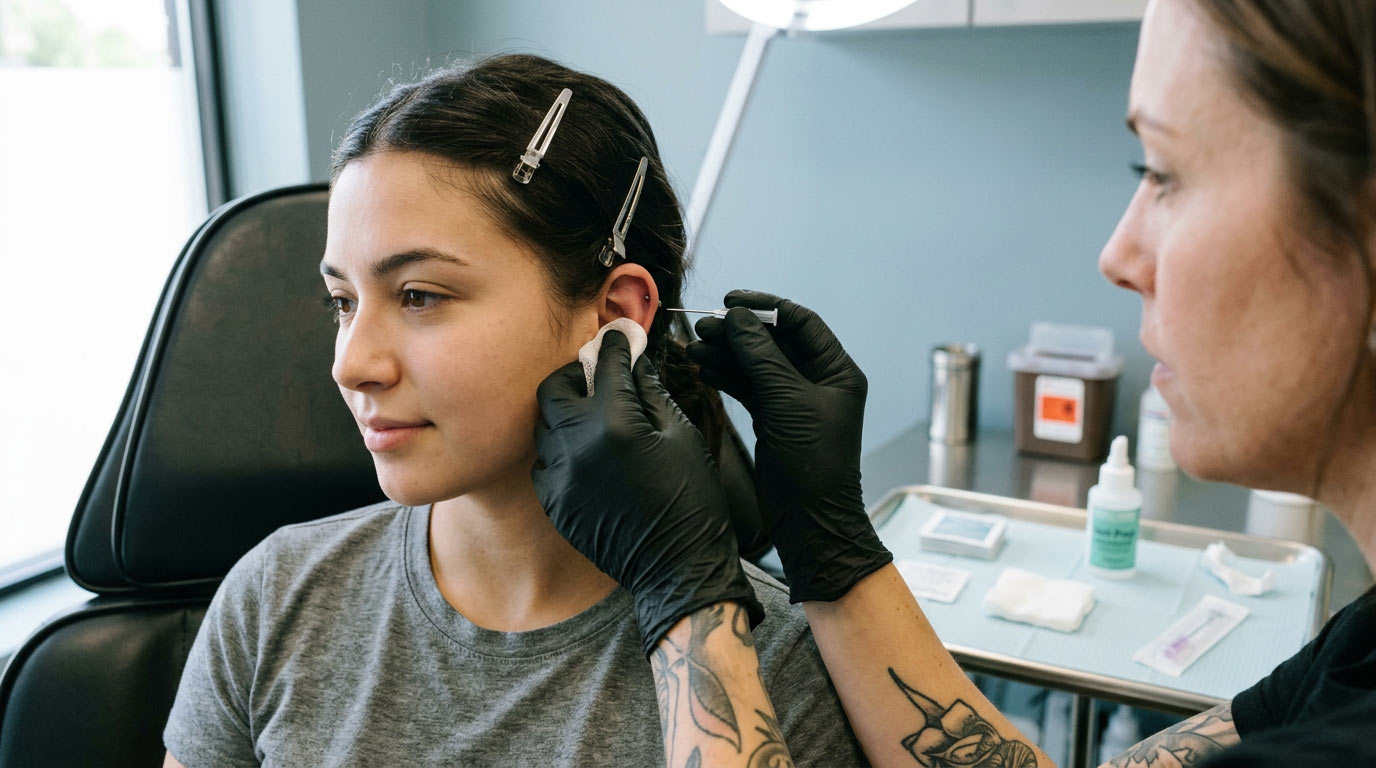
The good news: every piercing takes under 2 seconds. The bad news: some of those 2 seconds are considerably sharper than others. Here is the honest, anatomy-based guide to what hurts, what does not, and why.
Ear Piercings — Complete Pain Ranking
Ranked from least to most painful based on tissue type, cartilage density, and proximity to nerve clusters:
Why cartilage hurts more: Cartilage tissue is dense and fibrous — the needle must push through significantly more resistance than soft earlobe tissue. Cartilage also has less blood supply, which means fewer endorphins released during the piercing. The outer helix rim is thinner cartilage (4/10) while the inner folds and bowls are thicker and denser (5–6/10).
What Does a Cartilage Piercing Feel Like?
The three phases of a cartilage piercing experience:
Phase 1 — The Piercing (<2 seconds)
A sharp pressure building to a pinch as the needle passes through. For thicker cartilage, more like a dull crunch. Lasts under 2 seconds with an experienced needle piercer. Most people describe the sensation as more surprising than painful.
Phase 2 — Throbbing (1–4 hours)
Warm throbbing and pressure in the pierced area. The duration depends on cartilage thickness — helix throbs for 1–2 hours, conch or rook for 2–4 hours. Paracetamol (not ibuprofen or aspirin — both thin blood) can help if needed.
Phase 3 — Healing Tenderness (days–weeks)
Soreness when touched, accidentally bumped, or snagged on hair or clothing. This can persist for 2–6 weeks for cartilage piercings. It is normal and not a sign of infection as long as it is gradually improving rather than worsening.
7 Proven Ways to Reduce Piercing Pain
Choose an Experienced APP Piercer
Technique is the single biggest pain variable. An experienced needle piercer with perfect angle, speed, and confidence reduces pain significantly compared to a hesitant or imprecise piercer. The needle should move through in a single smooth motion — not slowly or tentatively. See our How to Find a Safe Piercer guide.
Eat a Full Meal 1–2 Hours Before
Low blood sugar significantly increases pain sensitivity and the risk of feeling faint. Have a proper meal — not just a snack — 1–2 hours before your appointment. Avoid going to your piercing on an empty stomach or after skipping a meal.
Stay Hydrated
Dehydration lowers your pain threshold and makes you more likely to feel faint during or after a piercing. Drink plenty of water the day before and morning of your appointment.
Breathe Through It
Controlled breathing is one of the most evidence-backed pain reduction techniques. Take a slow deep breath in, then exhale slowly as the needle passes through. Holding your breath or shallow breathing increases tension and pain perception.
Bring a Friend
Distraction genuinely reduces pain perception. Having someone talk to you about something unrelated during the piercing has measurable pain-reducing effects. Many studios welcome a single support person in the piercing room.
Avoid Caffeine and Alcohol 24 Hours Before
Caffeine increases anxiety and blood pressure, heightening pain sensitivity. Alcohol thins the blood (increasing bleeding) and is contraindicated before any piercing. Both substances increase complications during and after the procedure.
Book for the Morning
Pain tolerance is naturally higher in the morning and drops throughout the day as fatigue accumulates. Scheduling your piercing early in the day gives you the best physiological conditions for pain management.
What NOT to do: Do not take ibuprofen or aspirin before a piercing — both thin the blood and increase bleeding. Numbing creams are generally not recommended by professional piercers as they can change the tissue texture making placement less precise. Never drink alcohol before a piercing.
Frequently Asked Questions
What is the most painful piercing?
Among ear piercings, the snug (6.5/10), industrial (6/10), and rook (6/10) are most painful — they pass through the thickest cartilage. The pain level of any piercing is heavily influenced by piercer skill — an experienced needle piercer significantly reduces pain at every placement.
Does a cartilage piercing hurt more than a lobe?
Yes — cartilage piercings consistently hurt more than earlobe piercings. The earlobe is soft tissue rating 2/10. Cartilage is dense fibrous tissue requiring more needle resistance, rating 4–6.5/10 depending on placement. The difference is real but brief — all piercings take under 2 seconds.
How can I reduce piercing pain?
Key tips: (1) Choose an experienced APP needle piercer — technique is the biggest variable. (2) Eat a full meal 1–2 hours before. (3) Stay well hydrated. (4) Breathe slowly — exhale as the needle passes. (5) Bring a friend for distraction. (6) Avoid caffeine and alcohol 24 hours before. (7) Book a morning appointment when pain tolerance is naturally higher.
How long does piercing pain last?
The piercing moment lasts under 2 seconds. Throbbing warmth follows for 1–4 hours (longer for thick cartilage). Tenderness when touched lasts 3–14 days. Occasional soreness when snagged can persist for weeks during healing. Pain that worsens rather than gradually improves is a sign of infection and requires medical attention.
Questions about piercing pain?
Drop them in the comments — we answer every one!