
Piercing Healing · Complete Reference
Piercing Healing Times:
The Complete Guide by Type
How long does every piercing take to heal? A complete, body-area-by-body-area breakdown with expert tips to heal faster and avoid complications.
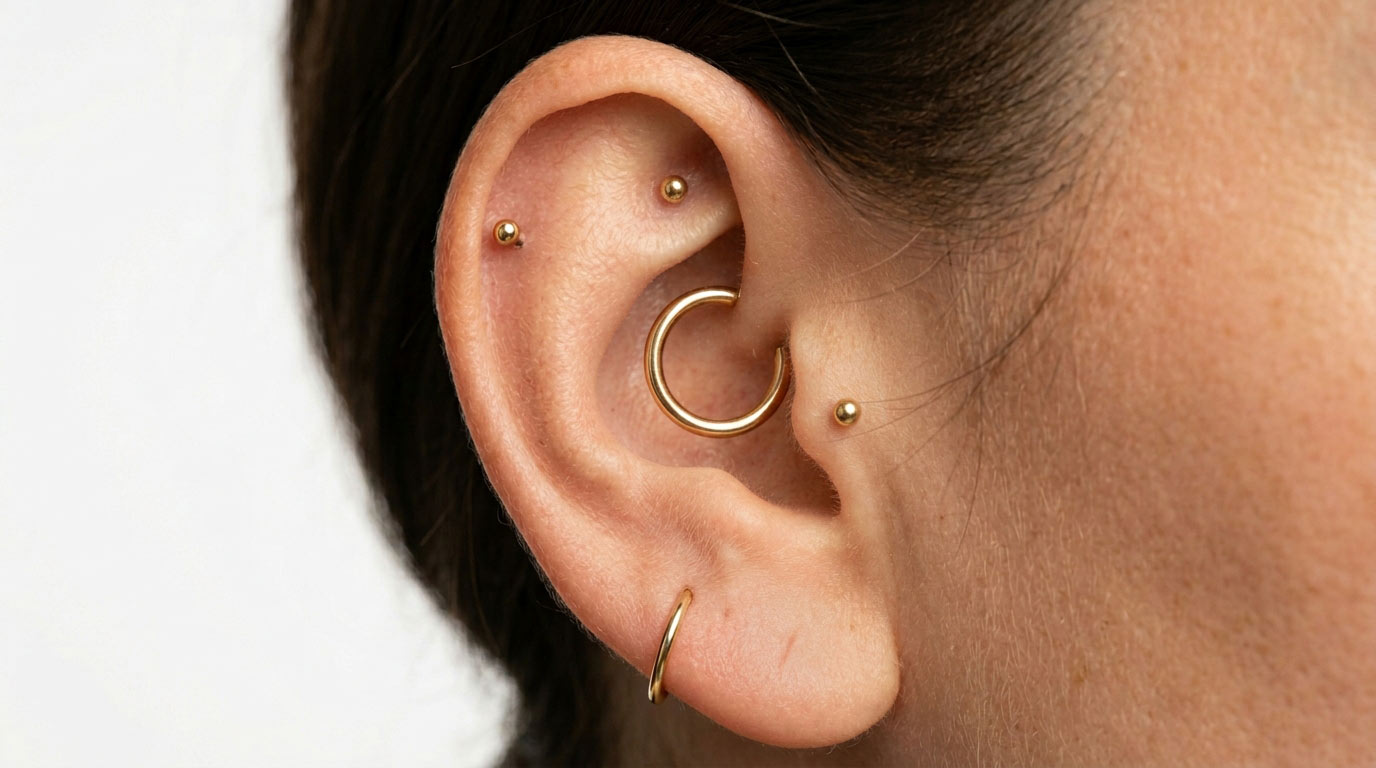
One of the most common questions after getting a new piercing is: "How long will this take to heal?" The honest answer — it depends entirely on where the piercing is, your body, and how consistently you follow aftercare. This guide breaks it all down so you know exactly what to expect.
Why Piercing Healing Times Vary So Much
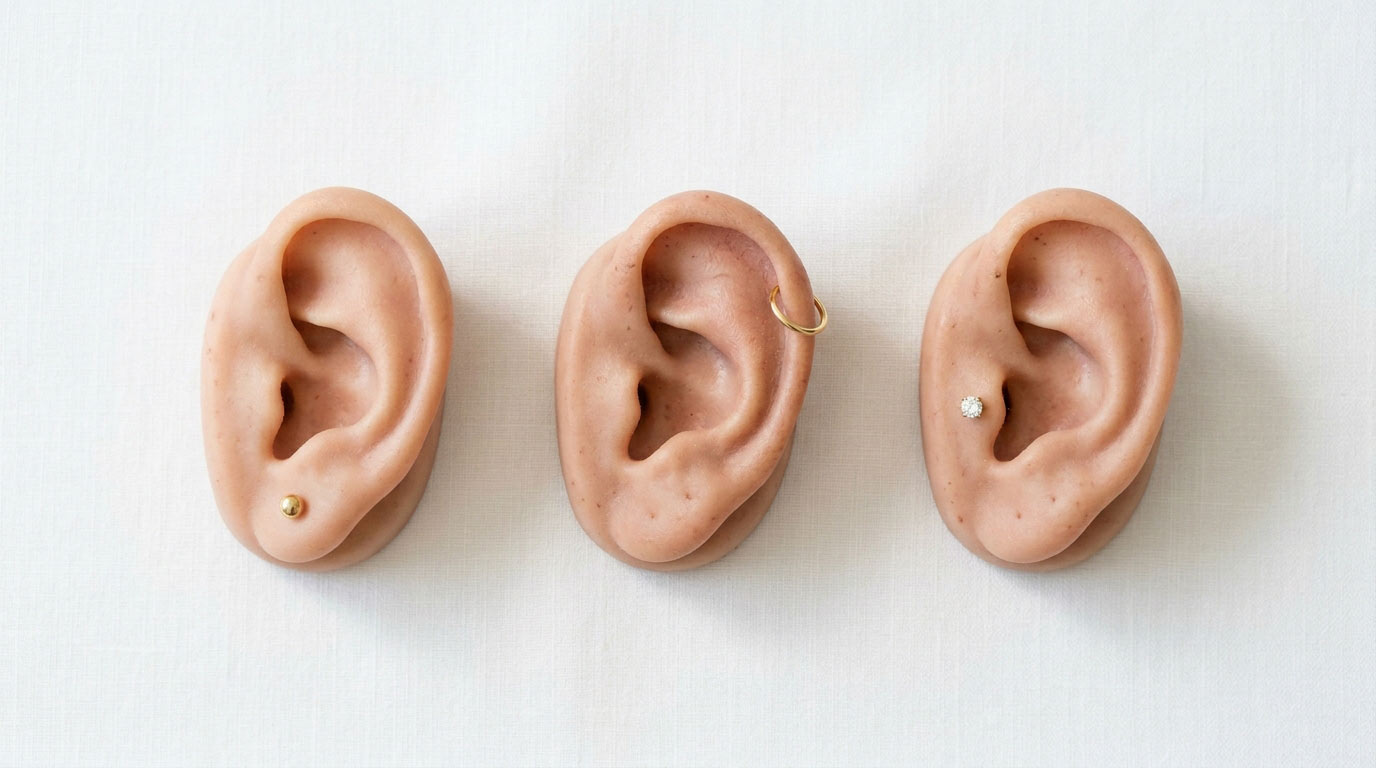
Not all piercings are created equal. A simple earlobe piercing heals in a matter of weeks because the tissue is soft, fleshy, and has excellent blood supply. A cartilage piercing in the same ear can take up to a year — not because anything went wrong, but because cartilage has far lower blood flow, which is what delivers oxygen and nutrients to heal tissue.
The same logic applies across the body. Tongue piercings heal surprisingly fast because saliva has natural antimicrobial properties and the mouth's blood supply is excellent. Navel piercings heal slowly because the belly button is a natural fold that traps moisture, experiences constant friction from clothing, and has less direct blood supply than fleshy areas.
Understanding why healing times differ helps you set realistic expectations — and stops you from assuming something is wrong when your piercing is actually just going through a perfectly normal, longer healing process. Consistent piercing aftercare is what keeps that process on track.
Important: Healing times listed throughout this guide are averages for healthy piercings with consistent aftercare. Your individual timeline may be shorter or longer. Always consult your professional piercer — not internet forums — if you have concerns about your specific piercing.
Factors That Affect Piercing Healing Time
These are the key variables that can speed up or significantly slow down how long your piercing takes to heal:
Piercing Location
The most important factor. Blood supply, tissue type (cartilage vs. fleshy), and exposure to friction or movement all vary by site.
Aftercare Consistency
Twice-daily cleaning with sterile saline, a hands-off approach, and proper jewelry care are the biggest controllable factors.
Jewelry Quality
Implant-grade titanium, 14k+ solid gold, or implant-grade steel heal fastest. Low-quality or reactive metals can cause prolonged irritation and slow healing significantly.
Lifestyle & Activity
Swimming (pools, oceans, hot tubs), contact sports, and activities that cause friction against the piercing all slow healing.
Sleep & Stress
Sleep is when your body heals most actively. Chronic stress and poor sleep significantly impair immune function and healing speed.
Diet & Nutrition
Zinc, vitamin C, and protein are essential for tissue repair. A poor diet, alcohol consumption, and smoking all extend healing time.
Piercer Skill
Proper placement, correct jewelry sizing, and professional technique from the start prevent complications that could add weeks or months to healing.
Individual Biology
Age, immune health, skin type, and genetic tendency toward keloids or hypertrophic scarring all play a role in healing speed.
The single most impactful thing you can do to heal faster is leave your piercing alone — no touching, no rotating, no changing jewelry early. Consistent, twice-daily saline cleaning is the next most important factor.
Complete Piercing Healing Times Chart
This is the most comprehensive piercing healing times chart you'll find — covering every common piercing type organized by body area. "Initial" healing means the surface has closed and is less tender. "Full healing" means the internal tissue is completely healed and jewelry can safely be changed.
Ear Piercings
| Ear Piercing Type | Initial Healing | Full Healing | Key Tip |
|---|---|---|---|
| Earlobe (standard) | 6–8 weeks | 3–6 months | Fastest healing ear piercing. Don't change jewelry at 6 weeks — wait for full internal heal. |
| Stacked Lobe | 6–8 weeks each | 4–6 months | Same as standard lobe. Heal one stack before adding more. |
| Upper Lobe | 6–8 weeks | 4–6 months | Slightly thicker tissue than standard lobe; similar timeline. |
| Helix | 3–4 months | 6–12 months | Most popular cartilage piercing. Avoid headphones pressing on it during healing. |
| Forward Helix | 3–4 months | 6–9 months | Can be irritated by glasses frames and earbuds. Keep hair products away. |
| Flat / Flat Helix | 3–4 months | 6–12 months | Thicker cartilage; prone to irritation bumps if jewelry is too long. |
| Conch (inner) | 3–4 months | 6–12 months | Avoid in-ear headphones entirely during healing. |
| Conch (outer) | 3–4 months | 6–9 months | Versatile for hoops or studs once healed. Downsize jewelry at 6–8 weeks. |
| Tragus | 3–4 months | 6–12 months | In-ear headphones are a major risk. Use bone conduction headphones during healing. |
| Anti-Tragus | 4–6 months | 8–16 months | One of the slower ear piercings. Less common anatomy makes professional placement critical. |
| Daith | 3–4 months | 6–12 months | Known for potential migraine benefits. Thicker cartilage — more intense piercing experience. |
| Rook | 3–4 months | 8–12 months | Anatomy-dependent placement. Requires experienced piercer. |
| Snug | 4–6 months | 12–18 months | One of the most challenging ear piercings. Not all ear anatomies can accommodate it. |
| Industrial | 4–5 months | 6–12 months | Two cartilage piercings heal as one. Any snagging affects both holes. |
| Hidden / Floating Helix | 3–4 months | 6–9 months | Popular social-media trend. Similar care to a standard helix. |
| Orbital | 3–4 months | 6–12 months | Two piercings connected by one ring. Both must heal before changing jewelry. |
Nose & Facial Piercings
| Piercing Type | Initial Healing | Full Healing | Key Tip |
|---|---|---|---|
| Nostril | 2–3 months | 4–6 months | Studs heal faster than rings. Be careful when removing glasses or blowing your nose. |
| High Nostril | 3–4 months | 6–9 months | Higher placement = thicker cartilage = longer healing. Popular stacking trend. |
| Septum | 6–8 weeks | 4–6 months | One of the faster face piercings when placed in the soft-tissue "sweet spot." Flip jewelry up to hide at work. |
| Bridge | 8–12 weeks | 3–6 months | Surface piercing — prone to rejection if jewelry is too heavy or movement is excessive. Watch for migration. |
| Eyebrow (vertical) | 8–12 weeks | 6–9 months | Surface piercing. Higher rejection risk. Avoid glasses frames pressing against it during healing. |
| Medusa / Philtrum | 6–8 weeks | 3–6 months | Rinse mouth after eating/drinking. Avoid playing with jewelry with tongue or teeth. |
| Madonna / Monroe | 6–8 weeks | 3–6 months | Same oral care as Medusa. Making a comeback in the current trend cycle. |
| Cheek | 3–6 months | 12–18 months | Complex placement. Always done by a highly experienced piercer only. Very long healing process. |
| Dermal (face) | 1–3 months | 6–9 months | Single-point anchor. Prone to rejection if snagged. Avoid makeup and skincare near the site. |
Body Piercings
| Piercing Type | Initial Healing | Full Healing | Key Tip |
|---|---|---|---|
| Navel (belly button) | 3–6 months | 9–12 months | One of the slowest to heal. Avoid tight waistbands. Especially slow for active people and swimmers. |
| Nipple | 6–9 months | 12–18 months | Requires the most patience of any common piercing. Wear loose, non-underwire clothing during healing. |
| Surface Piercing (general) | 4–6 months | 6–24 months | High rejection risk. Placement on flat skin (collarbone, nape, sternum) — quality jewelry is critical. |
| Dermal / Microdermal | 1–3 months | 3–9 months | No exit hole — relies on tissue integration. Can be placed almost anywhere on the body. |
| Sternum / Cleavage | 3–6 months | 6–12 months | High rejection risk due to constant movement. Use flexible PTFE jewelry for best results. |
Oral Piercings
| Piercing Type | Initial Healing | Full Healing | Key Tip |
|---|---|---|---|
| Tongue | 4–6 weeks | 3–4 months | Heals faster than most thanks to saliva's antimicrobial properties and excellent blood supply. Avoid spicy/hot food. |
| Tongue Web (frenulum) | 2–4 weeks | 4–8 weeks | Fastest-healing oral piercing. Very delicate — avoid touching with tongue constantly. |
| Smiley / Upper Frenulum | 4–8 weeks | 2–3 months | Hidden when mouth is closed. Can reject if teeth constantly press against jewelry. |
| Frowny / Lower Frenulum | 4–6 weeks | 2–3 months | Less common. Avoid foods that snag. Higher rejection risk than smiley. |
| Lip / Labret | 6–8 weeks | 3–6 months | Rinse with alcohol-free mouthwash after every meal. Avoid kissing and oral contact during initial healing. |
| Snake Bites (double lip) | 6–8 weeks each | 3–6 months | Double the aftercare responsibility. Avoid acidic, spicy, and hot foods. |
All healing times are general estimates for healthy individuals following consistent aftercare. Individual results vary. Consult your professional piercer for guidance specific to your piercing.
Ear Piercings: Healing Times Deep Dive
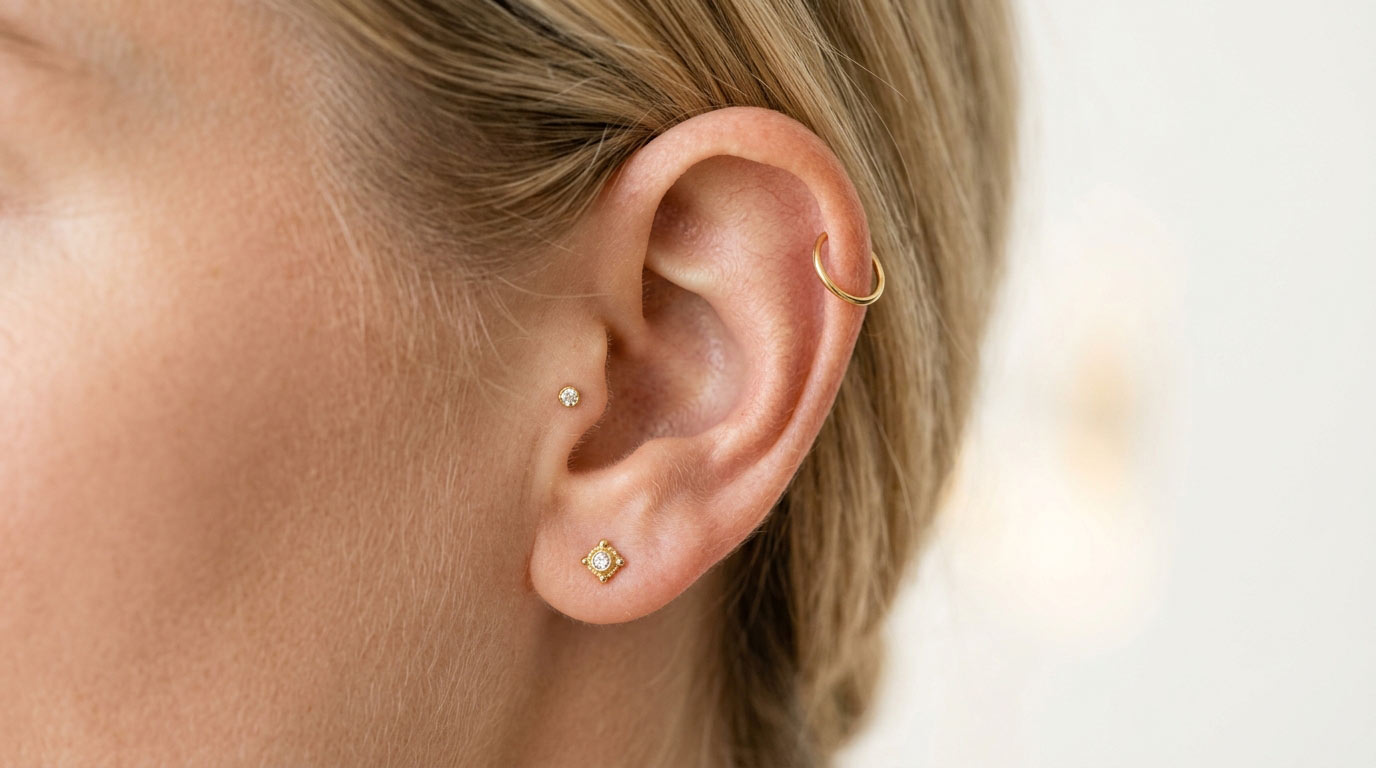
Ear piercings are the most diverse category — ranging from the quick-healing earlobe to the demanding 12–18-month snug piercing. Here's why the differences are so dramatic. For a placement-by-placement breakdown, see our types of ear piercings guide.
Lobe Piercings (Fastest)
Earlobe tissue is soft, fleshy, and richly supplied with blood — which is why lobes heal faster than any other ear location. Initial healing: 6–8 weeks. Full healing: 3–6 months. Many people assume their lobe piercing is "done" at 6 weeks because it looks and feels healed — but the internal tissue continues healing for months. Changing jewelry too soon is the number-one reason lobe piercings fail.
Cartilage Piercings (Slower)
Cartilage is dense, avascular tissue — meaning it has very limited blood supply. Less blood flow = less oxygen and fewer nutrients reaching the healing tissue = much slower healing. This is why helix, tragus, daith, conch, and rook piercings all take 6–12 months to fully heal. Cartilage piercings that appear fully healed at the 4-month mark are often still fragile internally — and rough handling, sleeping on them, or changing jewelry at this point can restart the irritation cycle entirely.
Planning a Curated Ear?
If you're building a curated ear with multiple piercings, plan the placement order carefully with your piercer. Getting multiple cartilage piercings simultaneously on the same ear means every one of them needs to heal without you sleeping on that side. Most experienced piercers recommend spacing new piercings 3–4 months apart to allow each one to progress through initial healing before adding more.
Cartilage piercings can look completely healed on the outside while the interior is still actively healing. Never base your jewelry change decision on how a piercing looks or feels. Always get confirmation from your professional piercer.
Facial & Nose Piercing Healing Times
Facial piercings are highly visible and often in contact with everyday activities — glasses, makeup, touching your face, blowing your nose — which is why proper healing is especially important. Our complete nose piercing guide covers every placement in depth.
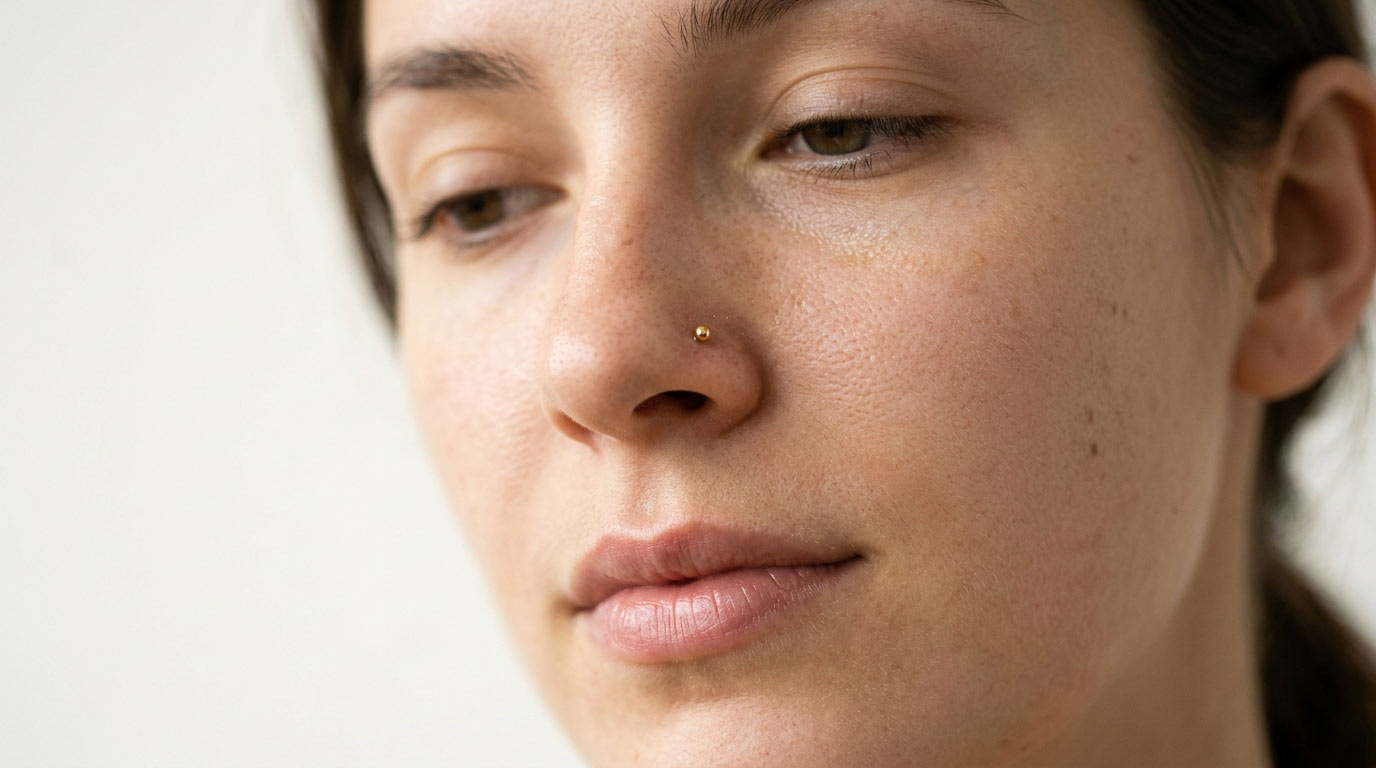
Nostril Piercing (4–6 months)
One of the most popular piercings overall, nostril piercings go through the thin cartilage of the side of the nose. Studs typically heal faster than rings because they move less. Be extra careful when removing glasses, using sunglasses, or blowing your nose — any tugging or pressure disrupts the healing channel. Initial healing: 2–3 months. Full healing: 4–6 months.
Septum Piercing (4–6 months)
Despite going through the nose, septum piercings can actually be among the faster-healing facial piercings — if the piercer correctly places them through the "columella" (the thin strip of soft tissue between the cartilage). A well-placed septum heals with very little drama. Initial healing occurs in just 6–8 weeks. Full healing takes 4–6 months. One major advantage: septum jewelry can be flipped up into the nose to hide it at work or school during healing.
Surface & Eyebrow Piercings (Higher Risk)
Surface piercings — including eyebrow, bridge, and anti-eyebrow — are placed horizontally under the skin rather than through a natural fold or feature. They have a higher rejection risk than piercings through defined anatomy. Signs of rejection include the jewelry migrating visibly toward the surface of the skin, with redness and thinning tissue around the exit points. Quality jewelry material (implant-grade titanium or PTFE) and expert placement minimize this risk.
Body Piercing Healing Times
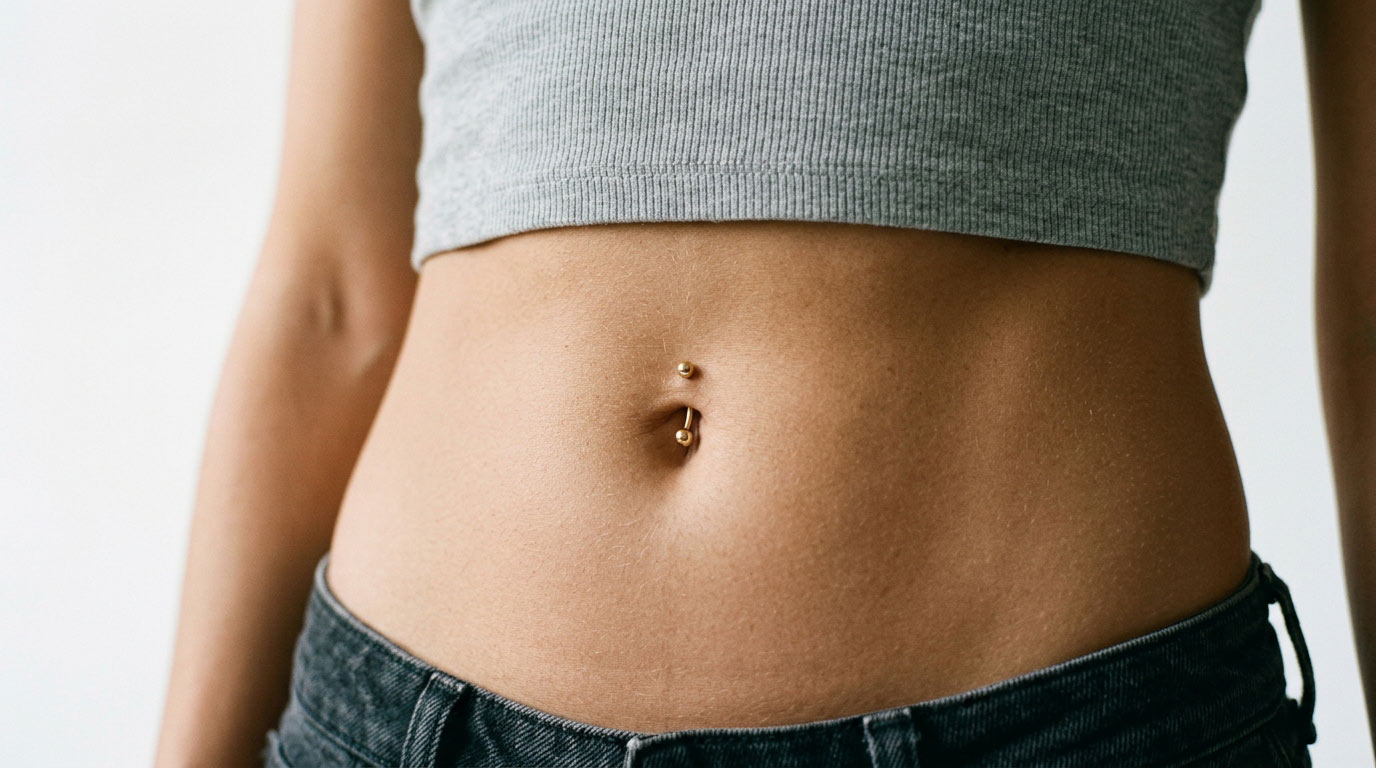
Belly Button / Navel (9–12 months)
Navel piercings are notoriously slow healers — and for good reason. The belly button is a natural fold that traps moisture, sits at a waistband friction zone, and experiences constant movement when you bend, sit, or exercise. Full healing typically takes 9–12 months, sometimes longer for very active people or swimmers. Avoid high-waisted jeans, tight waistbands, and contact sports during healing. A curved barbell (banana barbell) is the standard initial jewelry.
Nipple Piercings (12–18 months)
Nipple piercings require the most patience of any common piercing. They experience constant friction from clothing, pressure from bras, and the nipple's naturally sensitive nerve supply makes any irritation very noticeable. Despite this, they remain extremely popular — and with proper care and patience, they heal beautifully. Expect a full 12–18 months. Wear loose, breathable, non-underwire clothing during healing. Straight barbells are the standard initial jewelry.
Dermal / Microdermal Piercings (3–9 months)
Dermal piercings are single-point surface piercings — the jewelry has only one visible end, with an anchor embedded under the skin. They can be placed almost anywhere on the body where there is relatively flat skin. Healing depends entirely on tissue integration around the anchor. They are more vulnerable to rejection than through-piercings, especially if the area experiences regular friction or snagging. Implant-grade titanium anchors have the best integration outcomes.
Oral Piercing Healing Times
The mouth is a uniquely hospitable healing environment — saliva contains natural antimicrobial enzymes, and the mouth's blood supply is excellent. This is why oral piercings are generally among the fastest-healing piercings despite being placed in an area exposed to food, drink, and bacteria constantly.
Tongue Piercing (3–4 months)
Tongue piercings heal in just 4–6 weeks for initial healing and 3–4 months for full healing — among the fastest of any body piercing. The major challenge is the swelling in the first week, which can be dramatic. Initial jewelry is always longer to accommodate this swelling, and downsizing is critical once swelling subsides (usually within 2 weeks). Eating soft foods and rinsing with alcohol-free mouthwash after every meal are the two most important care steps.
Lip & Labret (3–6 months)
Lip piercings combine oral care (rinse after eating) with external care (twice-daily saline spray on the outside). The Medusa, Madonna, and Monroe placements are labret-style piercings through the upper lip area and follow the same 3–6 month healing timeline. The biggest enemies: playing with the jewelry with your teeth or tongue, kissing, and oral contact during the early healing phase.
All oral piercings require a downsizing appointment approximately 2 weeks after the initial piercing, once swelling has reduced. The long initial bar must be replaced with a correctly-sized shorter piece — this is critical to prevent tooth and gum damage from an over-long bar.
The 3 Stages of Piercing Healing
No matter where your piercing is, all piercings go through the same three biological phases of healing:
Days 1 – 14 typically
Inflammation Phase
Your immune system responds immediately: redness, warmth, swelling, tenderness, and some bleeding. White blood cells flood the area. This is completely normal and necessary — your body is establishing that the jewelry is not a pathogen while beginning tissue repair. Do not interrupt this phase by removing or changing jewelry.
Weeks to months
Proliferative / Healing Phase
Your body builds a fistula — a tunnel of new tissue lining the piercing channel from both ends inward. You'll notice crusties (dried whitish-yellow lymph fluid) forming around the jewelry — this is completely normal and is actually evidence of healthy healing. The tissue may feel tight or slightly itchy. The outside looks healed but the inside is not yet complete.
Final stage — varies by piercing type
Maturation Phase
The fistula tunnel matures, thickens, and strengthens. The tissue becomes more resilient and the piercing becomes stable. This phase is when your piercing transitions from "healed on the outside" to "fully healed internally." Only at the completion of this stage should you consider changing jewelry — and only with your piercer's confirmation.
How to Know Your Piercing Is Fully Healed
This is one of the most important — and most misunderstood — aspects of piercing healing. Looking healed and being healed are very different things.
Signs of Full Healing
- No redness, swelling, or tenderness
- No discharge or crusting at all
- Tissue feels smooth and stable around the jewelry
- Jewelry moves freely without irritation
- No sensitivity to touch or pressure
- Piercing is at or past its expected full healing timeline
- Your professional piercer has confirmed it's fully healed
Still Healing (Don't Change Yet)
- Any occasional tenderness when bumped
- Any crusting or dried discharge around the jewelry
- Occasional itching (normal, but means still healing)
- Any redness or pink color around the entry/exit holes
- Tissue still feels slightly firm or thickened around jewelry
- You're still within the expected healing timeline
The golden rule: When in doubt, wait longer. A piercing that's left alone for an extra month costs you nothing. A piercing that's handled too soon can require starting the healing process over — or can fail entirely.
Tips to Speed Up Piercing Healing
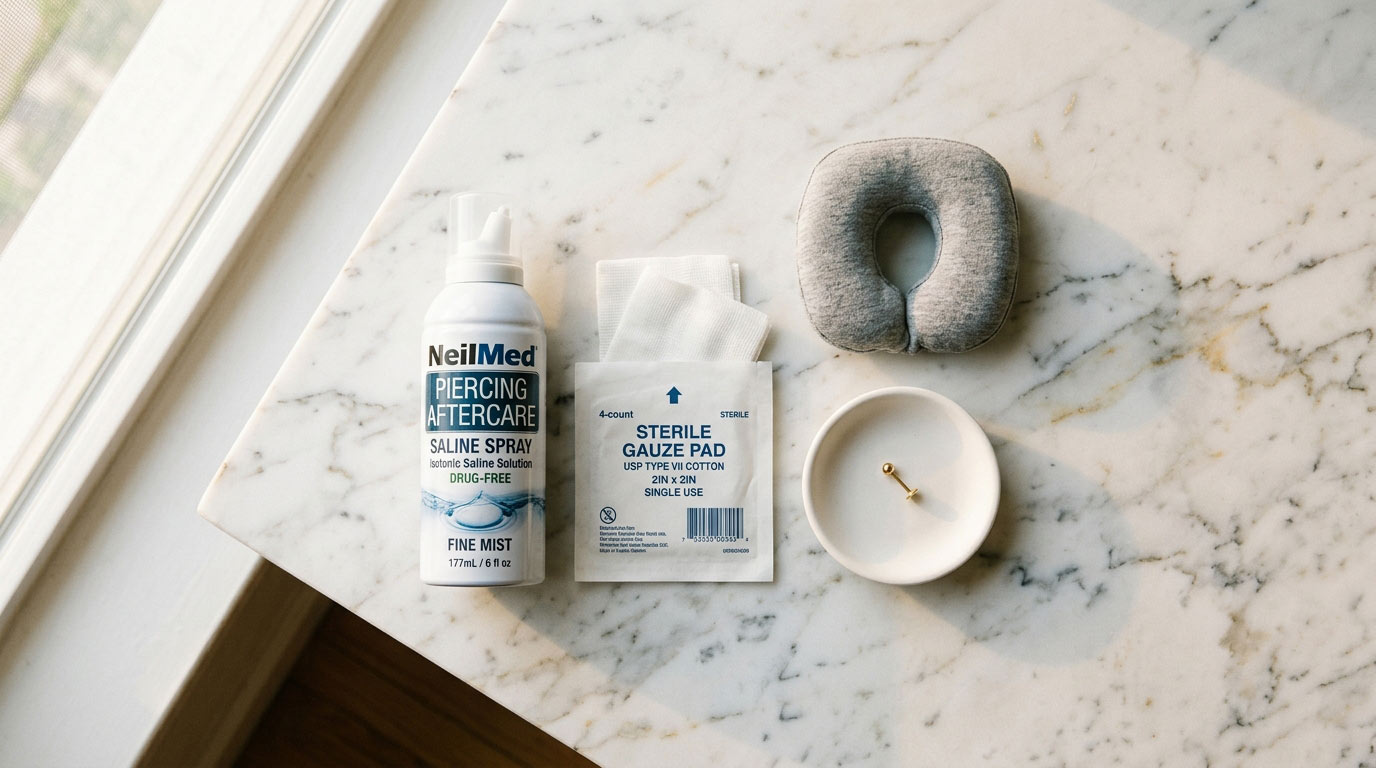
You can't force a piercing to heal faster than biology allows — but you can absolutely create the optimal conditions for healing to happen as efficiently as possible:
Evidence-Based Healing Tips
Maximize Your Healing Speed
Clean twice daily with sterile saline wound wash — no more, no less. Over-cleaning is just as harmful as under-cleaning.
Hands off. Every unnecessary touch introduces bacteria. Clean hands only, and only during cleaning.
Sleep well. Your body does most of its healing during sleep. 7–9 hours per night makes a measurable difference.
Eat for healing. Protein, zinc, and vitamin C all support tissue repair. Reduce alcohol and quit smoking.
Use a travel pillow for ear piercings to keep pressure off while sleeping on your side.
Downsize on time. Return to your piercer for a shorter post 4–6 weeks in. Long jewelry snags and causes bumps.
Wear the right clothing. Loose, breathable fabrics that don't press or snag on your piercing during healing.
No swimming in pools, hot tubs, oceans, or baths. Showering is fine. Protect with Tegaderm if you must swim.
There are also a few common "remedies" you should actively avoid despite their widespread reputation online: tea tree oil is too harsh and causes irritation. Hydrogen peroxide dissolves healthy healing tissue. Neosporin and antibiotic ointments trap bacteria in puncture wounds. DIY sea salt soaks are almost always too concentrated. Stick to commercial sterile saline wound wash — our saline solution guide explains exactly what to buy and how to use it.
Frequently Asked Questions
How long does an earlobe piercing take to heal?
Earlobe piercings initially heal in 6–8 weeks but require 3–6 months for full internal healing. Most people make the mistake of changing jewelry at 6 weeks when the piercing looks healed — but the internal fistula is still fragile at this point. Wait for full healing and confirm with your piercer before changing jewelry.
How long does a helix (cartilage) piercing take to heal?
Helix piercings take 3–4 months for initial surface healing and 6–12 months for full healing. Cartilage heals slowly because it has very limited blood supply compared to soft tissue. Avoid headphones, sleeping on the piercing, and changing jewelry until the full healing timeline has passed.
How long does a nose piercing take to heal?
Nostril piercings take 4–6 months to fully heal. Septum piercings are faster — initial healing in 6–8 weeks and full healing in 4–6 months when correctly placed through soft tissue. Studs heal faster than rings because they move less.
How long does a belly button piercing take to heal?
Navel piercings are one of the slowest-healing piercings — typically 9–12 months for full healing, and even longer for very active people or those who swim regularly. The belly button's location at the waistband friction zone and its fold-like anatomy make it particularly challenging. Avoid tight clothing during healing.
What piercing takes the shortest time to heal?
The tongue web (frenulum) and smiley piercings are among the fastest-healing piercings, with initial healing in as little as 2–4 weeks. Standard earlobe piercings are the fastest common piercing, with initial healing in 6–8 weeks. The mouth's excellent blood supply and saliva's antimicrobial properties make oral piercings heal faster than most.
What piercing takes the longest to heal?
The snug piercing and nipple piercings are among the longest-healing common piercings, taking 12–18 months for full healing. Navel piercings, anti-tragus, and surface piercings also frequently take over a year. Genital piercings vary widely — some (like the clitoral hood) heal in as little as 4–6 weeks while others take 6–12 months.
How do I know if my piercing is healed?
A fully healed piercing has no redness, swelling, tenderness, or discharge. The tissue feels smooth and stable. The jewelry moves freely without any irritation. The piercing has been at or past its expected full healing timeline. The most reliable confirmation is having your professional piercer physically inspect it — never rely solely on how it looks or feels.
Why is my piercing still not healed after 6 months?
For most cartilage and body piercings, 6 months is still within the normal healing range — so this isn't necessarily a problem. However, if you're experiencing ongoing irritation, persistent bumps, or discharge, the most common culprits are jewelry that needs downsizing (too-long posts are a top cause), sleeping on the piercing, contact with hair products or makeup, or low-quality jewelry material. Visit your piercer for an in-person assessment.
Have a question about your piercing's healing time?
Drop it in the comments — we answer every one!
pierceing.com
Sources: safepiercing.org (APP) · aad.org · sutterhealth.org
Informational purposes only. For medical concerns, consult a qualified healthcare professional or professional piercer.