
Piercing Health · Skin Guide · 2025
Piercing Bump vs Keloid:
How to Tell the Difference
That bump on your piercing is probably NOT a keloid. But knowing the difference matters — because the treatment for each is completely different.
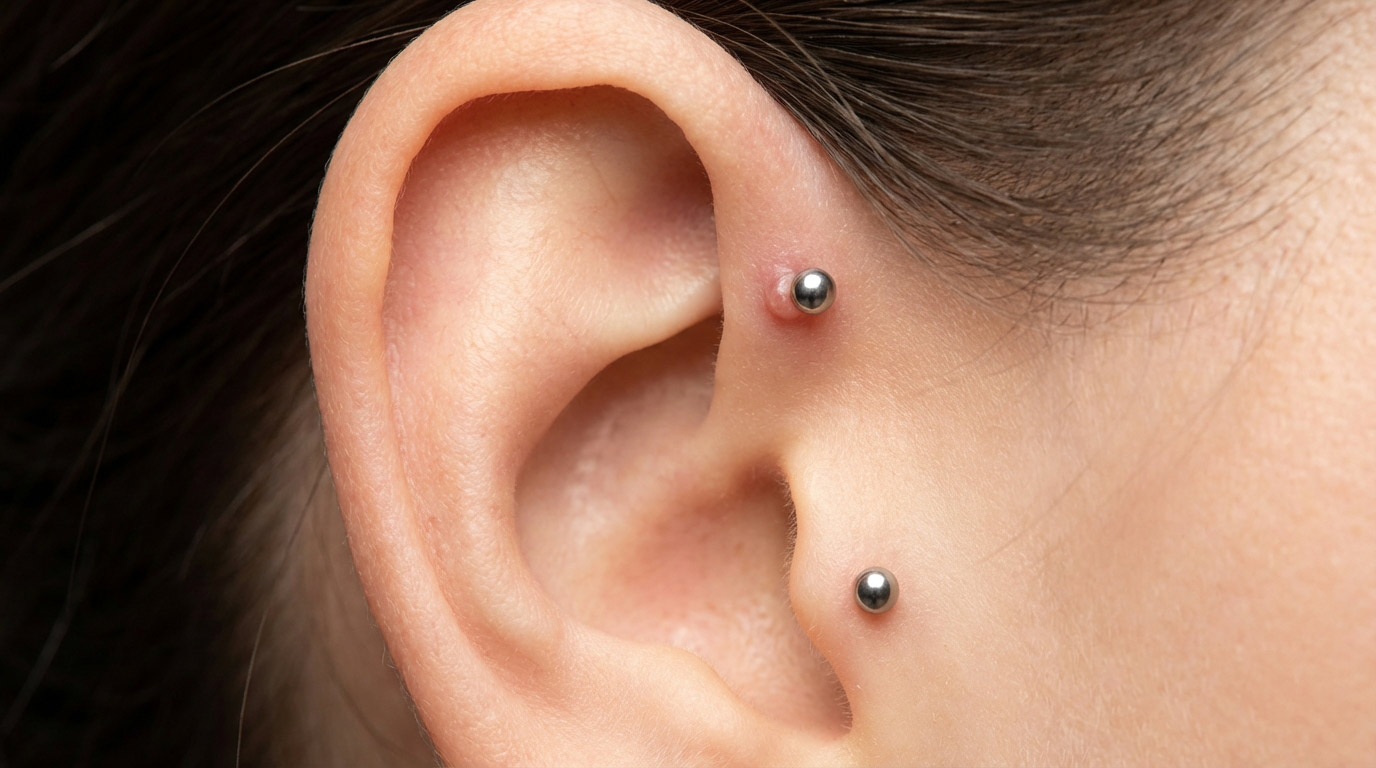
You got a piercing. A bump appeared. Your first instinct was to Google “keloid” — and now you're spiraling. Here's what you need to know: the vast majority of piercing bumps are NOT keloids. They're irritation bumps or hypertrophic scars — temporary reactions that respond to simple at-home care. But knowing which one you have matters, because the treatment is completely different.
Quick Answer: The Key Differences at a Glance
Before the deep dive, here is the bottom line — the most critical difference between a piercing bump and a keloid:
| Feature | Piercing Bump (Hypertrophic) | Keloid |
|---|---|---|
| When it appears | Within days to weeks of piercing | 3 to 12 months after piercing |
| Size & growth | Stays small, stops growing | Keeps growing over months or years |
| Boundaries | Stays within the piercing site | Spreads BEYOND the original wound |
| Color | Pink, red, or skin-toned | Pink initially, darkens to red or purple |
| Texture | Soft or slightly firm | Firm, rubbery, or hard |
| Goes away on its own? | Yes — often resolves with proper care | No — requires medical treatment |
| Genetic cause? | No — caused by irritation | Yes — genetically determined |
| Treatment | Saline cleaning, jewelry check | Steroids, cryotherapy, laser, surgery |
| How common? | Very common — affects most people | Uncommon — affects predisposed individuals |
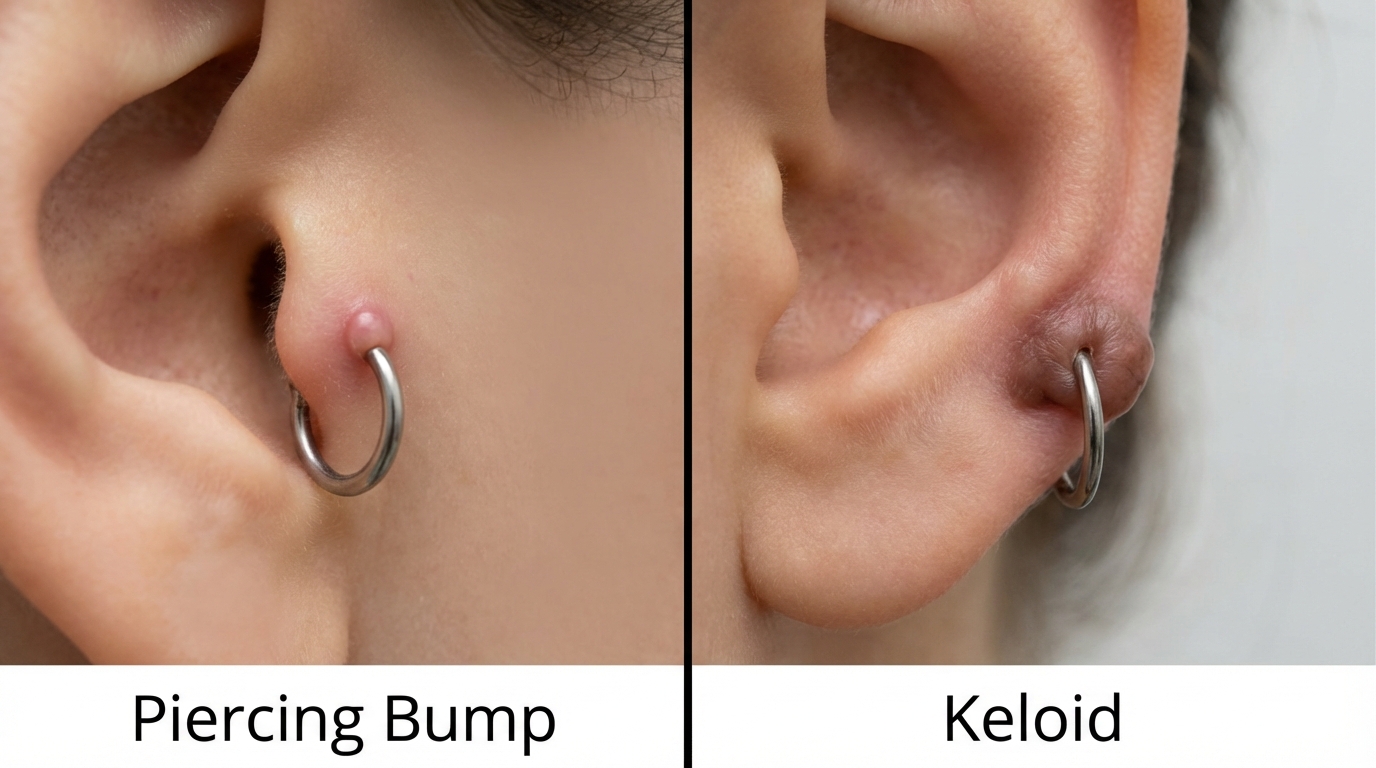
The single most important test: Does the bump extend BEYOND the piercing hole? If yes, it may be a keloid. If it stays right at or around the piercing site, it's almost certainly a hypertrophic scar (piercing bump) — treatable at home.
The 4 Types of Bumps That Form on Piercings
Most people think there are only two possibilities — bump or keloid. In reality there are four distinct types, each with different causes and treatments:
Irritation Bump
The most common type. A temporary inflammatory response to friction, pressure, poor jewelry material, or rough handling. Not a scar — just your body reacting to a stressor.
Hypertrophic Scar
A raised scar caused by excess collagen during healing. Medically distinct from a keloid — it stays within the wound boundaries and can improve over time with care.
Keloid
Abnormal scar growth caused by genetic overproduction of collagen. Grows beyond the wound site, never shrinks without treatment. Only occurs in genetically predisposed individuals.
Piercing Granuloma
A small, red, moist bump caused by chronic inflammation. Often leaks clear or yellowish fluid. Can appear at any stage and is the body's response to a foreign object it can't neutralize.
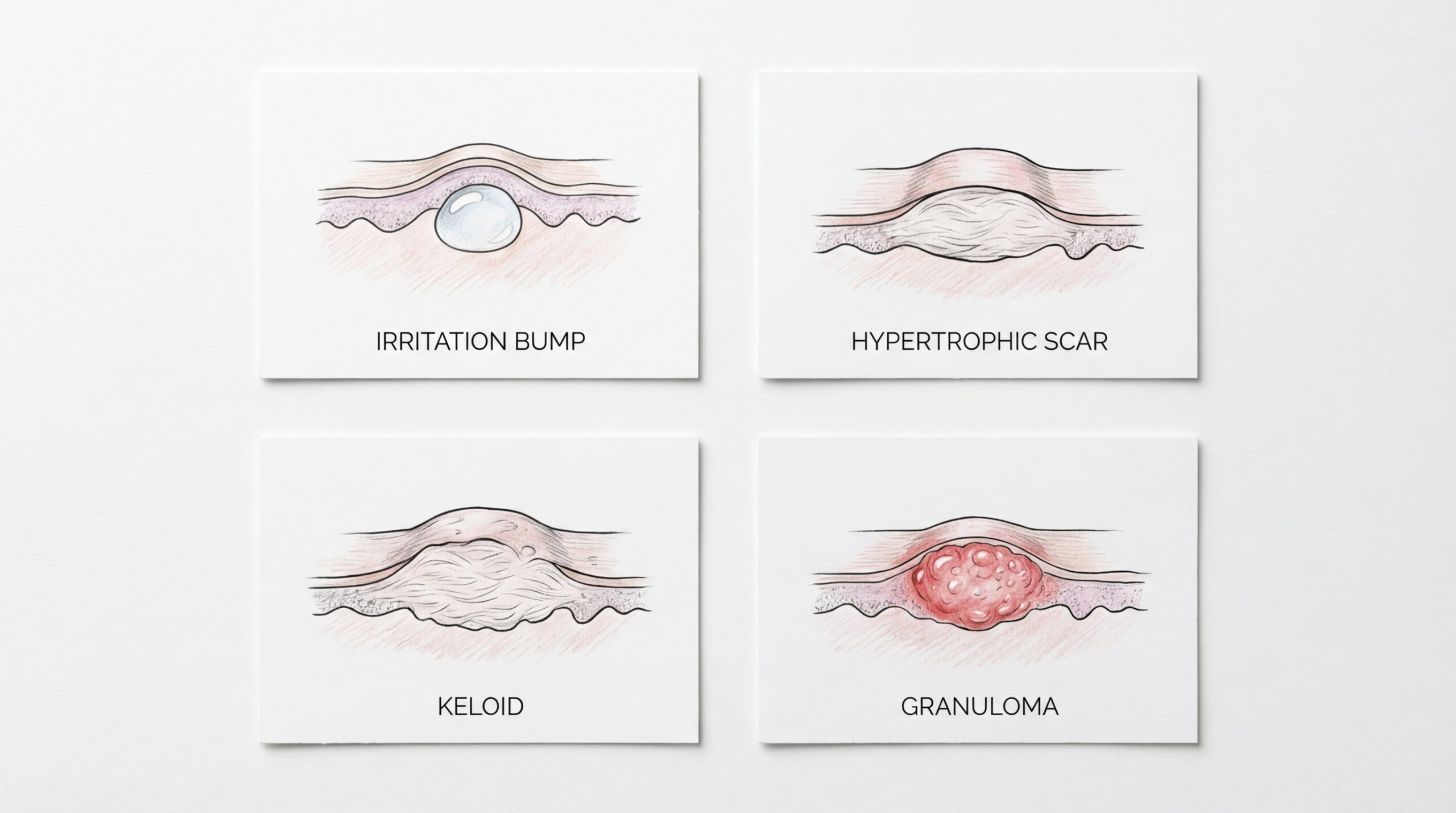
The most important thing to know: Irritation bumps and hypertrophic scars together account for the vast majority of piercing bumps. True keloids are relatively uncommon and only occur in people who are genetically predisposed. If you have never had a keloid before, your bump is almost certainly not a keloid.
What Is a Piercing Bump (Hypertrophic Scar)?
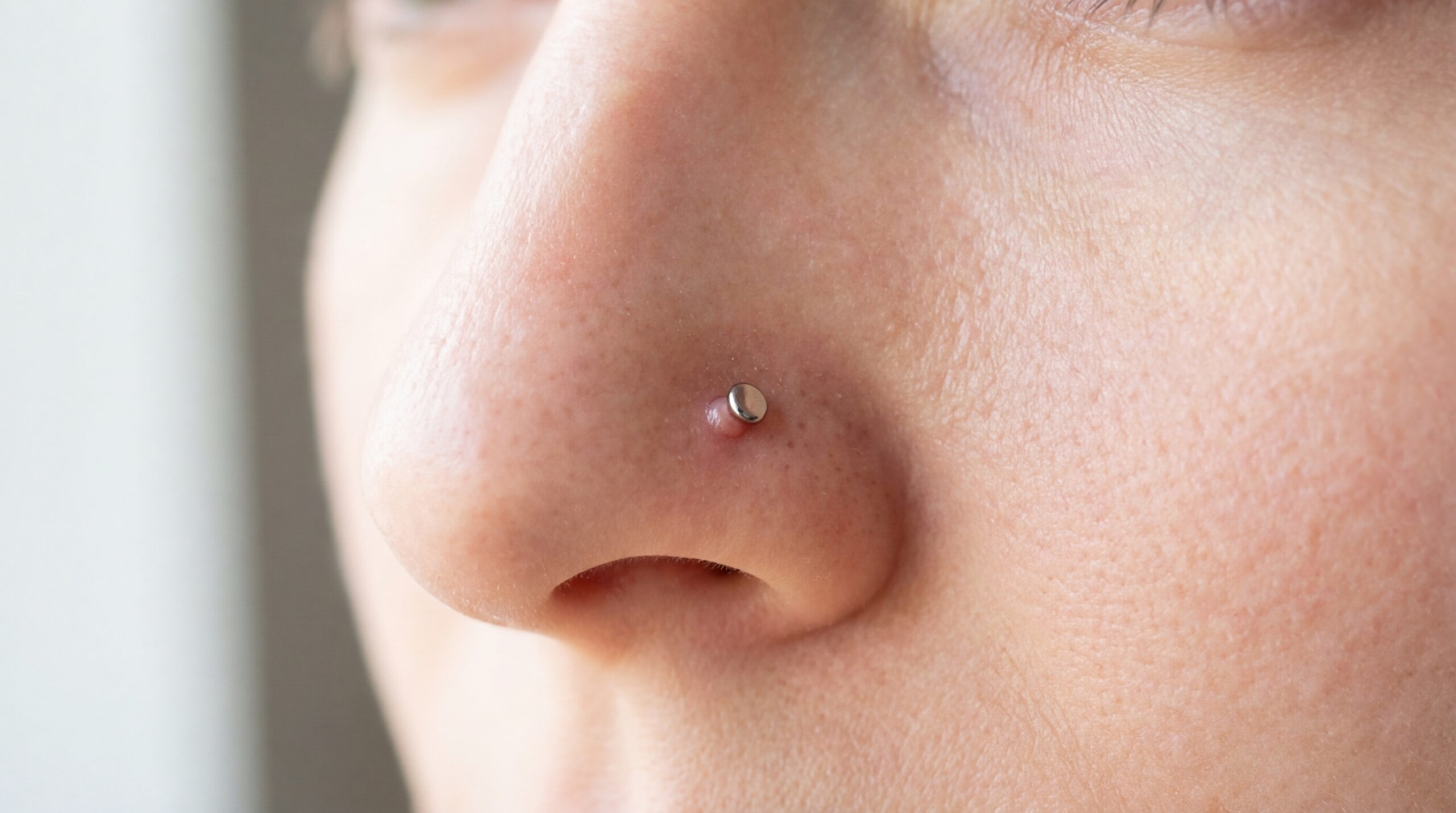
A piercing bump — medically known as a hypertrophic scar — is a small, raised lump that forms at or around a piercing site as a result of excess collagen production during the healing process. According to Medical News Today, these bumps are extremely common, typically appear within a few weeks of getting a piercing, and usually resolve on their own or with proper aftercare.
The key word is contained. A hypertrophic scar always stays within the boundaries of the original piercing wound. It may be annoying and persistent, but it does not invade surrounding tissue or keep growing indefinitely.
What Causes Piercing Bumps?
Poor jewelry material — nickel, plated metals, or mystery alloys triggering allergic reactions
Wrong jewelry length — too long post moves excessively and creates mechanical trauma
Touching or twisting — constant handling introduces bacteria and disrupts healing
Sleeping on the piercing — pressure and friction against pillow creates chronic irritation
Harsh aftercare products — hydrogen peroxide, alcohol, or tea tree oil damaging healing cells
Changing jewelry too early — trauma to healing tissue restarts inflammation
Good news: Because piercing bumps are caused by irritation, removing the cause usually resolves the bump. Most hypertrophic scars improve significantly within 4 to 8 weeks of correcting the irritating factor and maintaining a proper saline cleaning routine.
What Is a Keloid?
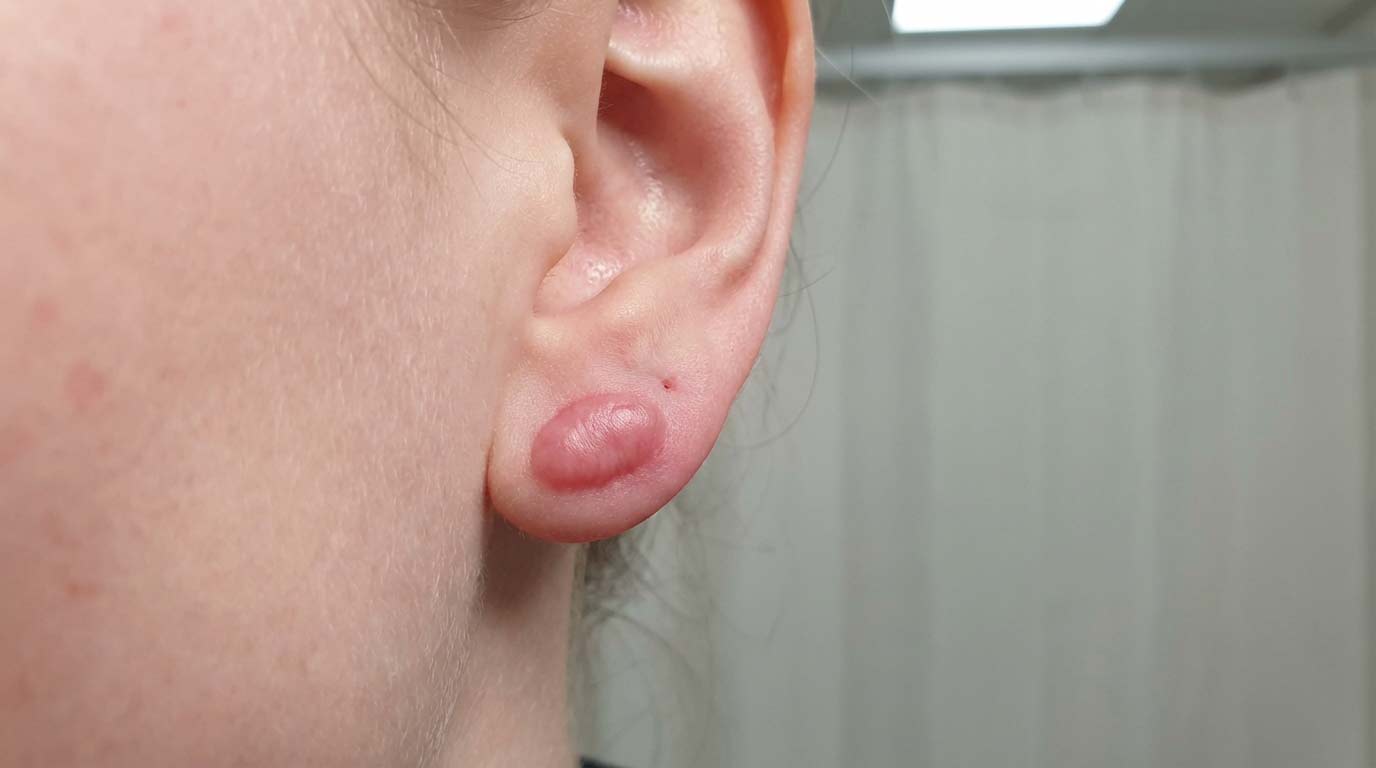
A keloid is a type of abnormal scar that forms when the body produces too much collagen during the wound healing process. Unlike normal scars — or hypertrophic scars — keloids grow beyond the boundaries of the original wound and do not regress on their own. According to research published in StatPearls (NCBI), keloids are caused by dysregulated fibroblast activity — the cells responsible for collagen production become overactive and continue producing excessive fibrous tissue long after the wound should have healed.
Keloids are classified as benign skin tumors — they are not dangerous or cancerous — but they can cause significant physical discomfort (itching, pain, burning sensation) and emotional distress due to their appearance. Critically, keloids are a genetic condition. They only occur in individuals who are predisposed to them.
Keloid Symptoms to Know
Grows beyond the piercing site — the most definitive sign. A keloid does not stay contained to the piercing hole; it spreads into surrounding skin.
Appears months after piercing — typically 3 to 12 months after the initial piercing, not immediately or within weeks.
Firm and rubbery to the touch — unlike soft irritation bumps, keloids feel hard and dense, like thick scar tissue.
Darkens over time — starts pinkish, then progresses to red, purple, or brown. On darker skin tones, keloids may be darker than the surrounding skin from early on.
Does not improve on its own — if you remove the jewelry, the keloid remains and may continue growing. Unlike irritation bumps, nothing you do at home will shrink a keloid.
Important: Keloid formation is genetic, not caused by bad aftercare. Even with perfect piercing care, a genetically predisposed person can develop a keloid. Conversely, someone without the genetic predisposition will never develop a keloid no matter how badly they care for a piercing. If you have never had a keloid before, you are unlikely to get one now.
Full Side-by-Side Comparison
All four types of piercing bumps compared across every key characteristic:
| Feature | Irritation Bump | Hypertrophic Scar | Keloid | Granuloma |
|---|---|---|---|---|
| Onset | Days to weeks | Weeks to months | 3 to 12 months | Weeks to months |
| Size | Small, stable | Small to medium, stable | Grows over time | Small, stable |
| Boundary | Within wound | Within wound | Beyond wound boundary | Within wound |
| Texture | Soft, may be fluid-filled | Firm, raised | Firm, rubbery or hard | Moist, soft, may ooze |
| Color | Red or skin-toned | Pink to red | Pink to red to dark purple | Bright red, moist |
| Genetic cause? | No | No | Yes | No |
| Goes away alone? | Yes with care | Often with time | Never without treatment | Sometimes with jewelry change |
| Home treatment | Saline, jewelry fix | Saline, downsizing | Not effective | Saline; see piercer |
| Medical needed? | Rarely | Sometimes | Yes | If persistent |
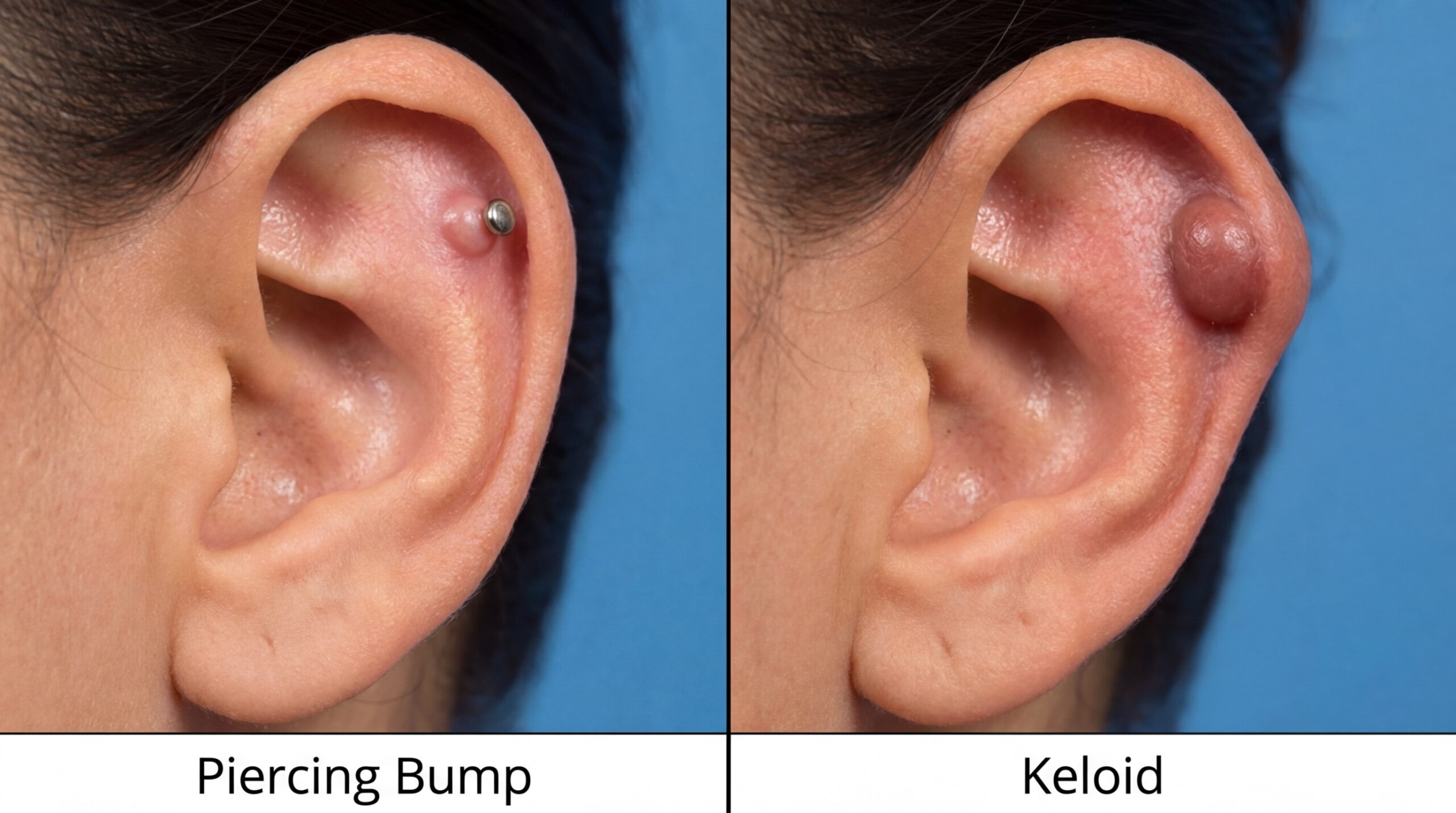
Self-Diagnosis Checklist — Which Do You Have?
Go through these questions. Your answers will point toward the likely type of bump:
When did it appear? — If within the first 4 weeks: strongly suggests irritation bump or hypertrophic scar. If it appeared months after piercing with no obvious cause: consider keloid.
Does it stay at the piercing hole? — If the bump is right at or directly adjacent to the piercing: likely a piercing bump. If it extends clearly past the hole into surrounding skin: keloid warning sign.
Has it stopped growing? — If the bump reached a certain size and stayed there: almost certainly a hypertrophic scar. If it is noticeably larger than it was a month ago and keeps growing: keloid concern.
Do you or anyone in your family have keloids? — Personal or family history of keloids is the strongest predictor. Studies show keloid formation has a strong genetic component — it runs in families.
Is it firm and rubbery? — A soft or slightly firm bump that you can slightly compress: likely hypertrophic. A hard, dense, rubbery growth that doesn't give: keloid sign. Keloids feel distinctly different — like firm scar tissue.
Did it respond to saline and jewelry adjustment? — If the bump improved or reduced after switching to titanium jewelry and cleaning consistently with saline: it was an irritation bump. Keloids do not respond to saline treatment.
Is it getting darker? — An irritation bump stays pink-red. A keloid progressively darkens — turning red, then purple or brown — especially on darker skin tones.
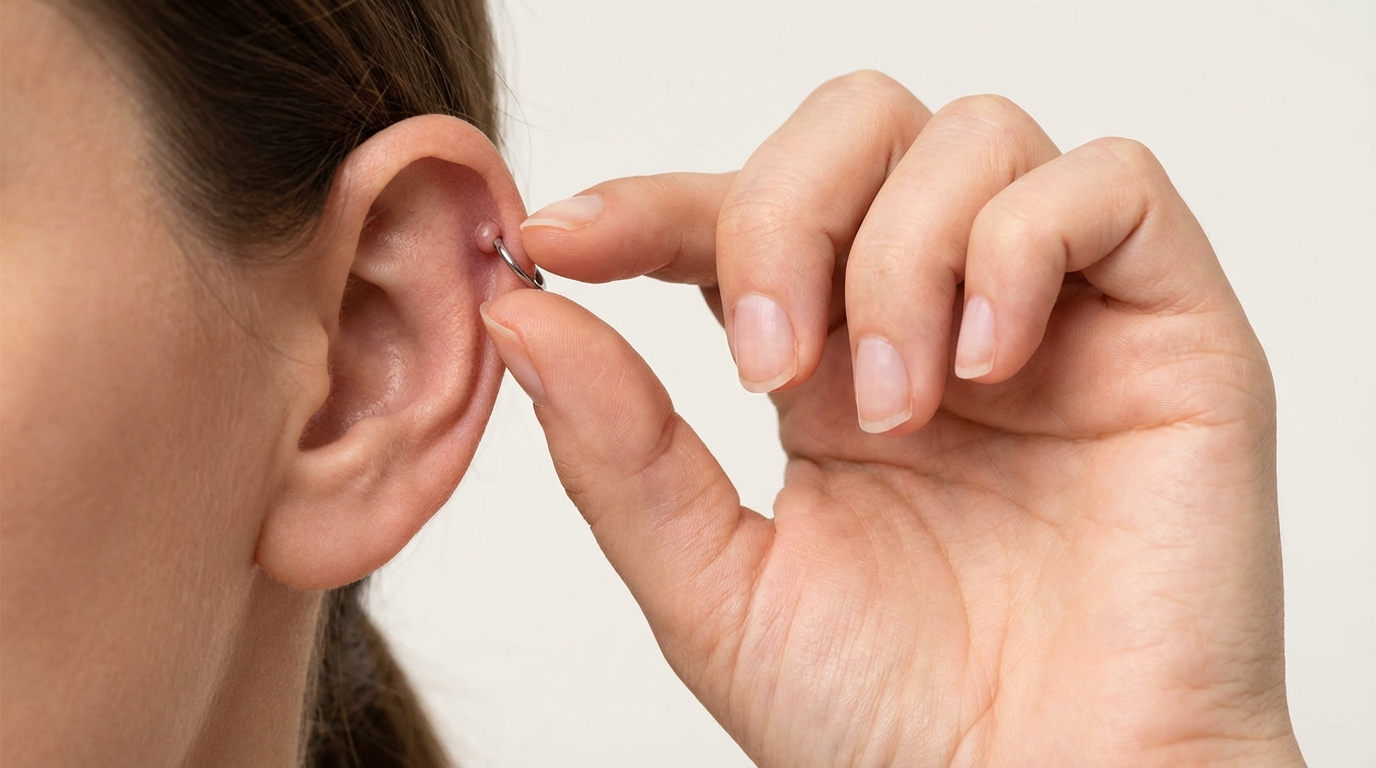
Scoring: If most of your answers point toward the green (bump) signs, treat it as a hypertrophic scar with consistent saline aftercare and a jewelry material/length check. If you have 2 or more of the red (keloid) warning signs — especially extending beyond the piercing site or continued growth — consult a dermatologist for a professional diagnosis.
Who Is at Risk for Keloids?
Keloids are not random — they occur in specific populations with identifiable risk factors. Research shows that keloid-prone individuals are 5 to 15 times more likely to develop keloid scars than the general population:
Family History
The strongest predictor. If a parent or sibling has keloids, your risk is significantly elevated. Keloid formation has a clear hereditary pattern, suggesting a genetic component in collagen regulation.
Darker Skin Tones
People of African, Hispanic, and Asian descent have significantly higher rates of keloid formation than those with lighter skin. This is related to melanin and differences in fibroblast activity across skin types.
Age 10 to 30
Keloids are most common during adolescence and young adulthood. They are uncommon in children under 10 and in people over 30, likely linked to hormonal activity during these years.
Previous Keloid History
If you have had a keloid anywhere on your body before — from acne, surgery, or a previous piercing — your risk of forming another keloid is very high.
Piercing Location
Certain areas are more prone to keloid formation: earlobes, upper chest, shoulders, and upper back. Cartilage piercings carry higher risk than lobe piercings in predisposed individuals.
Hormonal Factors
Keloids are slightly more common in females, possibly linked to hormonal influences on collagen production. Keloids have also been observed to grow more during pregnancy.
If you are in a high-risk group: Speak with a dermatologist BEFORE getting a piercing, especially in high-risk areas like the ear cartilage, chest, or upper back. They can advise on risk reduction strategies and whether certain piercing locations should be avoided entirely.
How Bumps Differ by Piercing Location
The presentation of both piercing bumps and keloids varies depending on where the piercing is located:
Earlobe
Most common location for true keloids. Earlobe keloids are often round or oval-shaped and can grow into large, dense masses on the front or back of the lobe. Irritation bumps here are usually small and respond quickly to saline treatment.
Helix / Cartilage
Cartilage piercings are the most common site for hypertrophic scars due to the reduced blood supply to cartilage tissue, which slows healing. True keloids on cartilage are less common than on lobes but do occur in predisposed individuals.
Nose (Nostril / Septum)
Nostril piercings frequently develop small bumps inside the nostril — almost always irritation bumps caused by bump-prone jewelry styles (nose screws, L-shapes). True keloids on the nose are less common. A flatback labret stud reduces bump formation.
Navel
Navel piercings frequently develop hypertrophic scars, especially when the piercing is in a high-movement area that receives constant friction from clothing. Keloids on the abdomen are more common in predisposed individuals due to the high tension of abdominal skin.
Nipple
Both irritation bumps and keloids are possible. Keloid risk is higher here due to skin tension. Hypertrophic scars on nipple piercings are often caused by wearing restrictive or rough-textured clothing during healing.
Lip / Labret / Oral
Bumps on oral piercings are usually irritation bumps caused by jewelry movement during eating or speaking. Keloids in the oral region are less common but can occur. Granulomas are more common here than elsewhere on the body.
Treatment Options — Piercing Bumps vs Keloids
Treating a Piercing Bump (At Home)
Saline Cleaning
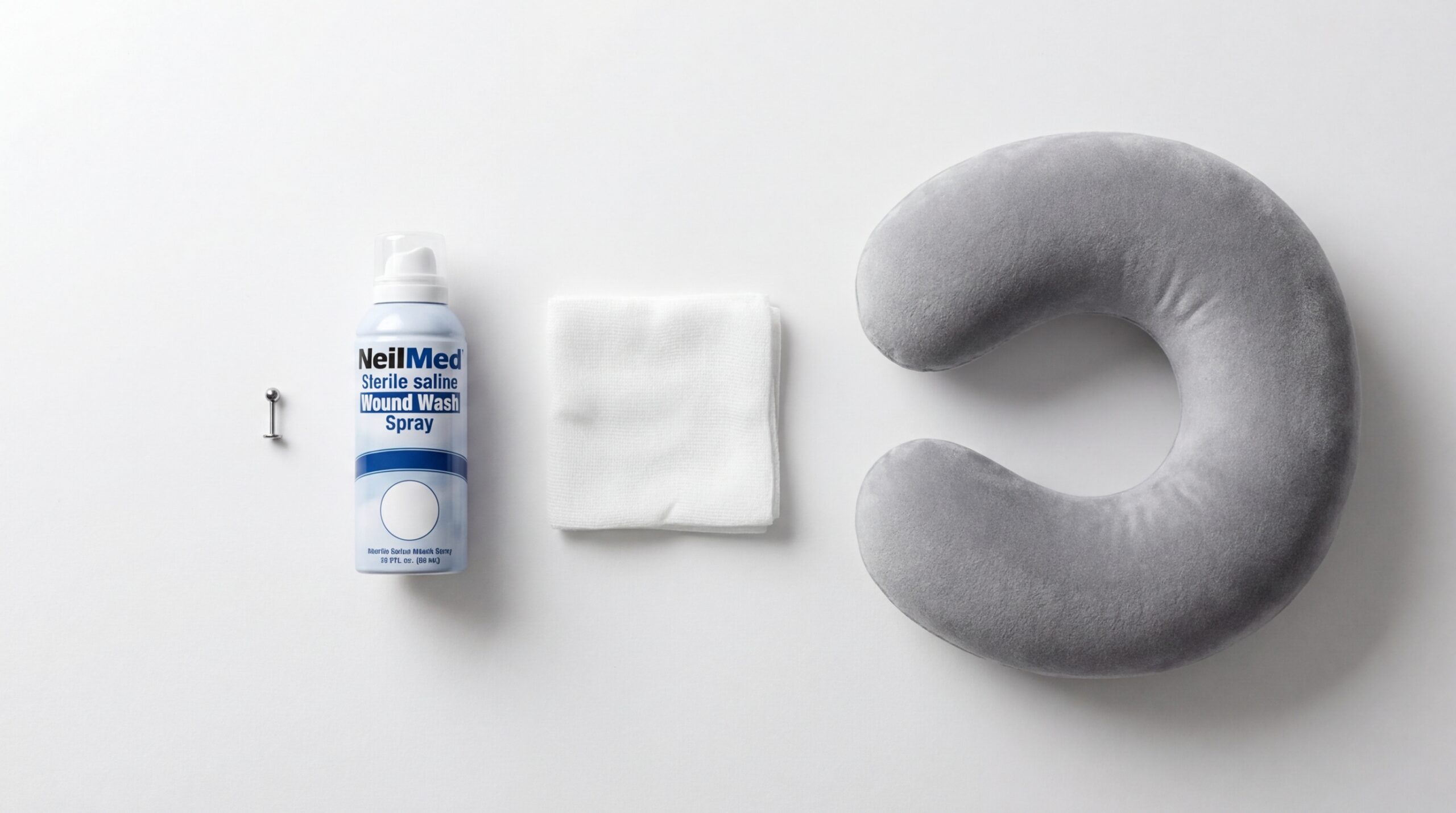
- Clean with sterile saline wound wash twice daily
- Never use hydrogen peroxide, alcohol, or tea tree oil
- Pat dry with clean disposable gauze after cleaning
- Most bumps improve within 4 to 8 weeks
Jewelry Check
- Switch to implant-grade titanium (ASTM F136) if not already
- Visit your piercer for downsizing if post is too long
- Never change jewelry yourself in a healing piercing
- Long posts create movement that causes bumps
Lifestyle Adjustments
- Use a travel pillow to avoid sleeping on piercing
- Keep hair products, makeup, and oils away from site
- Stop touching or twisting the jewelry
- Avoid swimming in pools, lakes, or oceans
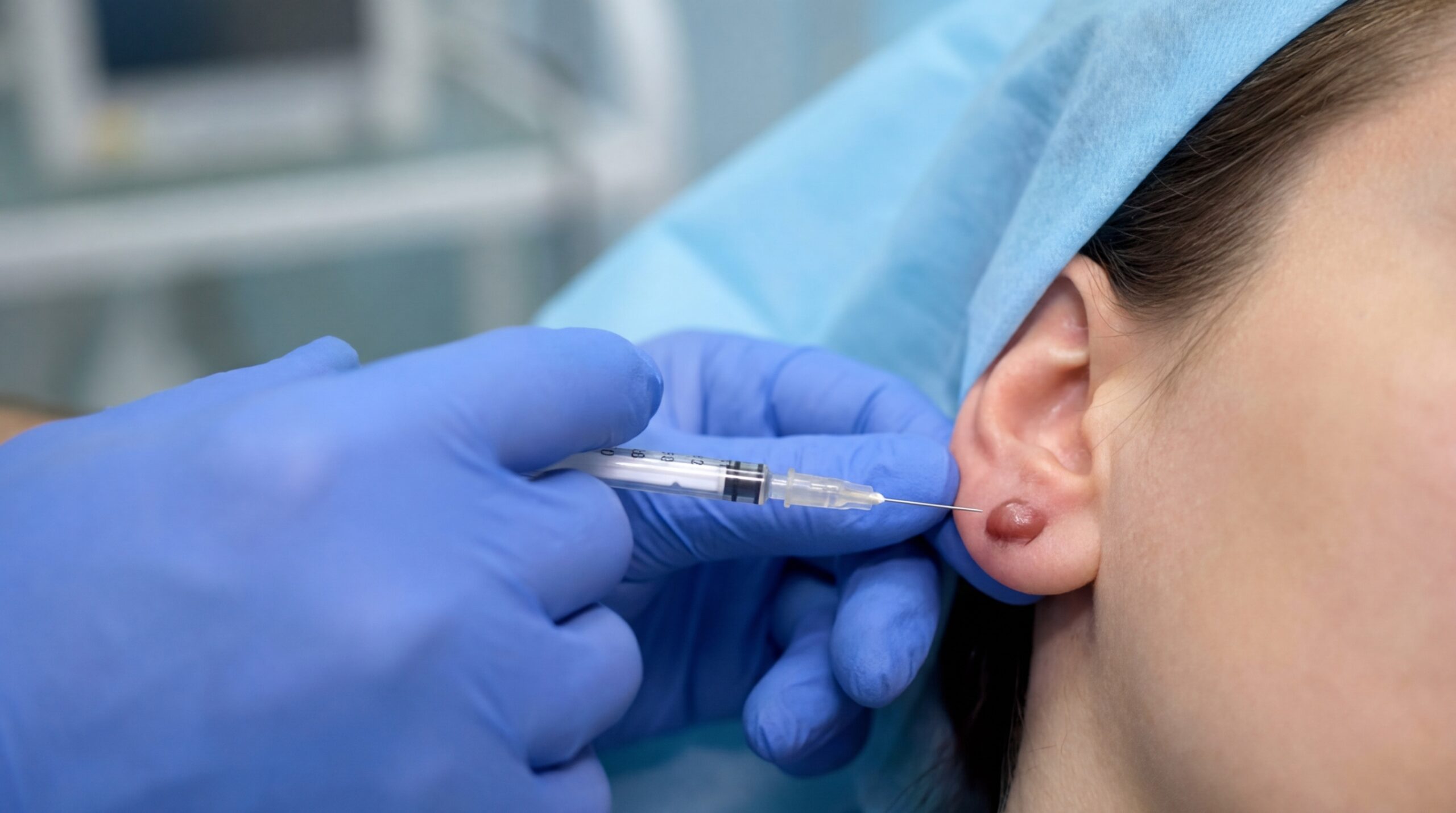
Treating a Keloid (Medical Treatment Required)
Steroid Injections
- Corticosteroid (triamcinolone) injected directly into keloid
- The most common first-line treatment
- Multiple sessions over several months
- Reduces size and improves symptoms
Cryotherapy
- Freezes the keloid tissue to reduce size
- Most effective for smaller keloids
- May not be suitable for darker skin tones due to pigmentation risk
Laser Therapy
- Flattens the keloid and fades discoloration
- Often combined with steroid injections
- Multiple sessions typically required
Surgical Removal
- For large keloids not responding to other treatments
- High recurrence risk without post-surgical treatment
- Usually followed by steroid injections or radiation
- Specialist plastic surgeon required
Important: Even with successful medical treatment, keloids have a high recurrence rate — they can regrow after removal. Combination treatments (surgery + steroid injections + sometimes radiation) provide the best outcomes. Never attempt to cut or remove a keloid at home.
Prevention Guide
While you cannot change your genetics, there are proven steps to reduce your risk of both piercing bumps and keloids:
Preventing Piercing Bumps
- Use implant-grade titanium or 14k solid gold jewelry from day one
- Return to your piercer at 4 to 6 weeks for downsizing
- Clean with sterile saline wound wash twice daily only
- Never touch or rotate jewelry — leave it completely still
- Use a travel pillow for cartilage piercings during sleep
- Choose an APP-certified professional piercer who uses implant-grade jewelry
Reducing Keloid Risk (Predisposed Individuals)
- Consult a dermatologist before getting any new piercings
- Avoid high-risk locations: earlobes, chest, upper back, shoulders
- Use only implant-grade titanium to minimize irritation triggers
- Seek early intervention at the first sign of abnormal growth
- Consider prophylactic steroid injections after new piercings (ask dermatologist)
- Monitor piercings closely for the first 12 months
When to See a Doctor
Most piercing bumps can be managed at home. But these situations warrant professional evaluation:
See a dermatologist if: Your bump keeps growing after 2 months — especially if it extends beyond the piercing hole. You have personal or family history of keloids. The bump has not improved after 4 to 8 weeks of correct saline care and jewelry adjustment. The growth is darkening, becoming painful, or itchy at night.
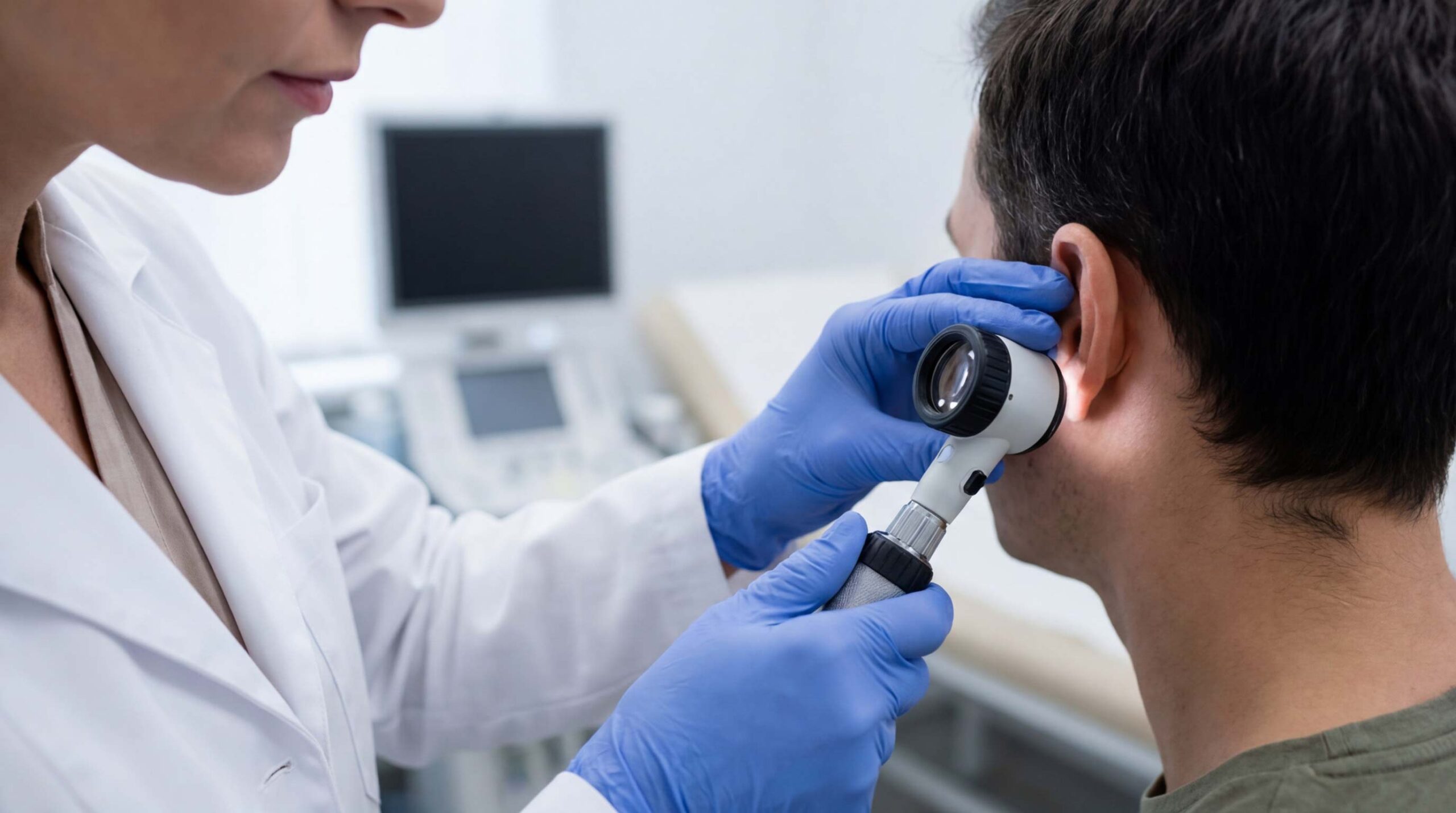
General Practitioner
For initial evaluation and basic infections. Can provide a referral to a dermatologist or plastic surgeon if keloid is suspected.
Dermatologist
Best for keloid diagnosis and non-surgical treatment: steroid injections, cryotherapy, and laser therapy. First specialist to see for most keloid cases.
Plastic Surgeon
Required for large keloids needing surgical removal. The best outcomes involve surgery followed by steroid injections and/or superficial radiation therapy.
Professional Piercer
Often the first stop for piercing bumps. An experienced APP-member piercer can quickly distinguish irritation bumps from more serious conditions and adjust jewelry accordingly.
Frequently Asked Questions
How do I know if my piercing bump is a keloid?
The key test: does the bump extend BEYOND the piercing hole into surrounding skin? A piercing bump (hypertrophic scar) appears within weeks, stays small and contained to the piercing site, and often improves with saline care. A keloid appears months after piercing (3 to 12 months), keeps growing, extends past the piercing hole, feels firm and rubbery, and does not improve with home treatment. If your bump is still growing after 2 months and spreading past the piercing site, consult a dermatologist.
Can a piercing bump turn into a keloid?
A normal irritation bump does not turn into a keloid. Keloids are a genetic condition — if you are not genetically predisposed, your bump will remain a hypertrophic scar and eventually improve. However, if you are keloid-prone, what starts as a bump may develop into a keloid over months. Keloid formation is determined by genetics, not by the bump itself or your aftercare.
What does a keloid look like on a piercing?
A keloid on a piercing looks like a firm, raised, rubbery growth that extends beyond the original piercing hole. It starts pinkish then turns red, purple, or brown over time. On earlobes, keloids are often round or oval-shaped and can become quite large. They may itch, feel tender, or cause a burning sensation. Unlike irritation bumps, keloids do not flatten or shrink over time and feel distinctly harder and denser.
How do I get rid of a piercing bump?
For a standard irritation bump: 1) Clean with sterile saline wound wash twice daily. 2) Switch to implant-grade titanium jewelry if you are not already using it. 3) Return to your piercer for downsizing if your post is too long. 4) Stop touching or sleeping on the piercing. 5) Stop using harsh products like hydrogen peroxide or tea tree oil. Most piercing bumps resolve within 4 to 8 weeks of correcting the irritating factor.
Who is most at risk for keloids from piercings?
People most at risk include: those with personal or family history of keloids (the strongest predictor), individuals with darker skin tones (African, Hispanic, and Asian descent show higher rates), people aged 10 to 30, and those who have had previous keloids anywhere on the body. Certain piercing locations also carry higher risk — earlobes, chest, and upper back piercings are most commonly affected in predisposed individuals.
What is the difference between a hypertrophic scar and a keloid?
Both are caused by excess collagen during healing but differ critically. A hypertrophic scar stays WITHIN the boundaries of the original wound, often improves over months, and responds to home care like saline cleaning. A keloid grows BEYOND the original wound boundaries, never shrinks on its own, is genetically determined, and requires medical treatment. The key test is boundary: does it stay within the piercing site (hypertrophic) or spread past it (keloid)?
When should I see a doctor about a piercing bump?
See a dermatologist if: the bump is still growing after 2 months, the bump extends beyond the piercing hole into surrounding skin, the bump is getting darker or changing color, you have personal or family history of keloids, the bump does not respond to 4 to 8 weeks of correct saline aftercare and jewelry adjustment, or you have increasing pain, tenderness, or itching at night. For large keloids, a plastic surgeon may be required.
Related Reading
Not sure what type of bump you have?
Describe it in the comments — we'll help you figure it out!