
Complete Guide · Nose Piercing
Nose Piercing:
The Complete Guide
Everything you need to know before, during, and after getting your nose pierced — all types, placements, pain levels, healing times, jewelry styles, aftercare, and costs in one complete guide.

Most popular piercing type globally after earlobe
Distinct nose piercing placements to choose from
Months for a nostril piercing to fully heal internally
How fast a nose piercing can close without jewelry
Average pain rating for a standard nostril piercing
Nose piercings are the second most popular body piercing in the world after the earlobe — practiced across cultures for thousands of years and now firmly mainstream. Whether you are drawn to a dainty nostril stud, a bold septum ring, or the increasingly popular high nostril placement, this guide covers everything you need to make the safest, most informed decision possible.
All Nose Piercing Types — Complete Reference
Nose piercing is not just the classic nostril stud. There are six distinct placements across and through the nose, each with different anatomy requirements, healing times, and jewelry options:
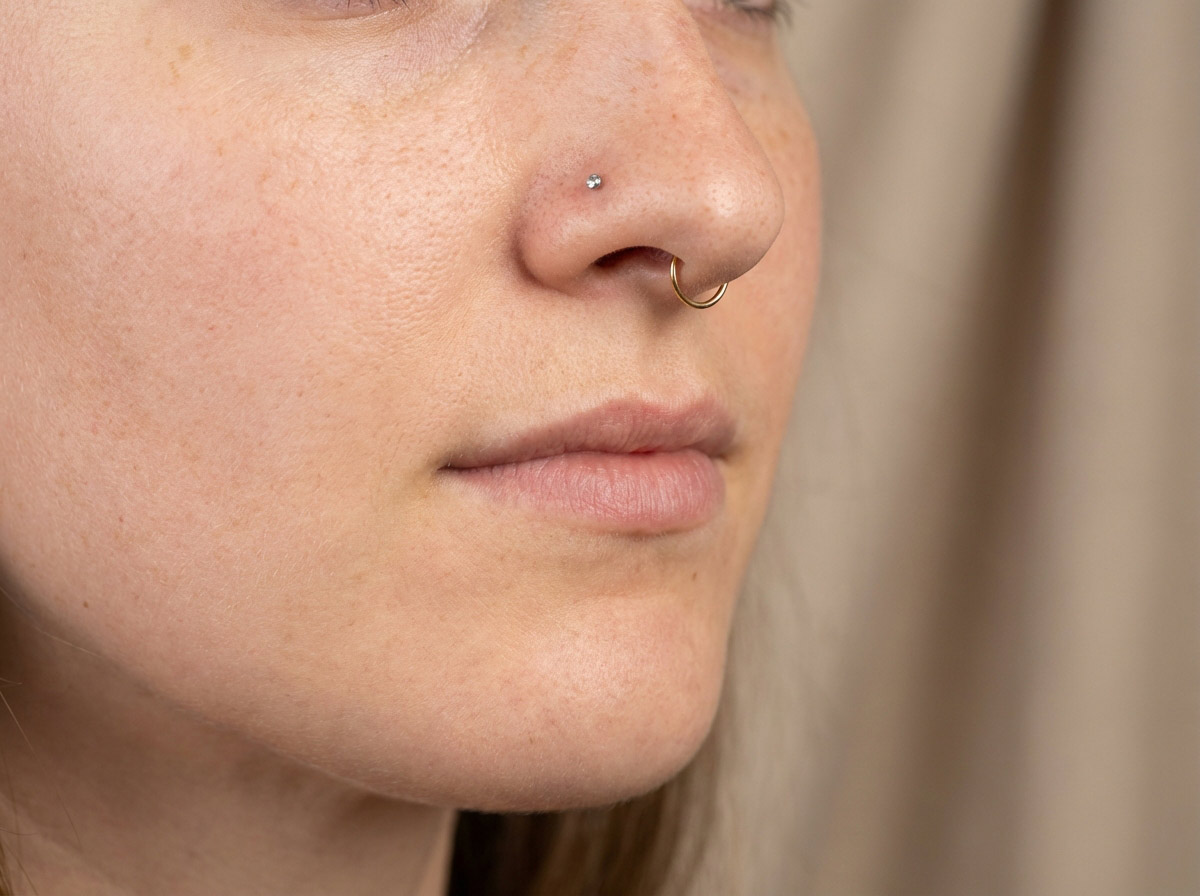
Nostril Piercing
The classic nose piercing — placed through the soft tissue on the curve of one nostril (the "wing"). The most popular nose piercing by a wide margin. Works on almost all nose anatomies. Can be placed on either side.
Septum Piercing
Passes through the soft tissue at the bottom of the nasal septum — the "sweet spot" between the cartilage and the lip. Not through the cartilage itself. Can be flipped up inside the nostril for work or school. One of the most discreet piercings available.
High Nostril Piercing
Placed higher up the nose than a standard nostril — on the nasal bone rather than the soft alar tissue. More painful and slower to heal than the standard nostril, but creates a distinct, unique look. Anatomy-dependent.
Bridge Piercing
A surface piercing across the bridge of the nose between the eyes. Does not pierce through the nasal bone — it passes through a pinch of skin only. Higher rejection risk than most piercings. Requires good surface anatomy for success.
Rhino Piercing
A vertical surface piercing through the tip of the nose — entering underneath the nose and exiting through the top. Extremely anatomy-dependent. One of the more painful and complex nose piercings. Not widely available at all studios.
Nasallang / Austin Bar
The nasallang passes through both nostrils and the septum with a single straight barbell — three piercings in one. The Austin Bar passes through both sides of the nose tip. Both are rare, complex, and require a very experienced piercer.
Most people choose between two: the nostril (soft, classic, fast-healing) or the septum (discreet, can be hidden, faster healing). Both are excellent first nose piercings. High nostril and bridge are better as second or third piercings once you have experience with healing.
Which Side to Get Your Nose Pierced On
One of the most Googled pre-piercing questions — and the answer is simpler than you think:
No Medical Rule
There is no anatomical reason to choose one side over the other. Both sides heal equally well. The choice is entirely personal — go with whichever side feels right for you.
The Selfie Side Tip
Many people choose the side of their face they prefer in photos — their "selfie side." If you have a dominant side you use in selfies and photos, piercing that nostril means you'll always see the jewelry.
Cultural Traditions
In Indian, South Asian, and some Middle Eastern traditions, the left nostril holds specific cultural or spiritual significance, including associations with femininity and Ayurvedic medicine. In Western contexts, left nostril remains the most common choice, though both are equally popular.
Let Your Piercer Assess
A good piercer will assess the curve and anatomy of both nostrils and let you know if one side has a more natural placement point. Asymmetrical nostrils are common — your piercer can help you choose the placement that will look most balanced.
Placement height matters more than side. Too low and the jewelry disappears into the curve of the nostril. Too high and it sits on cartilage where jewelry styles are more limited. Your piercer will mark the sweet spot — the natural curve of the alar crease — which allows the most jewelry versatility.
How Much Does a Nose Piercing Hurt?
Pain varies by piercing type and individual pain tolerance. One consistent truth: most people find it significantly less painful than they expected. The needle is through in under a second. Eyes may water reflexively — this is an automatic nose response, not a sign of extreme pain.
Here are realistic pain ratings based on professional piercer consensus and community experience:
Why eyes water during a nose piercing: The nasal tissue is rich in nerve endings connected to the eyes via the nasolacrimal duct. When the nose is pierced, involuntary eye-watering is a reflex response — not crying from pain. It happens to almost everyone and stops within seconds. It does not mean the piercing is more painful than expected.
Nose Piercing Healing Times
Nose piercings have a unique warning that sets them apart from ear piercings: they close remarkably fast. Even fully healed nostril piercings can close in hours without jewelry. The mucus membrane of the nose heals faster than any other piercing site.
Never remove nose jewelry unless you have a direct replacement ready.
| Piercing Type | Initial Healing | Full Healing | Jewelry Change OK? | Key Note |
|---|---|---|---|---|
| Nostril | 6–8 weeks (surface) | 4–6 months | After 2–4 months with piercer | Can close in minutes even when healed |
| Septum | 4–6 weeks | 2–3 months | After 6–8 weeks with piercer | Flipping up OK once surface heals |
| High Nostril | 3–4 months | 6–9 months | After 4–6 months with piercer | Cartilage — heals slower than soft nostril |
| Bridge | 3–6 months | 8–12 months | After 6+ months with piercer | Surface piercing — rejection risk |
| Rhino | 3–4 months | 6–9 months | After 4–6 months with piercer | Through cartilage tip — complex healing |
The fastest-closing piercing: A fresh nostril piercing can close in under 5 minutes without jewelry. Even piercings you have had for years can close in hours. If you need to remove your nose ring (medical procedure, sports, etc.) always have a retainer or replacement ready. Talk to your piercer about bioplast retainers for temporary removal.
Nose Piercing Jewelry Types — All Styles Explained
Nose jewelry has more variety than almost any other piercing type. Understanding the styles helps you choose the right starter jewelry and know what to look forward to once healed:
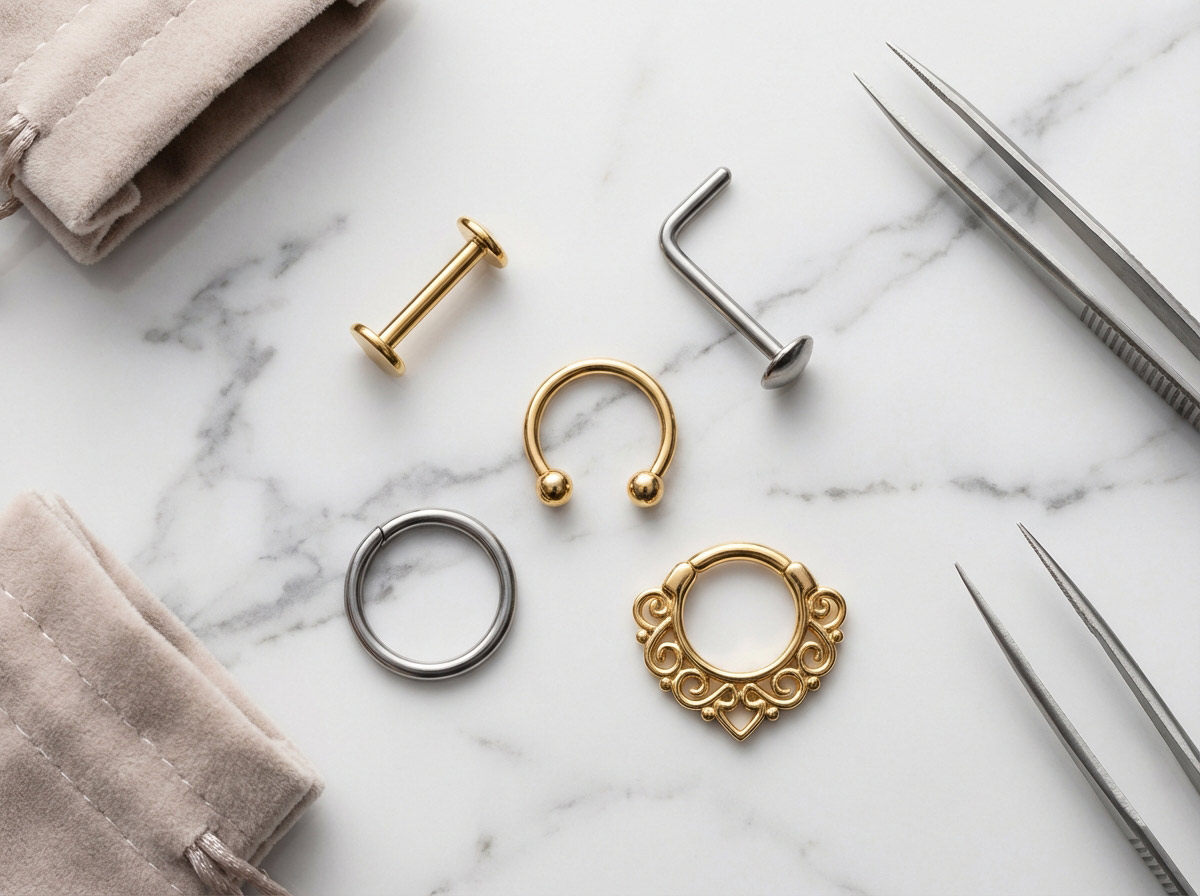
Flat-Back Labret Stud
The #1 recommended starter jewelry for nostril piercings. The flat disc back sits flush inside the nostril with no curved or sharp end pressing against the tissue. Internally threaded or threadless only. Significantly reduces irritation and healing time vs. other styles.
L-Shape Nose Stud
A post with an L-shaped bend that hooks inside the nostril to stay in place. Common in professional studios and widely available. More movement than a flat-back labret, but more stable than a nose screw. Better for healed piercings than initial ones.
Nose Screw / Corkscrew
A post with a twisted corkscrew end that rotates to stay in place. Very popular, widely sold. However, the twisted end creates pressure inside the nostril and is not ideal for initial piercings — best for healed piercings. Popular for DIY changes.
Seamless Hoop / Nose Ring
A circular ring worn through the nostril, sitting on the outside of the nose. One of the most fashion-forward nose jewelry styles. Should only be introduced after full healing — rings rotate during healing, disrupting the fistula. Available in gold, titanium, and steel.
Captive Bead Ring (CBR)
A circular ring with a removable bead closure. Classic look, widely used in nose and septum piercings. Needs pliers or ring-opening tools to change the bead — not suitable for daily removal. Best for fully healed piercings.
Circular Barbell (Horseshoe)
A horseshoe-shaped barbell with removable ball ends. The standard starter jewelry for septum piercings — can be flipped up inside the nostrils to hide completely. Once healed, switch ends for different decorative looks. Available in titanium, gold, and steel.
Septum Clicker
A hinged ring with a click-closure mechanism. One of the most popular healed septum jewelry styles — easy to open and close, available in countless designs. Also suitable for daith and other curved cartilage piercings. Not for initial piercings.
Nose Retainer / Bioplast
A clear or flesh-toned piece worn when you need to hide or temporarily remove a nose piercing — medical procedures, sports, work dress codes. Made from bioplast (flexible plastic). Must be used only in healed piercings. Keeps the channel open without visible jewelry.
Initial jewelry rule: For the first 2–4 months, only wear what your piercer installs — a flat-back labret stud or circular barbell in implant-grade titanium or solid gold. Do not attempt to change to a hoop, screw, or ring until fully healed. Changing too early is the #1 cause of prolonged healing and nose bumps.
Safe Jewelry Materials for Nose Piercings
The material your nose jewelry is made of directly affects healing. The nose is a sensitive area with high exposure to bacteria — only APP-approved materials should be used during healing:
| Material | Rating | Nickel-Free? | Notes |
|---|---|---|---|
| Implant-Grade Titanium (ASTM F136) | Best Choice | Yes | Lightest, hypoallergenic, ideal for sensitive skin — anodized colors are safe |
| 14k or 18k Solid Gold (nickel-free) | Premium Choice | Yes (if nickel-free) | Beautiful and biocompatible — verify it is explicitly nickel-free |
| Implant-Grade Steel (ASTM F138) | Good for Most | No (trace) | Safe for most people, but avoid if nickel-sensitive |
| Niobium | Good Option | Yes | Similar to titanium, can be anodized black |
| Sterling Silver | AVOID | No | Oxidizes in body fluids — causes permanent grey skin staining (argyria) |
| Gold-Plated | AVOID | No | Plating wears off quickly exposing nickel base metal |
| Acrylic / Unknown Metals | AVOID | Unknown | Porous, cannot be sterilized, causes irritation and infection risk |
See our full Jewelry Materials Guide for a complete breakdown of what to look for when shopping.
Step-by-Step: What Happens During a Nose Piercing
Knowing exactly what to expect removes the anxiety. Here is the full process at a professional studio:
Step 1 — Consultation
Your piercer discusses which nose piercing type suits your anatomy and goals. They assess your nostril shape to find the optimal placement height and check the septum tissue for a septum piercing. You discuss jewelry options and the full aftercare timeline.
Step 2 — Setup & Sterilization
Fresh gloves, sterile single-use needle opened from packaging, implant-grade jewelry removed from autoclave pouch. Your piercer cleans the area with a sterile wipe. Everything touching your skin is either single-use or autoclave-sterilized.
Step 3 — Marking Placement
A surgical pen marks the exact entry point on the outer nostril. You check the mark in a mirror from multiple angles. Always take time here — a good piercer adjusts the mark until you are completely happy with the position.
Step 4 — The Piercing
Your piercer positions a receiving tube or forceps inside or alongside the nostril to support the tissue. You take a deep breath in — on the exhale, the hollow needle passes through in under a second. Your eyes will water involuntarily — this is a normal reflex, not pain.
Step 5 — Jewelry Insertion
The starter jewelry threads through immediately after the needle. For a flat-back labret, the post is inserted through the hole and the flat back disc is positioned inside the nostril. The decorative end is secured on the outside. The area is cleaned and you check the placement.
Step 6 — Aftercare Briefing
You receive full written aftercare instructions. The piercer explains what is normal (mild swelling, watering eyes, clear discharge) vs. what is not (spreading redness, green pus, fever). They confirm your downsizing appointment date — typically 4–6 weeks out for nostrils.
Nose Piercing Aftercare — Complete Instructions
Nose piercing aftercare has one critical difference from ear piercings: you also need to clean the inside of the nostril. Mucus, debris, and bacteria accumulate inside — both entry and exit points need attention.
Daily Routine
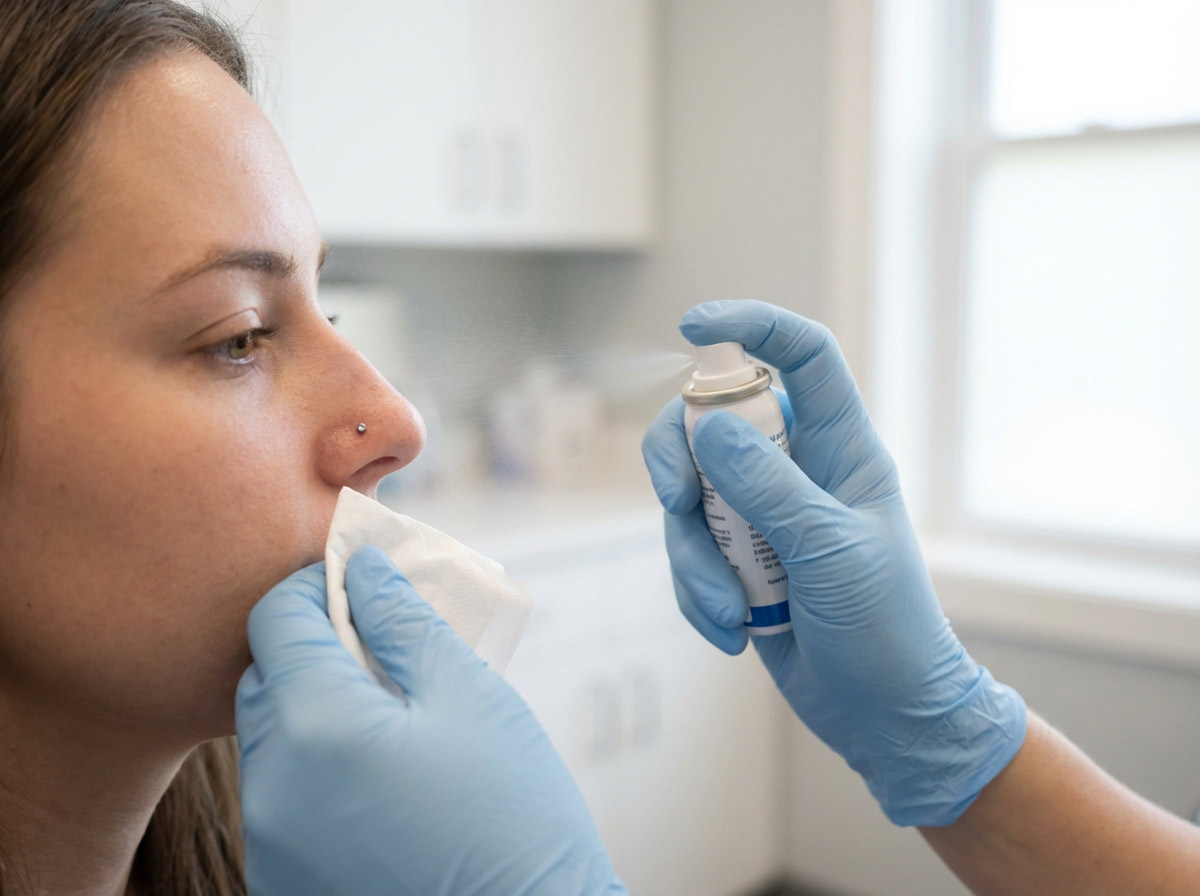
1 — Wash Hands
Always wash with soap and water before touching your piercing. Non-negotiable for a nose piercing — your hands touch your face frequently throughout the day.
2 — Spray Sterile Saline Twice Daily
Spray sterile saline wound wash (0.9% NaCl only) on the outside of the piercing. Also use a saline-soaked cotton swab or gauze to gently clean the inside of the nostril around the jewelry back. Let the saline sit for 30 seconds to soften any crusting. Do not rotate the jewelry.
3 — Rinse & Dry Gently
Rinse in the shower (let clean water flow over it) and pat dry with disposable gauze or paper towel. Cloth towels snag on nose jewelry. Leave completely alone until the next cleaning.
DO
- Clean inside and outside of the nostril twice daily
- Blow your nose gently — one nostril at a time
- Keep hair products, foundation, and makeup away
- Sleep with clean pillowcases — change 2x weekly
- Return at 4–6 weeks for downsizing
- Use a travel pillow if you sleep on your face
- Always have a replacement ready if jewelry needs removing
DON'T
- Never rotate or twist your jewelry — ever
- Don't use alcohol, hydrogen peroxide, or Bactine
- Don't blow your nose forcefully during early healing
- Don't swim in pools, hot tubs, or lakes
- Don't change jewelry before confirmed healing
- Don't remove jewelry without a replacement ready
- Don't touch unnecessarily — hands carry bacteria
Septum piercing tip: When flipping your septum jewelry up during healing, minimize how often you do it — every flip is a disruption to the healing tissue. Once the surface heals (usually 4–6 weeks), flipping up and down is generally fine. Clean both the visible part and the section inside the nostril.
For more detail see our Complete Aftercare Guide and Saline Solution Guide.
How Much Does a Nose Piercing Cost?
Prices vary significantly by studio type, location, and jewelry choice. Here is a realistic breakdown for the USA in 2025:
Mall / Chain Kiosk
$15–$35Basic nostril only. Includes starter stud. Gun piercing — not recommended for nose cartilage. Least safe option.
Pro Studio — Nostril
$30–$60Needle piercing + implant-grade titanium flatback. Best value for safety and outcome. Service fee may be separate from jewelry.
Pro Studio — Septum
$40–$70Needle + titanium or gold circular barbell. Includes consultation for septum tissue assessment.
High Nostril / Bridge
$45–$80More technical placement requires extra time and precision. Higher cost reflects the skill required.
High-End Studio + Gold
$80–$200+Solid 14k gold flatback or hoop jewelry. Premium studios, detailed consultation, professional lighting setup for placement.
Downsizing Visit
$15–$30Critical return visit at 4–6 weeks. Shortens starter post to fit healed anatomy. Prevents bumps and irritation.
UK / Europe: Professional studio nostril piercings typically cost £25–£55. Septum piercings £35–£65. High nostril £40–£70. Prices in Australia (AUD) are broadly similar to USD.
Nose Piercing Bump — Causes, Treatment & Prevention
A bump next to your nose piercing is one of the most common concerns — and one of the most misunderstood. In almost all cases, it is NOT a keloid. Here is everything you need to know:
Irritation Bump
The most common type. A soft, small bump at or directly beside the piercing hole caused by trauma, wrong jewelry, or poor aftercare. Responds to home treatment. Usually resolves in 4–8 weeks once the cause is removed.
Hypertrophic Scar
A firm raised bump from excess collagen. Stays contained to the piercing site. More persistent than an irritation bump but still responds to jewelry changes and saline care. Not a keloid.
True Keloid
A firm growth that grows beyond the piercing hole, appears months later, never shrinks, and is genetic. Uncommon. Requires dermatologist treatment. If your bump appeared within weeks and stays at the piercing site — it is almost certainly not a keloid.
How to Treat a Nose Piercing Bump
Step 1 — Switch to Implant-Grade Titanium
The most common cause of nose bumps is reactive jewelry. If you are not already using implant-grade titanium (ASTM F136) or solid 14k gold, visit your piercer and switch immediately. This single change resolves the majority of nose bumps.
Step 2 — Get Your Jewelry Downsized
Initial nose jewelry is longer than your final piece to allow for swelling. Once swelling reduces, the extra length causes the post to move and snag — directly causing bumps. Return to your piercer for a shorter post at 4–6 weeks.
Step 3 — Consistent Saline Cleaning
Clean with sterile saline wound wash twice daily — both outside and inside. Do not over-clean. Never use tea tree oil, hydrogen peroxide, or home remedies like aspirin paste — these can worsen the bump or cause chemical burns on nasal tissue.
Step 4 — Remove All Irritants
Stop touching the piercing. Stop sleeping on it. Keep makeup, foundation, and nose strips away from the area. If you wear glasses, check if the frame is pressing on the piercing site. Most nose bumps resolve completely within 4–8 weeks of removing the irritant.
For a full guide to identifying bump type and treatment: Piercing Bump vs Keloid — Complete Guide.
Double Nose Piercing — Trend Guide
The double nose piercing trend has been one of the fastest-growing piercing trends of 2024–2025. It means any combination of two nose piercings — and there are several distinct layouts to choose from:
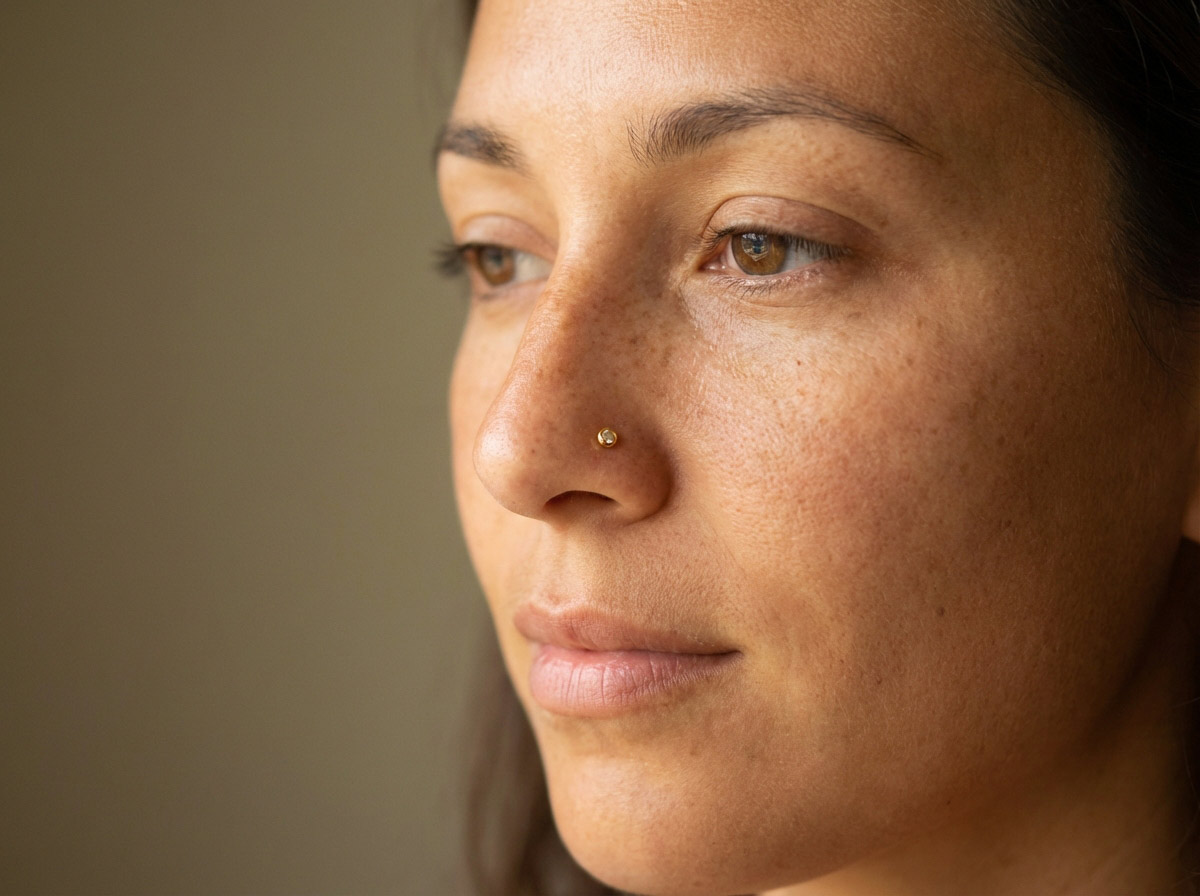
Both Nostrils
One stud on each side of the nose. The most balanced and symmetrical double nose look. Can be matching jewelry for a clean aesthetic or mismatched for a more editorial feel. Very popular in 2025.
Stacked Same Side
Two piercings on the same nostril, either vertically stacked or with one standard and one high nostril. Creates a more editorial, asymmetrical look. Requires both piercings to heal without touching each other.
Nostril + Septum
A nostril stud combined with a septum ring is arguably the most popular combination in 2025 — the delicate stud and the bold septum hoop balance each other well. Completely different jewelry styles that complement rather than compete.
High + Standard Nostril
A standard nostril piercing plus a high nostril on the same or opposite side. Creates a unique vertical arrangement up the nose. Both piercings need to heal independently — plan for 6–9 months of careful aftercare.
Can you get two nose piercings at once? Yes — many studios will pierce both nostrils on the same day. However, healing two piercings simultaneously doubles the aftercare demands. Most professional piercers recommend spacing them by at least 4–6 weeks if possible, especially for same-side placements where the piercings are close together.
Complications & Warning Signs
Nose piercings are generally safe when done professionally. Knowing what is normal vs. what needs attention helps you respond appropriately:
| Issue | What It Looks Like | Action |
|---|---|---|
| Normal Healing | Mild redness, clear/white crusties, watery eyes after piercing, slight tenderness improving daily | Continue aftercare — this is expected |
| Irritation Bump | Small soft bump at piercing site, caused by movement or wrong jewelry | Switch to titanium, downsize jewelry — see bump guide |
| Allergic Reaction | Persistent itching, rash-like redness, swelling | Switch to implant-grade titanium immediately |
| Minor Infection | Increasing tenderness, warmth, slightly thicker discharge | Improve aftercare — see doctor if not improving 3–5 days |
| Serious Infection | Spreading redness, green/yellow pus, fever, feeling unwell | See a doctor immediately |
| Piercing Rejection | Jewelry appears to be migrating, skin over piercing thinning | See your piercer immediately |
| Embedded Jewelry | Flat back disc or ball end disappearing into nose tissue | See piercer or doctor — do not attempt removal |
For the full infection guide see our Piercing Infection Signs Guide.
Frequently Asked Questions
Does a nose piercing hurt?
A nostril piercing is rated around 4/10 for pain — a brief sharp pinch as the hollow needle passes through the nostril tissue in under a second. Your eyes will water involuntarily due to the nasolacrimal nerve reflex — this is not crying, it is a normal automatic response. Mild throbbing follows for a few hours. Septum piercings through the soft columella tissue are actually slightly less painful at around 3/10. Most people are surprised by how quick and manageable it is.
How long does a nose piercing take to heal?
A standard nostril piercing takes 4–6 months for full internal healing, though you may be able to change jewelry at 2–4 months once the surface heals. Septum piercings heal faster at 2–3 months. High nostril piercings take 6–9 months. Most importantly: nose piercings close extremely fast — even fully healed piercings can close in hours without jewelry. Never remove nose jewelry without a replacement ready.
Can I change my nose ring after 2 weeks?
No — 2 weeks is far too early. The surface may look healed but the internal tissue is still actively forming. Changing jewelry at this stage causes significant trauma, introduces bacteria, and is the most common cause of nose piercing failure and bumps. Wait a minimum of 2–4 months before any jewelry change, and only after your professional piercer has confirmed sufficient healing.
What is the best nose ring for a new piercing?
A flat-back labret stud in implant-grade titanium (ASTM F136) is the best starter jewelry for most nostril piercings. The flat disc back sits flush inside the nostril with no curved or sharp end pressing against the tissue, which dramatically reduces irritation. For septum piercings, a titanium circular barbell (horseshoe) is the standard starter piece. Avoid L-shapes, nose screws, and rings for initial piercings.
Which side should I get my nose pierced on?
There is no medical or anatomical rule. In the USA, the left nostril is slightly more common. In Indian and South Asian tradition, the left nostril has specific cultural significance. Most people simply choose whichever side they prefer — their "selfie side," the side that feels more natural, or whichever nostril has a more symmetrical curve per their piercer's assessment. Both sides heal equally well.
Can I flip my septum piercing up to hide it?
Yes — a septum piercing with a circular barbell can be flipped up inside the nostrils to hide it completely. It is one of the most discreet piercing options available. During active healing, minimize how often you flip it to reduce irritation. Once fully healed (2–3 months), flipping it up and down daily is generally fine and will not cause damage.
How do I get rid of a nose piercing bump?
Most nose piercing bumps are irritation bumps or hypertrophic scars — not keloids. To treat: 1) Switch to implant-grade titanium flatback jewelry if not already using it. 2) Visit your piercer for a downsize if the post is still at the initial longer length. 3) Clean with sterile saline twice daily. 4) Stop touching or rotating the jewelry. 5) Remove all irritants (sleeping on the piercing, makeup near the site, glasses pressure). Most bumps resolve in 4–8 weeks.
How much does a nose piercing cost?
A professional studio nostril piercing costs $30–$60 including implant-grade starter jewelry. Septum piercings cost $40–$70. High nostril and bridge piercings run $45–$80 due to more technical placement. Mall kiosks charge $15–$35 but use gun piercing not suitable for nose cartilage. Always choose a needle-only professional studio. Factor in a downsizing appointment at 4–6 weeks ($15–$30).
Have a question about your nose piercing?
Drop it in the comments — we answer every one!