
Complete Guide · Septum Piercing
Septum Piercing:
The Complete Guide
Everything about septum piercings — the sweet spot, pain level, fast healing, how to hide it, best jewelry, aftercare, deviated septum advice, and why this is one of the most versatile piercings you can get.
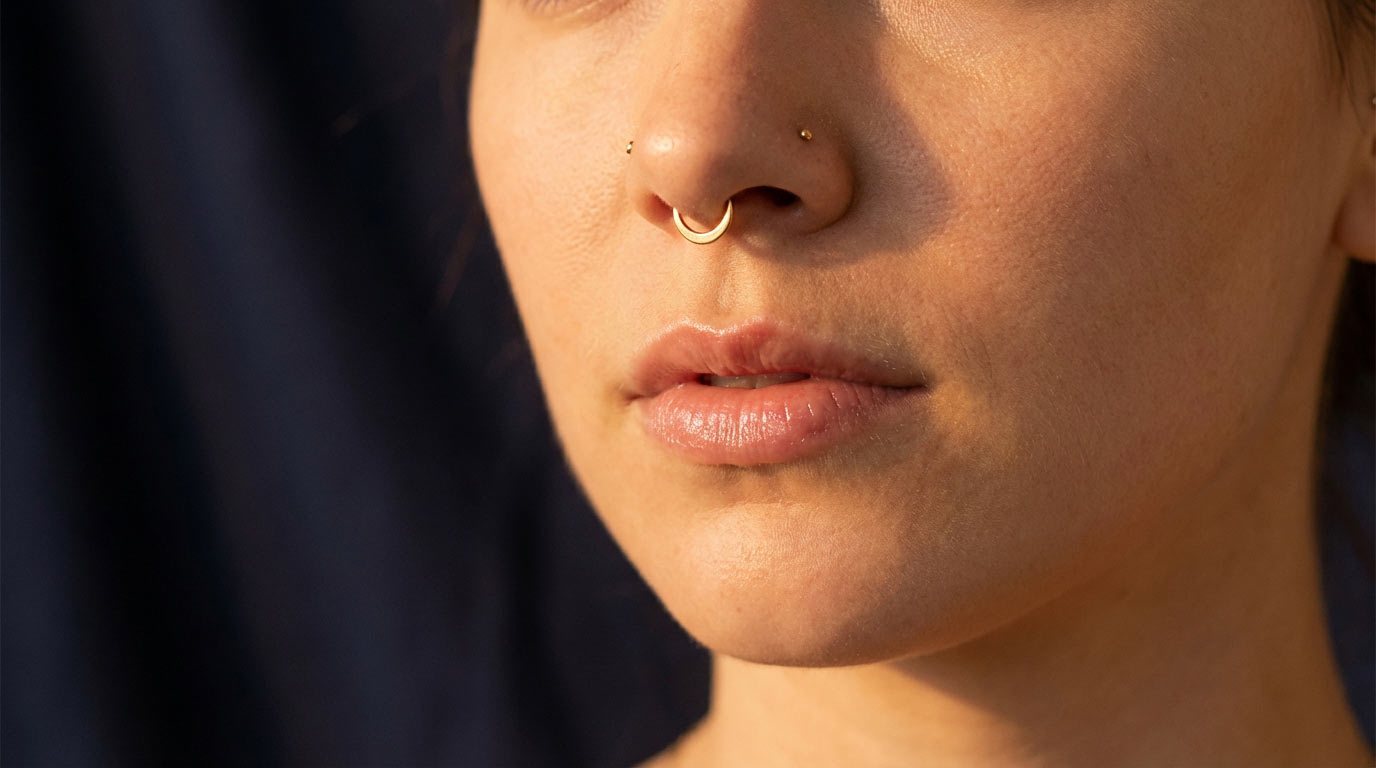
Pain rating when correctly placed through sweet spot
Average surface healing time — one of the fastest face piercings
Hideable — flip jewelry up inside nostrils for any occasion
Most versatile facial piercing for jewelry variety
Standard gauge — most septum jewelry sold at this size
The septum piercing sits in a unique category: it looks bold when shown and disappears completely when hidden. It heals faster than almost any other facial piercing. It works on most anatomies. And it remains one of the most searched, most requested, and most versatile piercings in the world.
What Is a Septum Piercing?
A septum piercing passes through the nasal septum — the dividing wall between the two nostrils. But critically, it does not pierce through the cartilage of the septum itself. A correctly placed septum piercing goes through a small strip of soft tissue called the “sweet spot” — a thin membrane just below the nasal cartilage at the base of the septum.
This anatomy is the key to everything about the septum piercing. Piercing through soft tissue rather than cartilage means significantly less pain, dramatically faster healing, and a much lower risk of the complications associated with cartilage piercings. When done correctly, the septum is one of the fastest-healing and least painful facial piercings available.
The other defining characteristic of the septum piercing is its complete concealment. A circular barbell (horseshoe) can be flipped upward inside the nostrils so the piercing is entirely invisible from the front — making it uniquely suitable for people whose work, school, or family environment does not accept visible facial piercings.
New to facial piercings? The septum is one of the best first facial piercings alongside the nostril. Low pain, fast healing, and completely hideable. Start with our Piercing Aftercare Guide to understand what the healing period requires before you book.
The Septum Sweet Spot — What It Is and Why It Matters
The sweet spot is the single most important concept in septum piercing. Understanding it explains everything about why septum piercings can be nearly painless with the right piercer — or very painful with the wrong one.
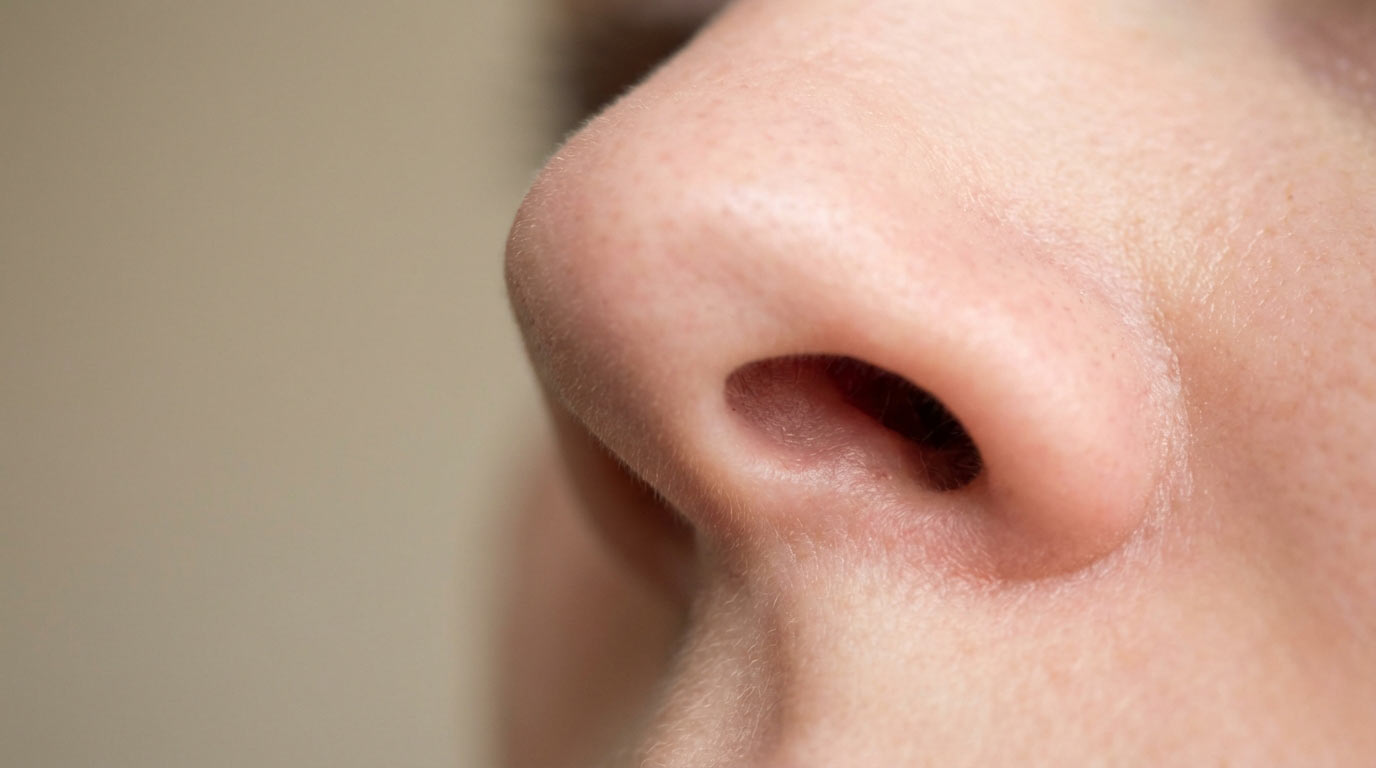
Where Is It?
The sweet spot is the thin strip of soft tissue between the tip of your nasal cartilage and the bottom of your septum. It sits just inside the nostrils at the base of the nose. It is soft, pliable tissue — not cartilage. You can feel it by gently pressing inward at the base of your nose between the nostrils.
Why Does It Matter?
Soft tissue has better blood supply and fewer nerve endings than cartilage. Piercing through the sweet spot means: significantly less pain (3–4/10 vs 5–7/10 through cartilage), much faster healing (6–8 weeks vs 6–12 months for cartilage), and lower risk of complications. Sweet spot placement is the mark of an experienced septum piercer.
What Your Piercer Does
Before piercing, your piercer will insert clean fingers into your nostrils to locate the sweet spot, assess its size, check for deviations, and plan the piercing angle. This assessment takes 30–60 seconds and is entirely normal — it is the difference between a painless sweet spot piercing and an accidental cartilage piercing.
Accidental cartilage piercing: If a piercer does not assess your anatomy and pierces through the cartilage instead of the sweet spot, it will hurt significantly more, take 6–12 months to heal, and carry all the complication risks of cartilage piercings. This is the most common cause of bad septum experiences — not the piercing type itself. Always choose an experienced needle-only piercer.
Septum Piercing Pros & Cons
The septum is genuinely one of the most well-rounded facial piercings. Here is an honest breakdown:
PROS
- Completely hideable — flip jewelry up inside nostrils for work, school, family
- One of the fastest-healing face piercings — 6–8 weeks surface healing
- Low pain when correctly placed through sweet spot — 3–4/10
- Huge jewelry variety — from subtle retainers to ornate clickers
- Works on most anatomies including deviated septums
- Flatters all face shapes — visually shortens longer noses, widens narrow faces
- No visible scar if retired — placement is inside the nose
CONS
- Anatomy-dependent — deviated septums require experienced piercers
- Sensitive during colds, allergies, and nose blowing throughout healing
- Flipping too frequently during healing can cause irritation bumps
- Larger clickers can feel heavy — some people find them uncomfortable daily
- Incorrect placement through cartilage significantly increases pain and healing
- Some workplaces may still notice even flipped jewelry up close
Does a Septum Piercing Hurt?
The septum has a reputation for being painful — but this is almost entirely based on accounts of incorrectly placed piercings through cartilage. Through the sweet spot, it is one of the least painful facial piercings:
What to expect: Through the sweet spot, most people describe a sharp pressure that makes the eyes water involuntarily — a natural reflex from proximity to the tear ducts, not a sign of extreme pain. The whole procedure takes under 10 seconds. Mild tenderness when touched for 1–2 weeks is normal.
Septum Piercing Healing Times
The septum is one of the fastest-healing piercings on the face because the sweet spot is soft vascularized tissue with good blood supply — unlike cartilage which heals 2–4 times slower:
| Milestone | Timeline | Action |
|---|---|---|
| Initial soreness resolves | 1–2 weeks | Continue saline twice daily, avoid touching |
| Crusties reduce significantly | 3–4 weeks | Continue aftercare, gentle flipping only if needed |
| Surface feels healed | 6–8 weeks | Can begin flipping carefully — continue aftercare |
| Safe to change jewelry | 8–12 weeks | Piercer confirms healing — swap to clicker or new style |
| Full internal healing | 3–6 months | Fully healed — all jewelry styles safe |
Healing during cold & allergy season: Nose blowing, sneezing, and increased mucus production all apply pressure to a healing septum. Blow your nose gently and avoid blowing hard on the pierced side. Saline nasal rinses can help reduce mucus buildup without irritating the piercing. Do not use medicated nasal sprays — the chemicals can irritate healing tissue.
How to Hide Your Septum Piercing
The septum's hideability is its defining feature. Here are all three methods from most to least visible:
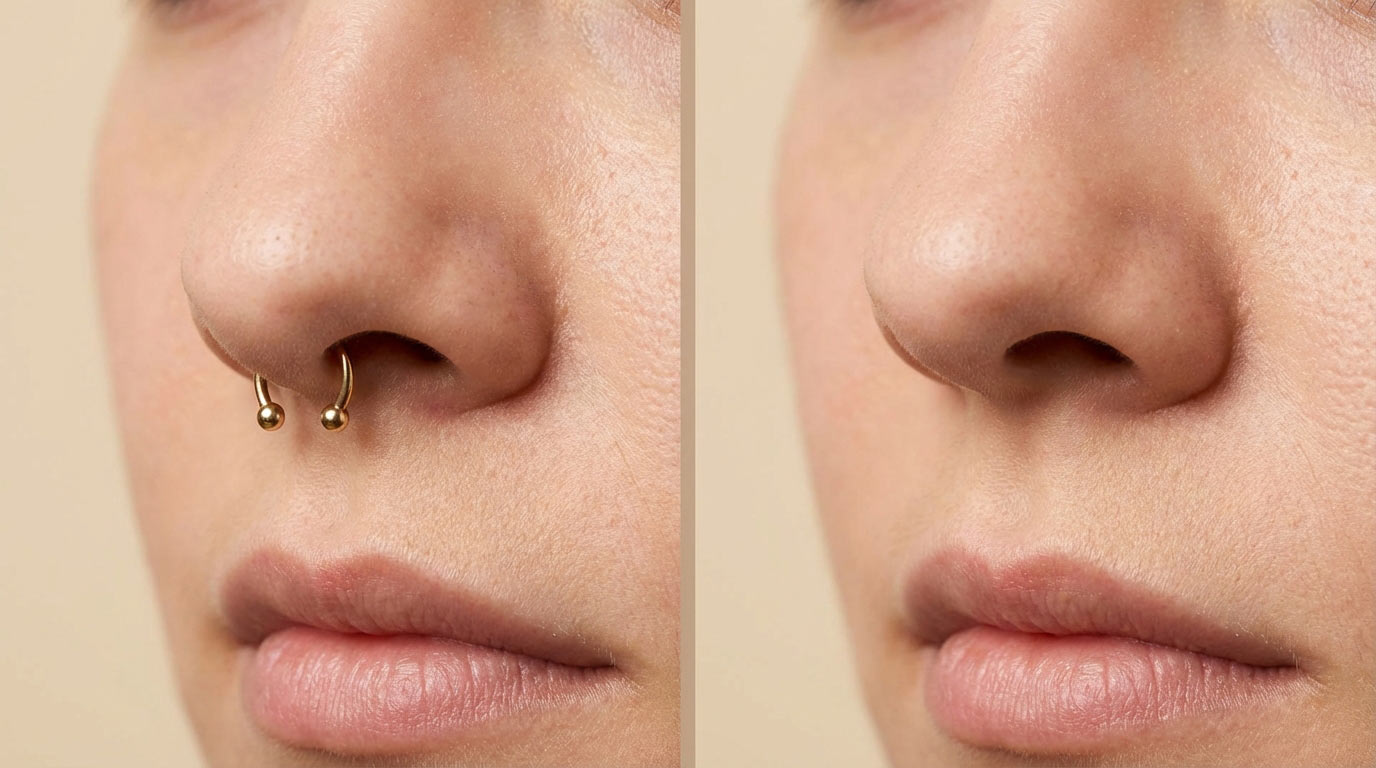
Method 1 — Flip Up a Horseshoe Barbell
1 — Wash Your Hands
Always before touching a healing septum. Bacteria from your fingers is the #1 cause of septum infections.
2 — Tilt Head Back Slightly
Looking slightly upward relaxes the nasal tissue and gives you better visibility inside the nostril.
3 — Grip the Bottom
Hold the U-shaped bottom of the circular barbell between two fingers. Do not grip the balls at the ends.
4 — Rotate Upward Into Nostrils
Gently rotate the jewelry upward until both ball ends disappear inside the nostrils. The U-shape should now point upward inside your nose, completely hidden from the front.
5 — Check in a Mirror
Tilt your head back and look up — you should see nothing. During healing: flip as rarely as possible. Every rotation disrupts the healing fistula.
Method 2 — Use a Retainer
A septum retainer is a U-shaped piece of clear, flesh-colored, or transparent jewelry designed to sit inside the nostrils with no visible external part. Bioflex or clear acrylic retainers are available in 16g. Best for MRI scans, surgery, high-visibility environments, or extended hiding.
During healing: Limit flipping to once or twice per day maximum. Every flip moves the jewelry through the healing tissue channel. The sweet spot heals fast but is still fragile for the first 6–8 weeks. Flipping repeatedly is one of the causes of healing setbacks and septum bumps.
Best Jewelry for a Septum Piercing
Septum jewelry has more variety than almost any other piercing. Here is the full breakdown by style and healing stage:
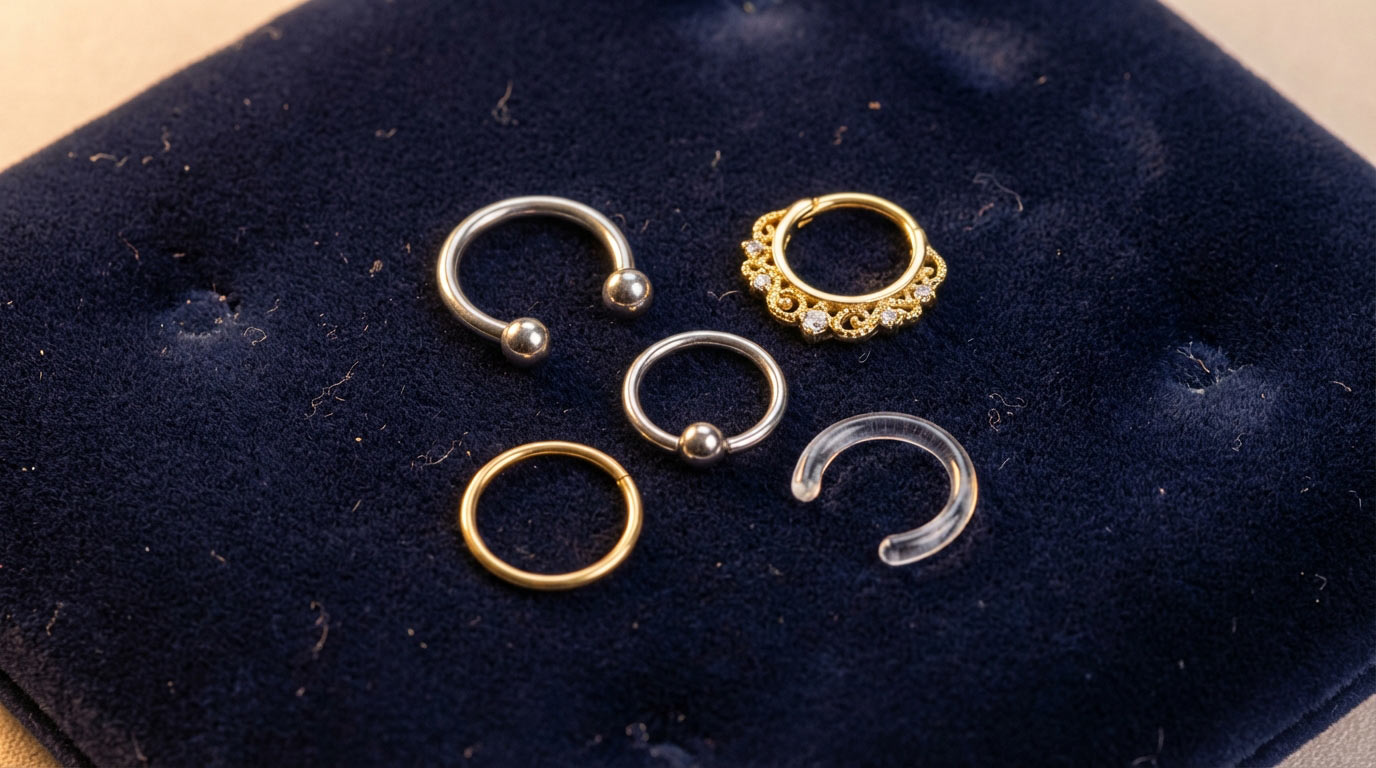
Circular Barbell (Horseshoe)
The #1 starter jewelry for septum piercings. U-shaped barbell with two ball ends. Can be widened or tightened for fit. Flippable for concealment. Easy to clean. Available in titanium, steel, and gold.
Clicker Ring (Hinged)
A hinged ring with a click-lock closure. The most popular healed septum style. Easy to insert and remove. Available in plain titanium through to elaborate ornate gold designs. Not for initial healing — the hinge can rotate through the fistula.
Seamless Hoop
A continuous ring that opens by bending. Clean, minimalist, subtle. Must be fitted by a piercer — bending repeatedly weakens the metal. Best for those who want a simple look without the click mechanism.
Captive Bead Ring (CBR)
A ring held closed by a removable bead that snaps into tension. Good starter option alongside horseshoes. Requires ball-capture tool or piercer assistance to open safely.
Retainer
U-shaped transparent or flesh-colored piece designed to sit entirely inside the nostrils. Maximum concealment — for work, MRI, surgery, sports. Not recommended for initial healing as a permanent piece.
Decorative Clicker
Large ornate clicker rings with multiple stones, spikes, chains, crescent moons, and geometric shapes. Fully healed piercings only. Available in titanium, 14k gold, and sterling silver (healed only).
| Material | Safe for New? | Notes |
|---|---|---|
| Implant-Grade Titanium (ASTM F136) | ✅ Best choice | Nickel-free, lightest, hypoallergenic |
| Implant-Grade Steel (ASTM F138) | ✅ Good choice | Widely used, heavier than titanium, small nickel content |
| 14k or 18k Solid Gold (nickel-free) | ✅ Premium choice | Beautiful and biocompatible. Verify nickel-free |
| Bioflex / PTFE Plastic | ⚠️ Retainers only | For concealment retainers. Not long-term jewelry |
| Sterling Silver | ⚠️ Healed only, short-term | Oxidizes in body fluids — causes grey/black staining |
| Plated or Mystery Metal | ❌ Never | Plating wears off exposing base metal. Causes reactions |
Safe materials: Implant-grade titanium (ASTM F136) or steel (ASTM F138) for initial healing. Solid 14k/18k gold (nickel-free) once healed. Never sterling silver, plated metals, or unknown alloys during healing. See our Best Jewelry for New Piercings guide for the full materials breakdown.
Septum Piercing Aftercare
Septum aftercare is simpler than cartilage aftercare but has unique challenges: you cannot see the piercing easily, and your nose is constantly exposed to mucus, allergens, and daily touch. The LITHA method — Leave It The Hell Alone — is the most recommended approach:
1 — Wash Hands
Before every touch. Your septum is directly in the path of your hands constantly throughout the day — and during a cold.
2 — Sterile Saline Twice Daily
Spray 0.9% NaCl sterile wound wash into each nostril entrance and on the external jewelry twice per day. Let sit 30 seconds. See our Saline Solution Guide for the best products.
3 — Rinse in Shower
Let warm (not hot) shower water run over the piercing daily. This softens crusties naturally and is the gentlest way to clean the piercing channel from both directions.
4 — Leave It Alone
No rotating, no flipping unnecessarily, no touching, no products near the septum. The sweet spot heals fast when left alone and slows significantly when disturbed.
SEPTUM DO
- Blow nose gently using soft tissue during healing
- Use saline nasal rinse to manage mucus without disturbing the piercing
- Sleep on your back if possible during the first few weeks
- Keep makeup, foundation, and skincare away from nostrils
- Visit your piercer if you notice spreading redness or worsening pain
- Limit flipping to once daily maximum during initial healing
SEPTUM DON'T
- Never use hydrogen peroxide, alcohol, or tea tree oil
- Don't blow your nose hard — apply gentle pressure only
- Don't rotate or flip repeatedly during healing
- Don't swim in pools, lakes, or hot tubs during healing
- Don't change jewelry before the 8–12 week mark
- Don't use medicated nasal sprays near the piercing
Deviated Septum & Anatomy Considerations
The most common anatomy concern people have before getting a septum piercing — and the answer is largely reassuring:
Mild Deviation
Most people have some degree of septal deviation — perfectly straight septums are actually rare. Mild deviation usually has no impact on septum piercing. Your piercer will locate the sweet spot on the flatter side and adjust the angle for straight-looking jewelry.
Moderate Deviation
Moderate deviations require an experienced piercer who can work around the deviation angle. The jewelry may appear to sit slightly off-center when worn down, but can look natural with the right jewelry style. A horseshoe tends to work better than a clicker in these cases.
Post-Septoplasty
If you have had nasal surgery (septoplasty), wait at least 12 months post-surgery before piercing and consult your surgeon first. Surgery alters the internal anatomy, including the location and quality of the sweet spot tissue, and can leave scar tissue that affects placement.
The anatomy assessment: Any experienced septum piercer will assess your anatomy before agreeing to pierce. If your deviation is too severe for safe placement, a good piercer will tell you honestly rather than pierce through cartilage and charge you anyway.
Septum Piercing Cost Breakdown
The septum is one of the more affordable facial piercings because the procedure is relatively straightforward for an experienced piercer:
| Venue | Price Range | Includes | Notes |
|---|---|---|---|
| Budget / Mall Kiosk | $15–$30 | Basic jewelry | Often gun piercers — never for septum |
| Professional Studio — Titanium | $40–$80 | Needle + titanium horseshoe | Recommended standard |
| Professional Studio — Gold | $80–$150 | Needle + 14k gold horseshoe/clicker | Premium option |
| High-End / Specialist Studio | $100–$200 | Full anatomy assessment + premium jewelry | Best for complex anatomies |
| Jewelry Change (clicker) | $20–$40 | New clicker/ring fitted by piercer | First change recommended in-studio |
Budgeting tip: Unlike cartilage piercings, septum piercings do not require a separate downsizing appointment — saving you $15–$30. However, your first jewelry change to a clicker is best done in-studio, especially for deviations where correct angle matters.
Septum Styling & Trends
The septum remains one of the most trend-driven piercings. Here are the looks dominating right now:
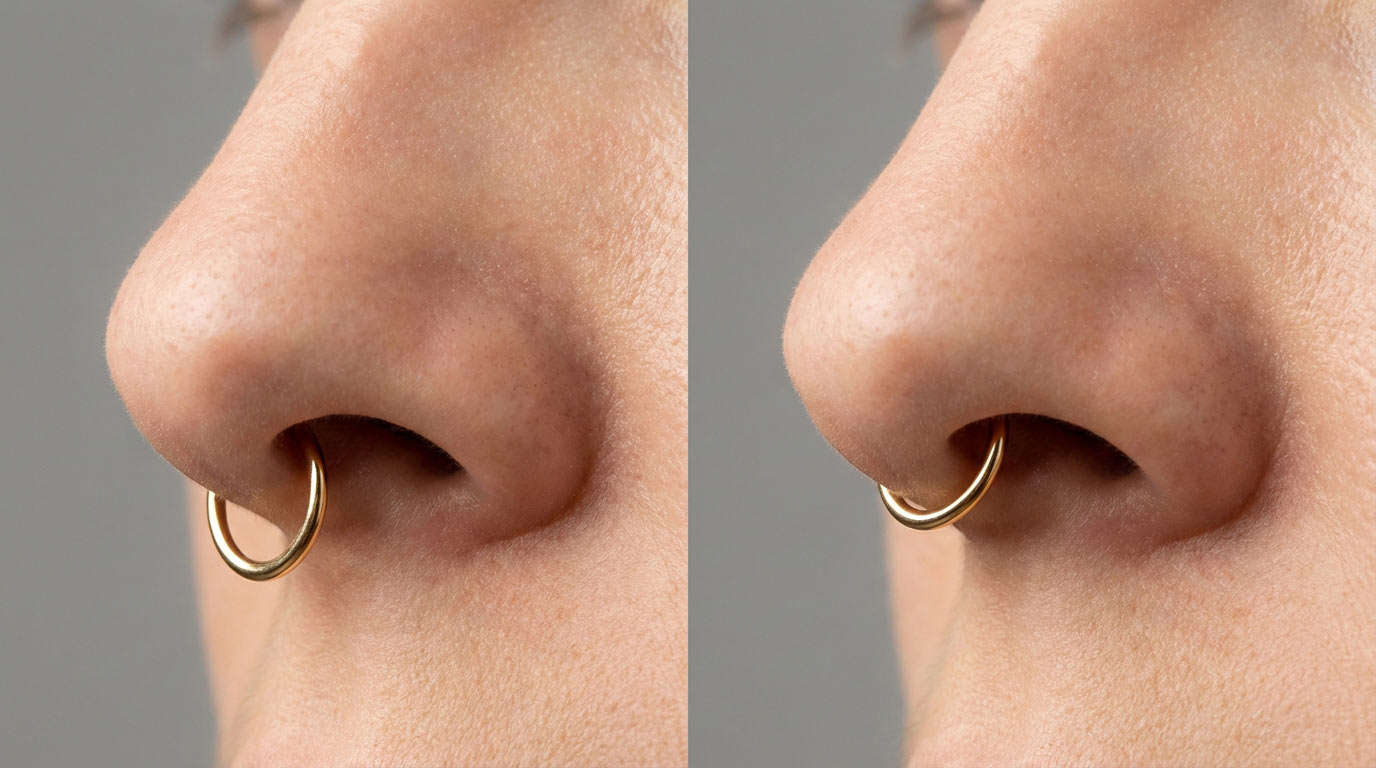
Dainty Gold Clicker
Thin 14k gold segment ring or simple clicker — the “quiet luxury” septum. Minimal, elegant, and versatile with every outfit.
Crescent & Moon Shapes
Crescent moon clickers are the #1 most-saved septum style on Pinterest. Celestial aesthetic trending strongly across all piercings.
Ornate Statement Clickers
Large decorative clickers with multiple CZ stones, spikes, or geometric designs — worn for events and creative looks.
Seamless Hoop
The most classic septum style — thin seamless titanium or gold hoop. Clean, subtle, endlessly wearable.
Septum + Nostril Combo
Pairing a septum ring with matching nostril studs on one or both sides. The curated nose look — coordinates with curated ear.
Opal & Pastel Stones
Clickers featuring opal, pastel CZ, or iridescent stones. Pairs beautifully with rose gold titanium.
Frequently Asked Questions
Does a septum piercing hurt?
Through the sweet spot, a septum piercing rates 3–4/10 for pain — one of the least painful facial piercings. The sweet spot has fewer nerve endings than cartilage. Most people describe a sharp pressure that makes the eyes water briefly (a natural reflex, not extreme pain), followed by mild soreness for a few days. An incorrectly placed septum through cartilage rates 6–7/10 — which is why choosing an experienced piercer is critical.
How long does a septum piercing take to heal?
A septum piercing heals faster than most facial piercings — 6–8 weeks for surface healing and 3–6 months for full internal healing. The sweet spot is soft vascularized tissue rather than cartilage. Do not judge healing by surface appearance — have your piercer confirm full healing before changing jewelry.
Can you hide a septum piercing?
Yes — the septum is the most hideable facial piercing. A horseshoe barbell can be rotated upward so both ends disappear inside the nostrils — completely invisible from the front. Retainer jewelry provides additional concealment. Limit flipping during healing to once daily maximum.
What is the septum sweet spot?
The sweet spot is the thin strip of soft tissue between the tip of the nasal cartilage and the bottom of the septum — it is not the cartilage itself. Piercing through the sweet spot minimizes pain, speeds healing to 6–8 weeks, and reduces complication risk. An experienced piercer will feel for it before piercing.
Can I get a septum piercing with a deviated septum?
Yes — most people with a deviated septum can still get pierced. An experienced piercer will assess your anatomy and work around the deviation. Mild deviation has little impact; moderate deviation requires skill and judgment. Post-septoplasty patients should wait 12 months and consult their surgeon.
What is the best jewelry for a new septum piercing?
A circular barbell (horseshoe) in implant-grade titanium at 16g is the best initial septum jewelry. It allows healing, can be flipped up for concealment, and can be widened or tightened for comfort. Never start with a clicker ring — the hinge mechanism can rotate through the healing fistula. Clickers are ideal for healed septums (8–12 weeks+).
What are the pros and cons of a septum piercing?
Pros: Completely hideable by flipping up. One of the fastest-healing facial piercings (6–8 weeks). Low pain when correctly placed (3–4/10). Most versatile jewelry selection. No visible scar if retired. Works on most anatomies. Cons: Anatomy-dependent. Sensitive during colds and allergy season. Frequent flipping during healing causes irritation. Incorrect placement through cartilage causes significantly more pain and slower healing.
How much does a septum piercing cost?
A septum piercing at a professional studio costs $40–$80 including implant-grade titanium or steel starter jewelry. High-end studios with solid 14k gold charge $80–$150. Unlike cartilage piercings, septums do not require a downsizing appointment. Always choose a professional needle-only studio.
Questions about your septum piercing?
Drop them in the comments — we answer every one!