
Piercing Aftercare · Saline Guide
Saline Solution for Piercings:
The Complete How-To Guide
What saline to buy, how to use it correctly, whether DIY really works, and which products to avoid — everything you need for clean, fast-healing piercings.
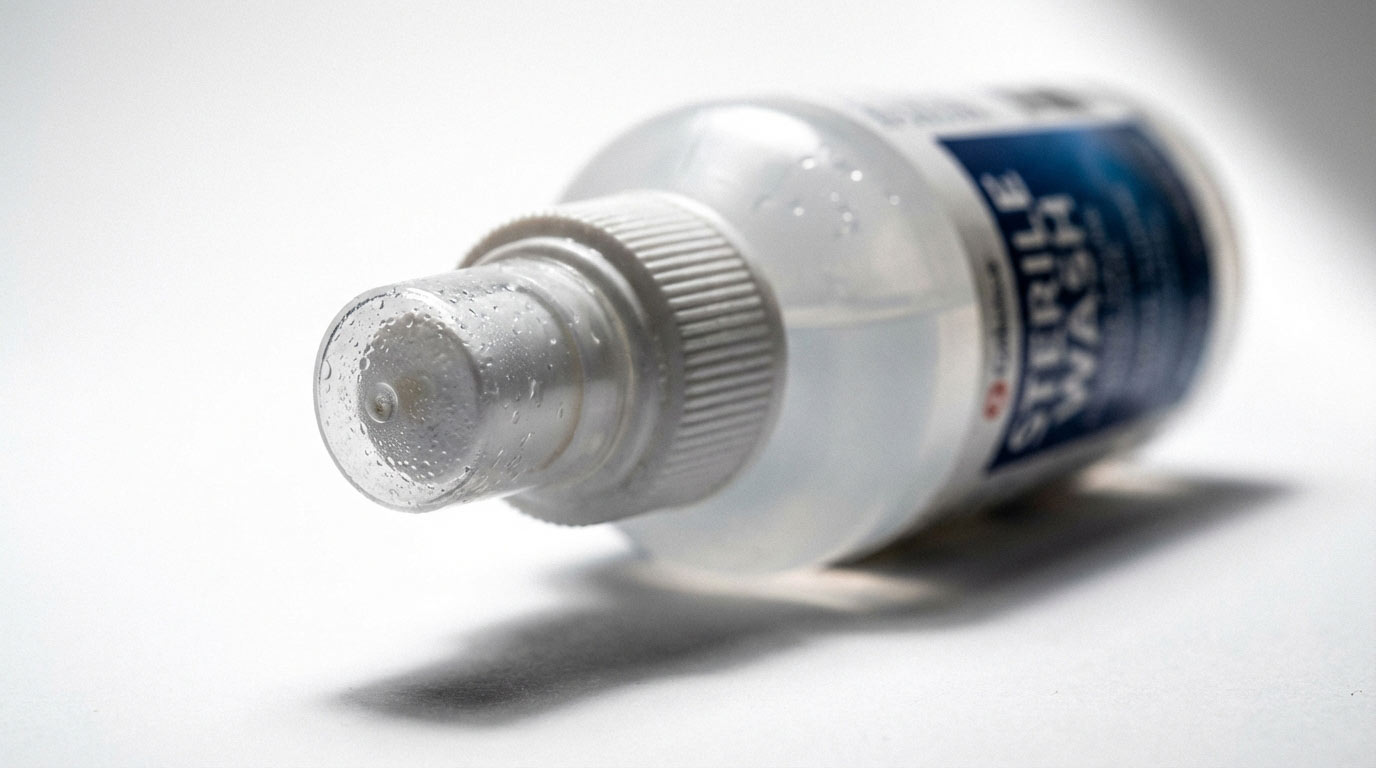
If there is one thing every professional piercer, dermatologist, and the Association of Professional Piercers (APP) agree on, it is this: sterile saline solution is the gold standard for piercing aftercare. Not tea tree oil. Not Bactine. Not sea salt soaks. Just saline — used correctly, twice a day.
What Is Saline Solution?
Saline solution is a mixture of water and salt (sodium chloride). According to the Cleveland Clinic, normal saline contains exactly 0.9% sodium chloride in water — the same salt concentration as human blood and tissue fluid. This is why it is called isotonic — it does not disrupt the cells it contacts.
This isotonic concentration is precisely why it is so effective for piercing care. Gentle enough not to damage delicate healing tissue, yet effective enough to flush away bacteria, debris, dried lymph fluid, and crusties from the piercing site.
Sodium chloride — the only safe concentration for piercing wound care
Daily — the correct cleaning frequency recommended by the APP
Ingredients only — sodium chloride and purified water. Nothing else.
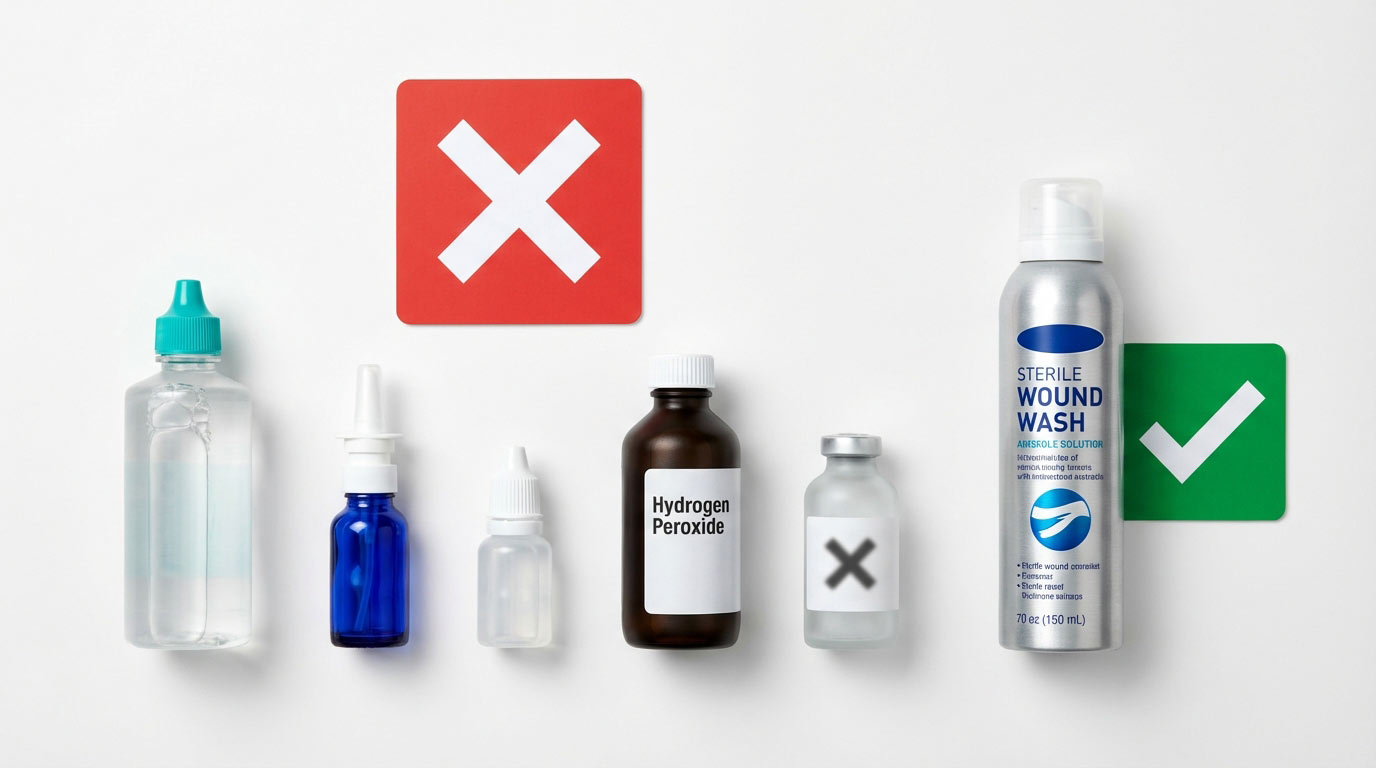
Important distinction: There are many types of saline — contact lens saline, nasal spray, eye drops, and wound wash. These are NOT interchangeable. For piercing aftercare, you need sterile saline wound wash specifically — not any other type, even if the label says saline.
Why Saline Works for Piercings — The Science
Saline works on a biological level. Here is what happens when you spray sterile saline on a healing piercing:
Mechanical Flushing
The spray physically dislodges bacteria, debris, dried lymph fluid, and dead cells from the piercing channel without damaging healing tissue.
Isotonic Balance
At 0.9% NaCl, saline matches your body's natural fluid concentration — it cleans without drawing water out of cells or bursting them, both of which delay healing.
Reduces Bacterial Load
By flushing the wound, saline reduces the bacteria count at the piercing site without the tissue-damaging harshness of alcohol or hydrogen peroxide.
Softens Crusties
Saline rehydrates dried lymph discharge (crusties) around the jewelry, making them easy to remove gently instead of picking them dry, which causes micro-tears.
Supports Healing Biology
Unlike antiseptics that kill all cells including healthy healing cells, saline is non-cytotoxic — it supports your body's natural repair process rather than interfering with it.
No Resistance Risk
Unlike antibiotic products, regular saline use does not contribute to antibiotic resistance — making it a safe long-term cleaning solution for the entire healing period.
Why not alcohol or hydrogen peroxide? Both are cytotoxic — they kill bacteria but also destroy the healthy epithelial cells that form your healing fistula tunnel. Hydrogen peroxide literally dissolves new healing skin. Saline cleans without causing this destruction.
The Right Saline to Buy — What to Look For
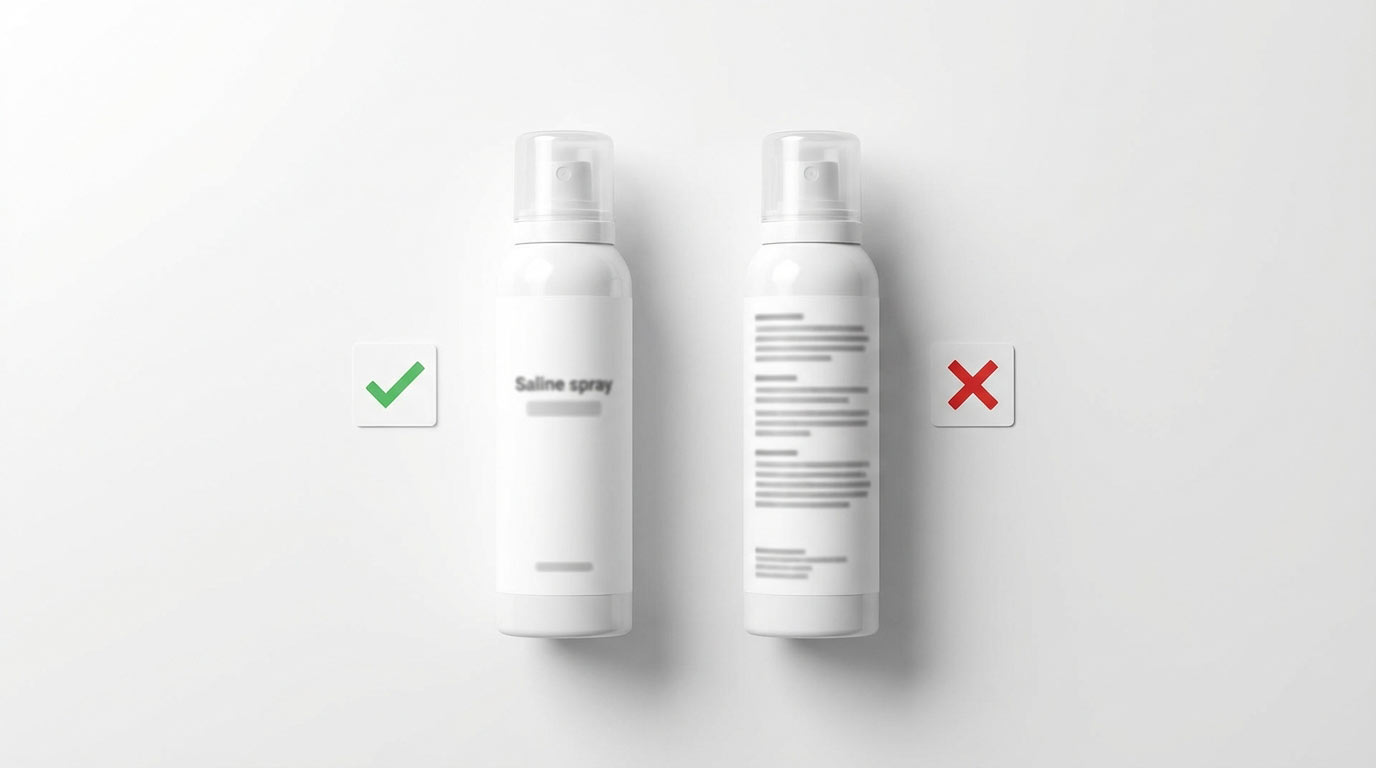
Not all saline is suitable for piercing aftercare. Here is exactly what the label must show — and must not show.
Label Must Show
- Wound wash saline or sterile wound wash
- Ingredients: 0.9% sodium chloride only
- Purified or sterile water as the only other ingredient
- Sterile on the label confirming a pathogen-free product
- Spray nozzle for hands-free application
Avoid Products With
- Preservatives (boric acid, benzalkonium chloride)
- Antibacterial agents or antiseptics
- Moisturizers, aloe, or skin conditioners
- Fragrance or essential oils (including tea tree)
- Baking soda or buffering agents
Where to find it: First aid aisle of any pharmacy or grocery store — not the contact lens section. Search for wound wash saline. It is typically much cheaper than specialty piercing aftercare sprays and works identically.
Best Saline Brands — Compared
These are the most trusted, professionally recommended products:
NeilMed Wound Wash
The most widely recommended product by professional piercers. Pure sterile saline — 0.9% sodium chloride and purified water, nothing else. Affordable, widely available, fully APP-approved.
0.9% NaCl onlyPreservative-freeAPP approvedH2Ocean Piercing Spray
Red Sea salt with 82 trace minerals plus lysozyme — a natural antimicrobial enzyme that fights bacteria beyond what plain saline offers. Beloved by many professional piercers.
Sea salt + lysozyme82 trace mineralsEnzyme-boostedSimply Saline Wound Wash
Pure 0.9% NaCl. The can sprays in any direction including upside down, ideal for awkward piercing locations. Very affordable and widely available at pharmacies.
0.9% NaCl onlySprays any directionBudget-friendlySteri-Wash Aftercare Spray
Hospital-grade sterile saline used in clinical settings for wounds and burns. The gold standard of purity for healing tissue. Available in a convenient 3oz travel size.
Hospital-gradeTravel sizeSterile| Product | Ingredients | Price | Best For |
|---|---|---|---|
| NeilMed Wound Wash | 0.9% NaCl + purified water only | $ | Everyday use, most widely available |
| H2Ocean Piercing Spray | Sea salt + lysozyme + trace minerals | $$ | Extra antimicrobial enzyme benefits |
| Simply Saline Wound Wash | 0.9% NaCl only | $ | Upside-down spray, pharmacy availability |
| Steri-Wash | 0.9% NaCl only | $ | Travel size, hospital-grade purity |
Any sterile wound wash saline with 0.9% NaCl as the only ingredient works equally well. Brand preference is secondary to ingredient purity.
Step-by-Step: How to Use Saline on a Piercing
The exact 3-step process recommended by the Association of Professional Piercers (APP). Follow twice daily — morning and evening — for the entire healing period. For the full routine, see our complete aftercare guide.
Step 1 — WASH Your Hands
Wash thoroughly with soap and water before touching your piercing for any reason. Your hands carry millions of bacteria — this is the single most important step to prevent infection.
Step 2 — SPRAY Directly on the Piercing
Spray sterile saline wound wash directly onto the piercing — saturating both the front and back. Hold the can 5 to 10cm away. Allow the saline to sit for 30 to 60 seconds to soften crusties. Do not rotate or twist your jewelry during or after spraying — this causes micro-tears and introduces bacteria into the wound channel.
Step 3 — DRY Gently
Pat dry using clean, disposable gauze or paper towels. Never cloth towels — they harbor bacteria and snag on jewelry. Wipe any softened crusties gently. Then leave the piercing completely alone until the next cleaning.
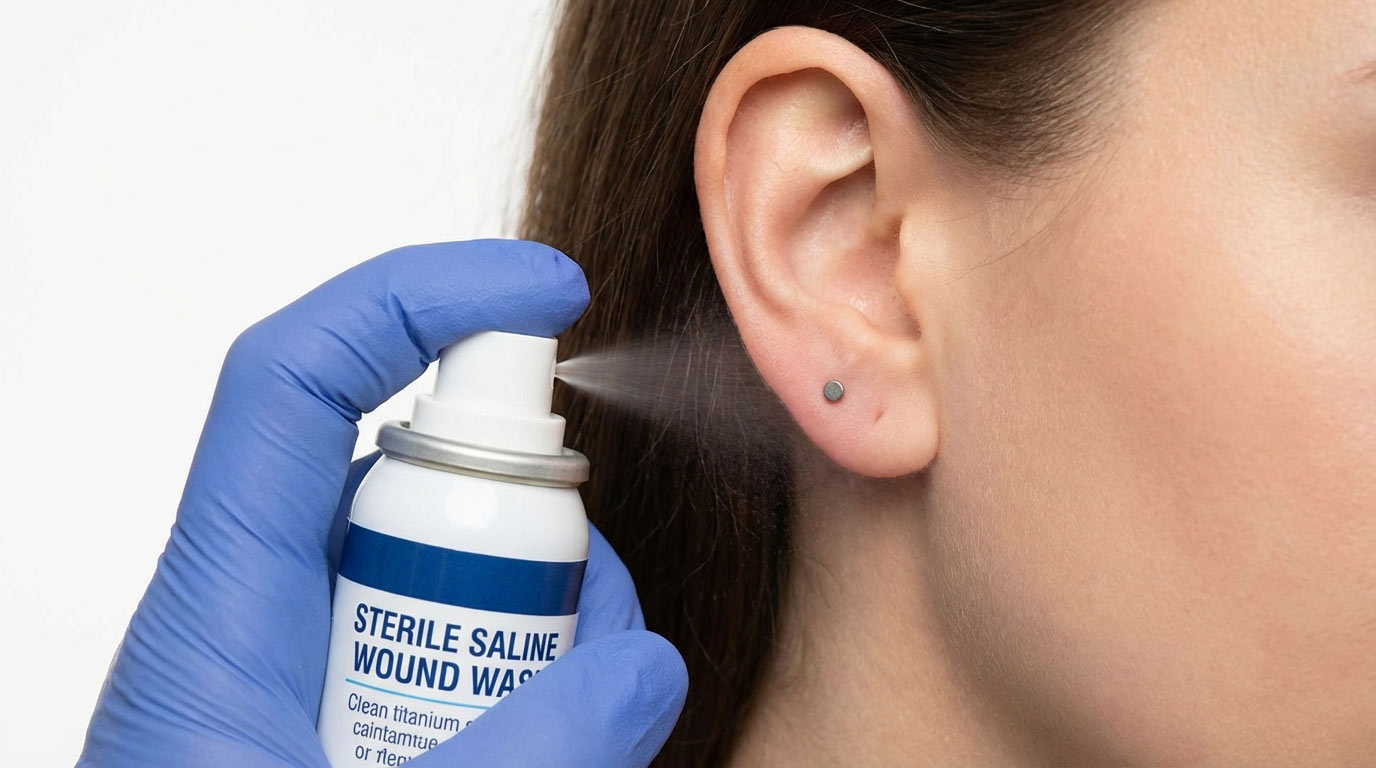
Frequency: Twice daily only. Over-cleaning strips healing tissue, causes irritation, and paradoxically slows healing. Twice every day is the optimal routine.
Application Methods — Which Is Best?
The best method depends on the piercing location and how difficult it is to reach:
Direct Spray
Hold the can 5 to 10cm away and spray directly onto front and back. Most hands-free, hygienic, and effective. Ideal for ear, nose, cartilage, and most body piercings.
Saturated Gauze Compress
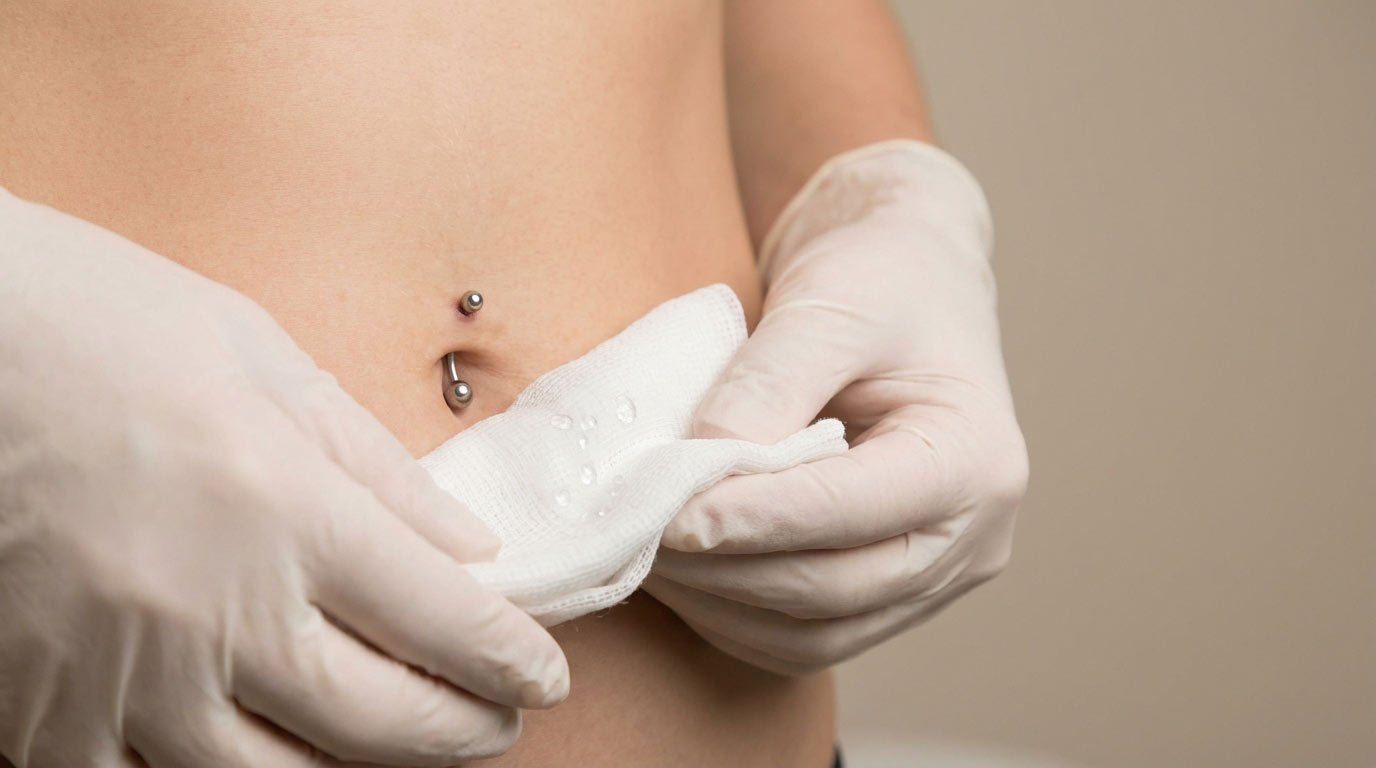
Soak sterile gauze in saline and hold against the piercing for 3 to 5 minutes. Excellent for navel, nipple, or inner ear piercings where direct spraying is difficult.
Shower Rinse
Let clean running water flow over your piercing for 30 to 60 seconds. An excellent supplement to saline cleaning — not a replacement. Plain water mechanically flushes the wound.
Cotton Swab
Dip in saline and apply around the piercing. Useful for hard-to-reach crusties. Caution: cotton fibres can detach and catch on jewelry. Non-woven gauze is safer when possible.
Cup Soak
Submerging the piercing in a cup of saline was previously popular but is now discouraged by the APP. The container can harbor bacteria. The spray method is safer and equally effective.
For oral piercings (tongue, lip, labret): Rinse the inside of your mouth with alcohol-free saline or antimicrobial mouthwash after every meal, drink (except water), and smoking. Spray the external portion with sterile wound wash. Dual internal and external cleaning is essential.
Saline Types to Avoid for Piercings
The word saline on a label does not mean it is suitable for piercing aftercare. These commonly confused products are not appropriate:
Contact Lens Saline
Contains preservatives such as boric acid or sodium borate that irritate healing piercing tissue, cause dryness, and delay the healing process. Keep for your lenses only.
Nasal Spray / Sinus Rinse
Formulated for the nose with baking soda or buffering agents too harsh for fresh piercing tissue. Many require you to mix the solution yourself — no longer sterile once mixed.
Eye Drops / Eyewash
pH, concentration, and additives are calibrated for eye tissue — completely different from healing skin wounds. Never use on piercings under any circumstances.
Bactine and BZK Products
Products containing Benzalkonium Chloride (BZK) including Bactine and many pierced-ear care solutions are not for long-term wound care. The APP specifically warns against these products.
Saline With Additives
Any saline listing more than two ingredients (NaCl + water) is not suitable. This includes saline with tea tree oil, panthenol, moisturizers, or aloe — all can irritate or delay healing.
Hydrogen Peroxide
Frequently confused as a cleaning solution. Hydrogen peroxide is cytotoxic — it dissolves new healing skin tissue, literally undoing the healing your body has already accomplished.
DIY Sea Salt Solution — Does It Actually Work?
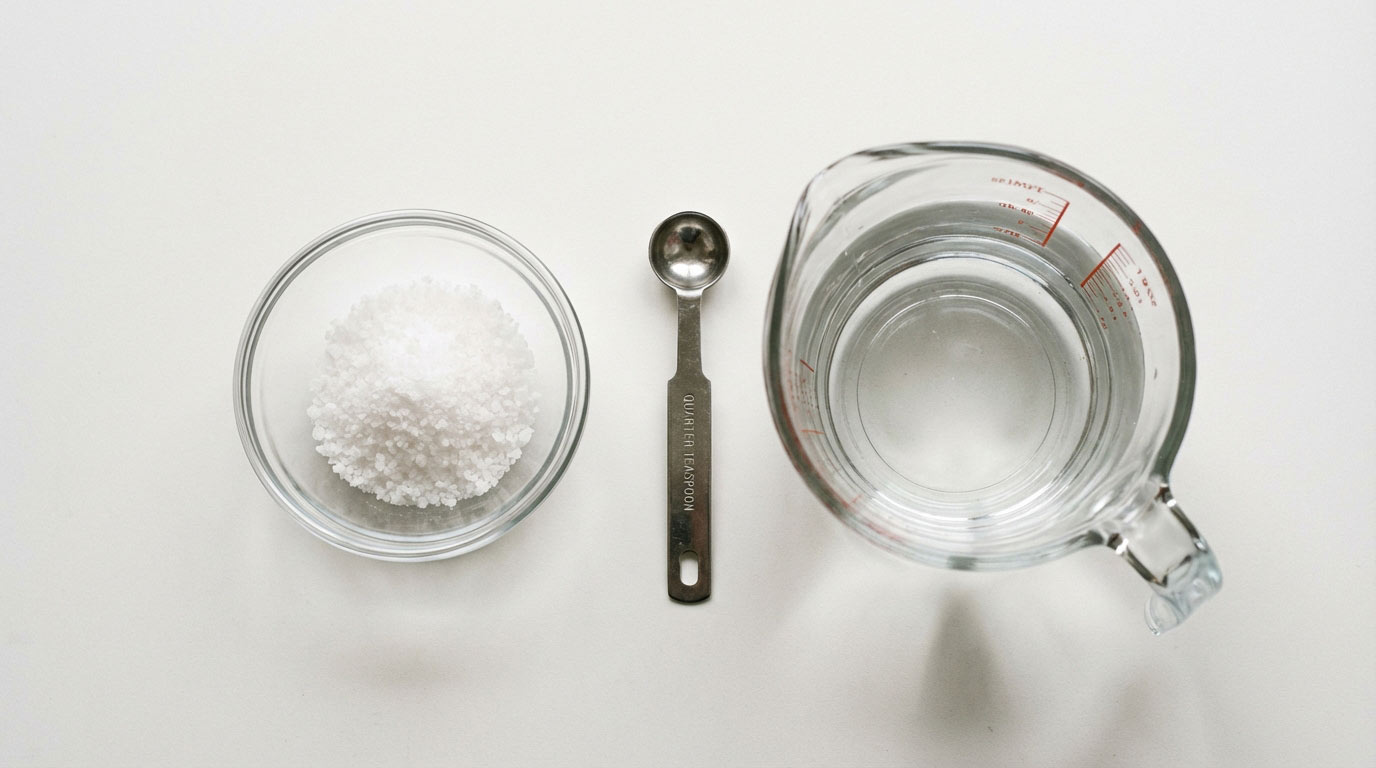
Short answer: the APP no longer recommends DIY sea salt solutions. Homemade solutions are almost always too concentrated — most people add far more salt than 0.9%, resulting in a hypertonic solution that draws moisture out of healing tissue, over-dries the piercing, and interferes with healing.
If you are in a situation where commercial sterile saline is genuinely unavailable, here is the correct recipe as a last resort only:
Emergency DIY Saline Recipe (Last Resort Only)
Use distilled water only. Never tap water — it contains chlorine, fluoride, and potentially harmful microorganisms. If distilled water is unavailable, boil water and allow it to cool completely before use.
Measure precisely: exactly one quarter teaspoon (1.25ml) of non-iodized sea salt or non-iodized kosher salt per 8 oz (240ml) of water. Never use table salt — it contains iodine and anti-caking agents that irritate piercing tissue.
Mix in a clean, sterilized container — ideally glass or new plastic. Stir until fully dissolved. The solution should taste like mild tears — not strongly salty.
Use immediately. Homemade solutions are NOT sterile and should never be stored for reuse. Make a fresh batch each time. Never use leftover solution from the previous day.
Why commercial is better: Commercial wound wash is sterile, precisely calibrated to exactly 0.9% NaCl, packaged in a sterile container, and sprays without requiring you to touch the piercing. Even a small measurement error in DIY saline produces a solution that over-dries and damages healing tissue. Commercial sterile wound wash costs just a few dollars at any pharmacy.
Saline Use by Piercing Type
The core saline routine is the same for all piercings, but the application technique varies by location:
| Piercing | Best Method | Special Tip |
|---|---|---|
| Earlobe | Direct spray front and back | Keep hair and hair products away during cleaning |
| Helix / Cartilage | Direct spray; gauze compress for stubborn crusties | Avoid in-ear headphones pressing against the site |
| Tragus | Direct spray at an angle; swab for hard-to-reach areas | Angle the can to reach the inner ear position |
| Daith | Saturated gauze compress 3 to 5 min | Inner ear location makes spraying difficult |
| Industrial | Spray both ends; gauze along the bar | Both holes need attention — the bar collects crusties along its length |
| Nostril | Direct spray from outside; shower rinse | Blow nose gently, one nostril at a time |
| Septum | Spray into the nostril area; clean with saturated swab | Flip jewelry up after cleaning to minimize bacteria contact |
| Navel | Saturated gauze compress 3 to 5 min | Dry thoroughly — navel folds trap moisture and slow healing |
| Nipple | Direct spray; gauze compress | Wear loose breathable clothing to reduce friction against healing tissue |
| Tongue | Spray externally; alcohol-free rinse internally | Rinse inside mouth after every meal, drink, and smoking |
| Lip / Labret | Spray externally; internal rinse after eating | Avoid kissing and oral contact during initial healing phase |
| Dermal | Saturated gauze held gently over the site | Never snag the anchor — be very gentle around the decorative top |
Common Saline Mistakes That Slow Healing
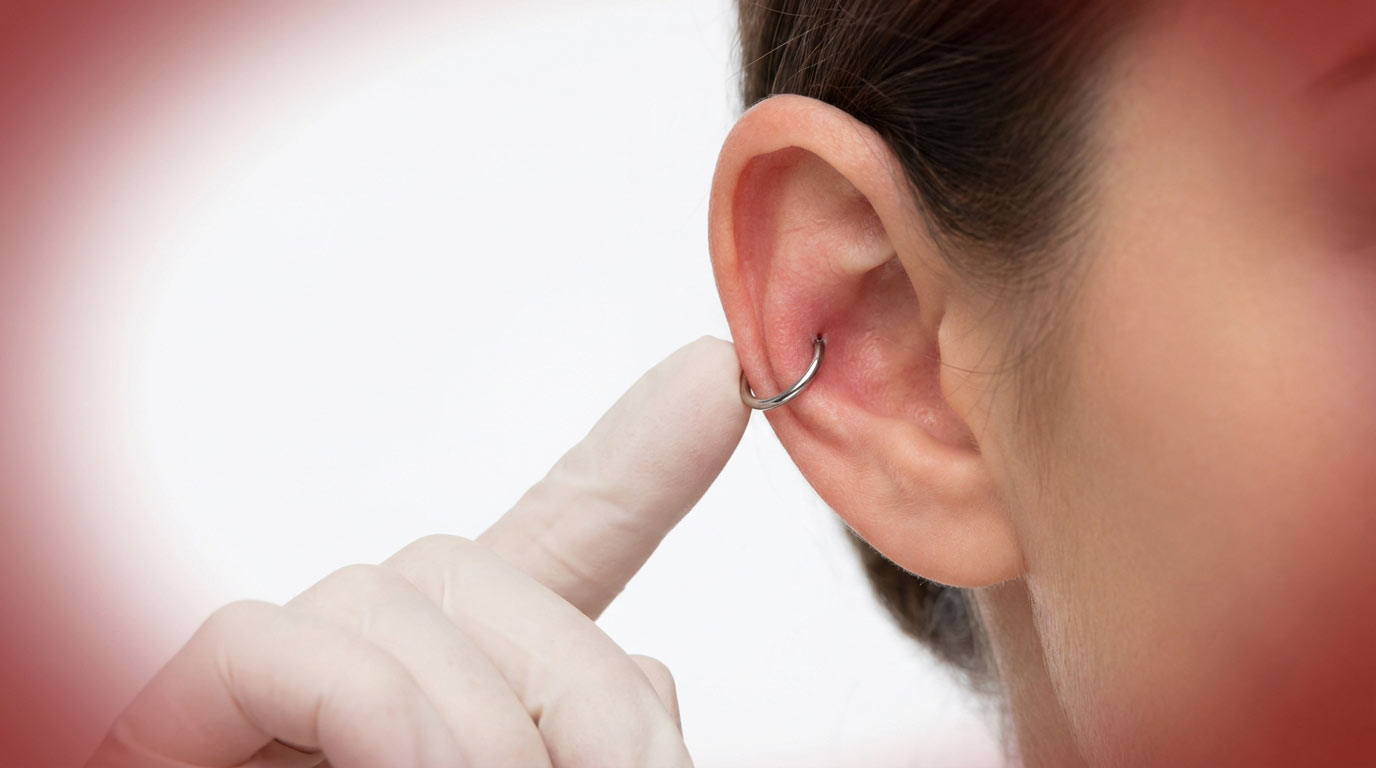
Even with the right product, these common mistakes undermine your results:
Over-Cleaning
Cleaning more than twice daily strips away the protective layer forming over the wound and causes chemical irritation. Many cases of persistent irritation are simply caused by over-cleaning. Twice daily is the maximum — no more.
Rotating Jewelry After Spraying
One of the most persistent and harmful piercing myths. Rotating does NOT help saline penetrate the channel. It causes micro-tears and drags bacteria from the outer jewelry surface into the wound. The APP confirms rotating jewelry may actually irritate the piercing. Never rotate — ever.
Not Drying After Saline
Leaving saline on the piercing without drying allows prolonged moisture to accumulate — which softens surrounding skin and creates an environment for bacterial growth. Always pat dry with clean, disposable gauze after applying saline.
Using Expired or Contaminated Product
Sterile wound wash degrades over time and opened nozzles accumulate bacteria. Check expiry dates and replace products showing contamination at the nozzle. A fresh can for a few dollars is always worth it.
Stopping Saline Too Early
Many people stop cleaning once the piercing looks healed. But piercings heal from the outside in — the surface may look complete while the interior fistula is still fragile. Continue your saline routine for the entire healing period as confirmed by your professional piercer. Check typical timelines in our healing times guide.
Frequently Asked Questions
What saline solution should I use for my piercing?
Use sterile saline wound wash with 0.9% sodium chloride as the ONLY ingredient. Look for wound wash saline in the first aid aisle. Top brands: NeilMed Wound Wash, H2Ocean Piercing Aftercare Spray, Simply Saline Wound Wash, and Steri-Wash. Avoid contact lens saline, nasal spray, and eye drops — these contain additives that irritate healing piercing tissue.
How often should I clean my piercing with saline?
Twice daily — once in the morning and once in the evening. More than twice per day is too much. Over-cleaning strips healing tissue, causes chemical irritation, and slows healing. Consistency matters more than frequency.
Can I make my own saline solution for piercings?
The APP no longer recommends DIY solutions — homemade mixtures are almost always too concentrated. If unavailable: dissolve exactly one quarter teaspoon of non-iodized sea salt in 8oz of distilled or boiled water. Use immediately and make a fresh batch each time. Commercial sterile wound wash is strongly preferred — it is precisely calibrated, sterile, and costs just a few dollars at any pharmacy.
Can I use contact lens saline for a piercing?
No. Contact lens saline contains preservatives like boric acid that irritate healing piercing tissue, cause dryness, and significantly delay healing. Only use sterile wound wash saline — 0.9% sodium chloride with no additives.
Is NeilMed or H2Ocean better for piercings?
Both are excellent. NeilMed contains only sterile water and 0.9% NaCl — pure, affordable, APP-approved. H2Ocean contains Red Sea salt with lysozyme (a natural antimicrobial enzyme) and trace minerals, offering additional antibacterial properties. NeilMed is the budget choice; H2Ocean provides enzyme-based benefits. Either works very well for piercing aftercare.
Should I rotate my jewelry when cleaning with saline?
Absolutely not. This is one of the most harmful piercing myths. Rotating jewelry does not help saline penetrate — the spray does that on its own. Rotation causes micro-tears and drags bacteria from the outer jewelry surface into the wound. The APP specifically states that moving jewelry may actually irritate the piercing. Leave jewelry completely still during and after cleaning.
How long should I use saline on my piercing?
For the entire healing period — not just until it looks or feels healed. Piercings heal outside-in, so surface healing happens long before internal healing is complete. Minimums: earlobes 3 to 6 months, cartilage 6 to 12 months, navel 9 to 12 months. Your professional piercer confirms when full healing is complete.
Questions about your saline routine?
Drop them in the comments — we answer every one!
pierceing.com
Sources: safepiercing.org (APP) · Cleveland Clinic
Informational purposes only. Always consult your professional piercer for guidance specific to your piercing.