
Complete Guide · Daith Piercing
Daith Piercing:
The Complete Guide
Everything about daith piercing — anatomy, the migraine claim examined by medical research, pain level, healing timeline, best jewelry, aftercare, and why this inner-ear placement is one of the most talked-about piercings in the world.
Year daith piercing was created by Erik Dakota
Pain rating through inner cartilage crux of helix
Months required for full internal healing
Standard gauge — curved barbell recommended as starter
Migraine claim — evidence inconclusive per NCBI 2020
The daith is one of the most searched piercings on the internet — partly for its striking inner-ear appearance, and partly because of persistent claims that it can relieve migraines. This guide covers both honestly: the full piercing experience, and what medical research actually says about the migraine claim.
What Is a Daith Piercing?
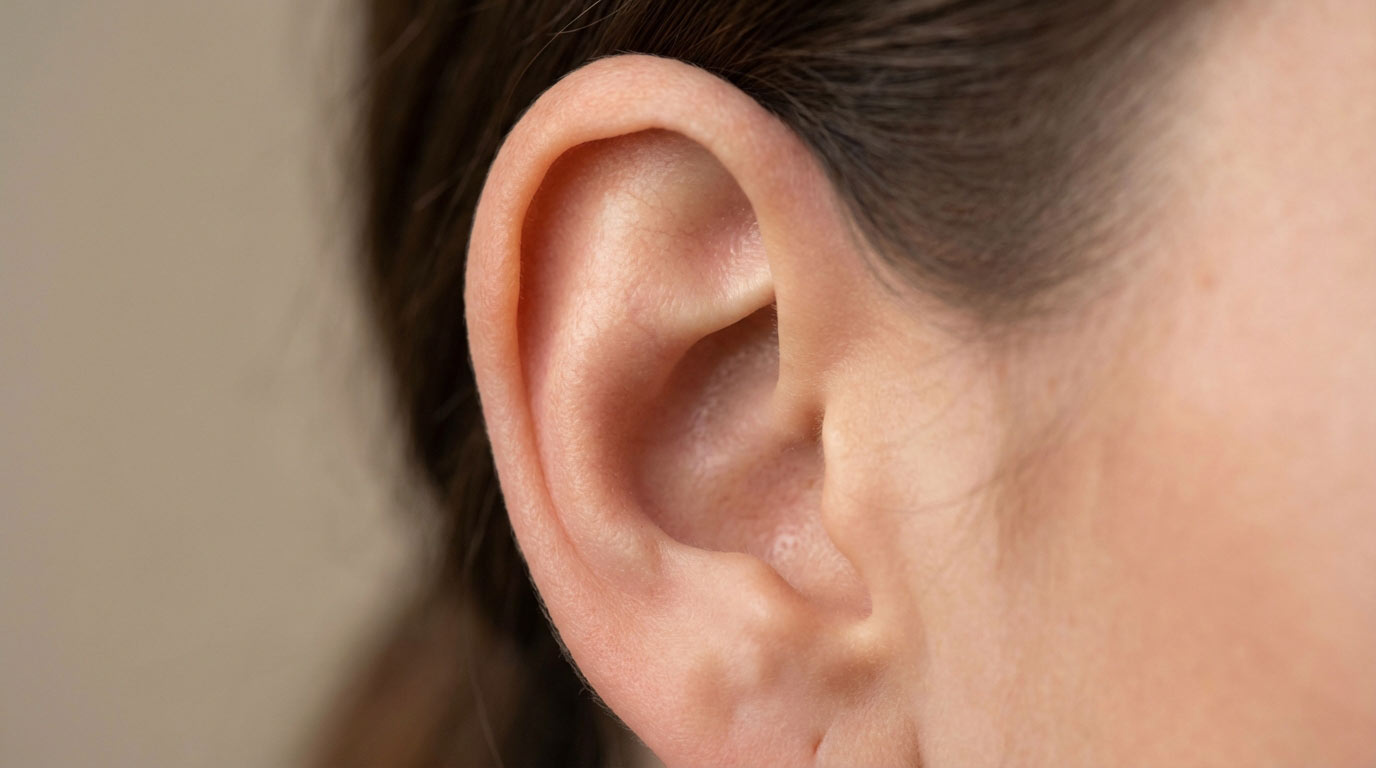
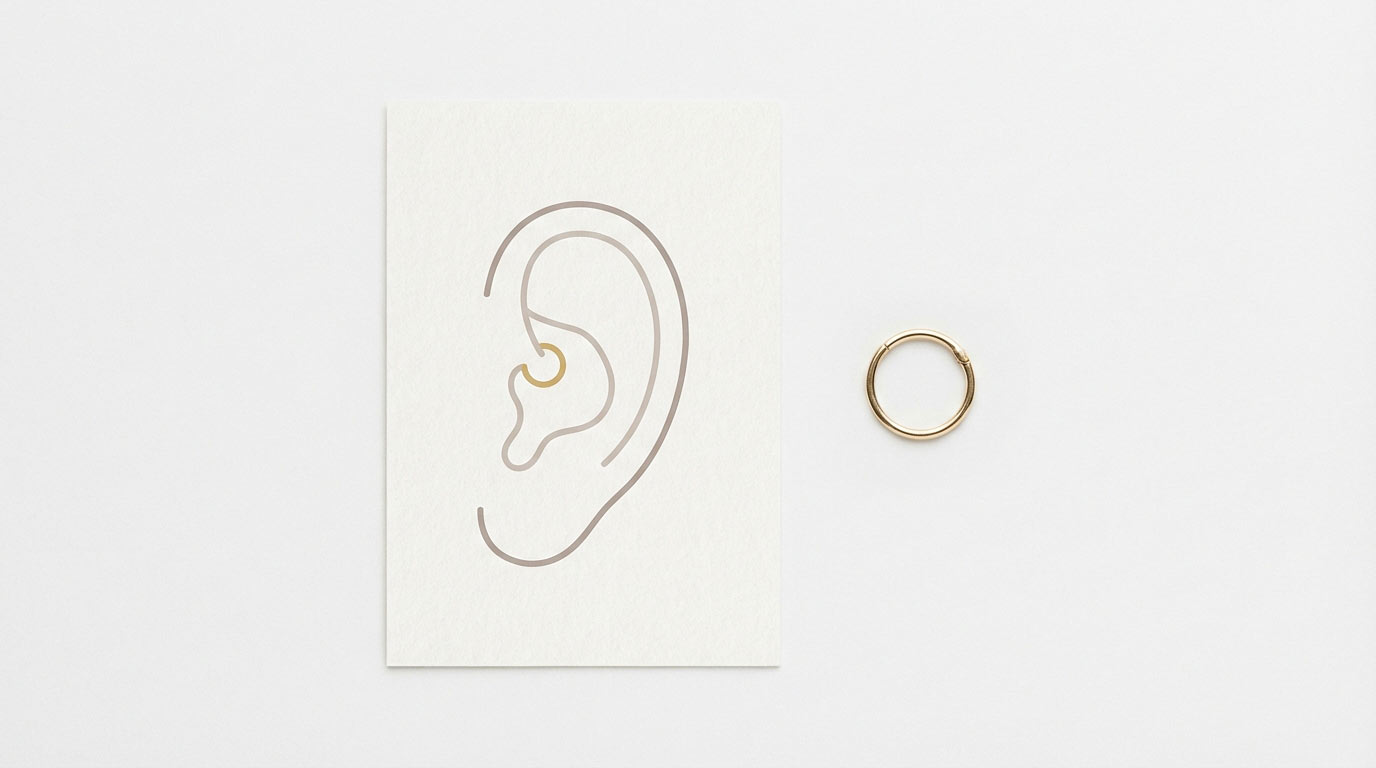
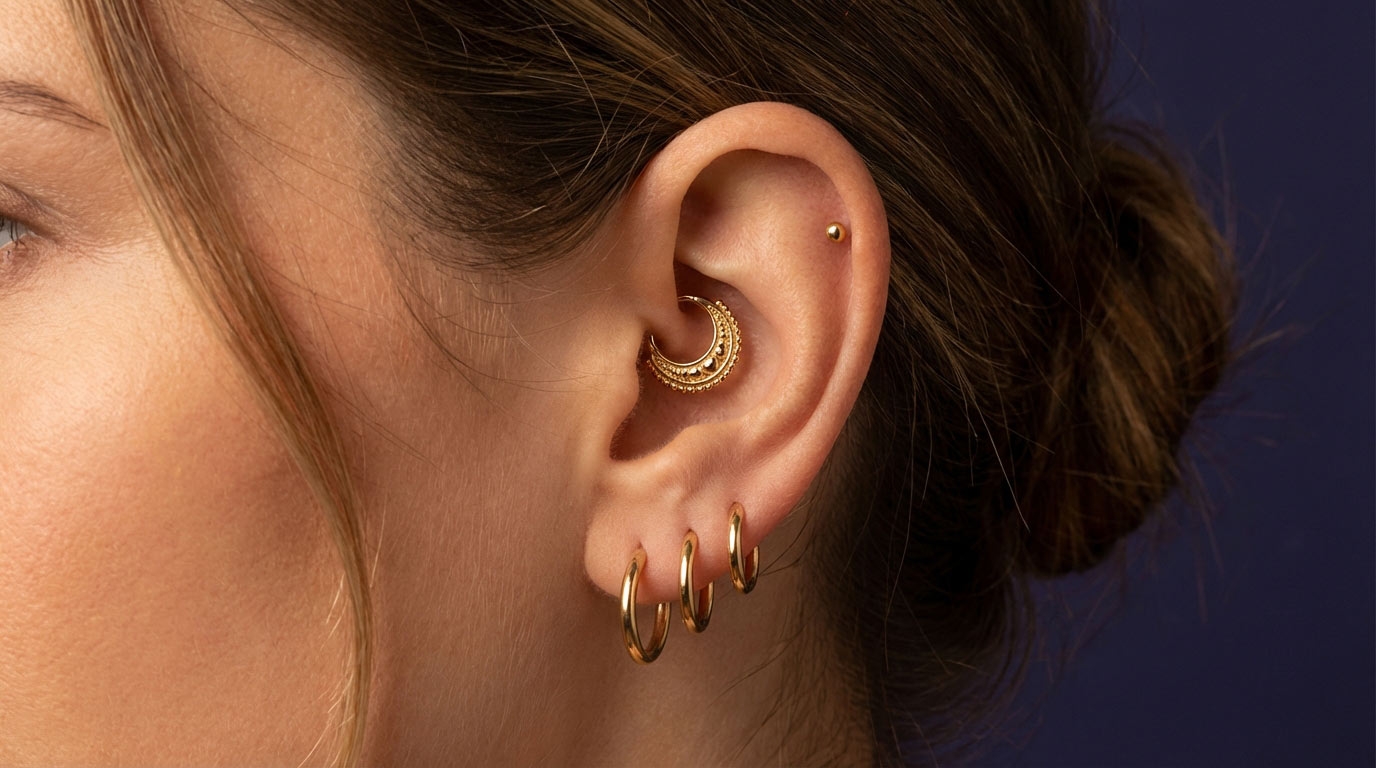
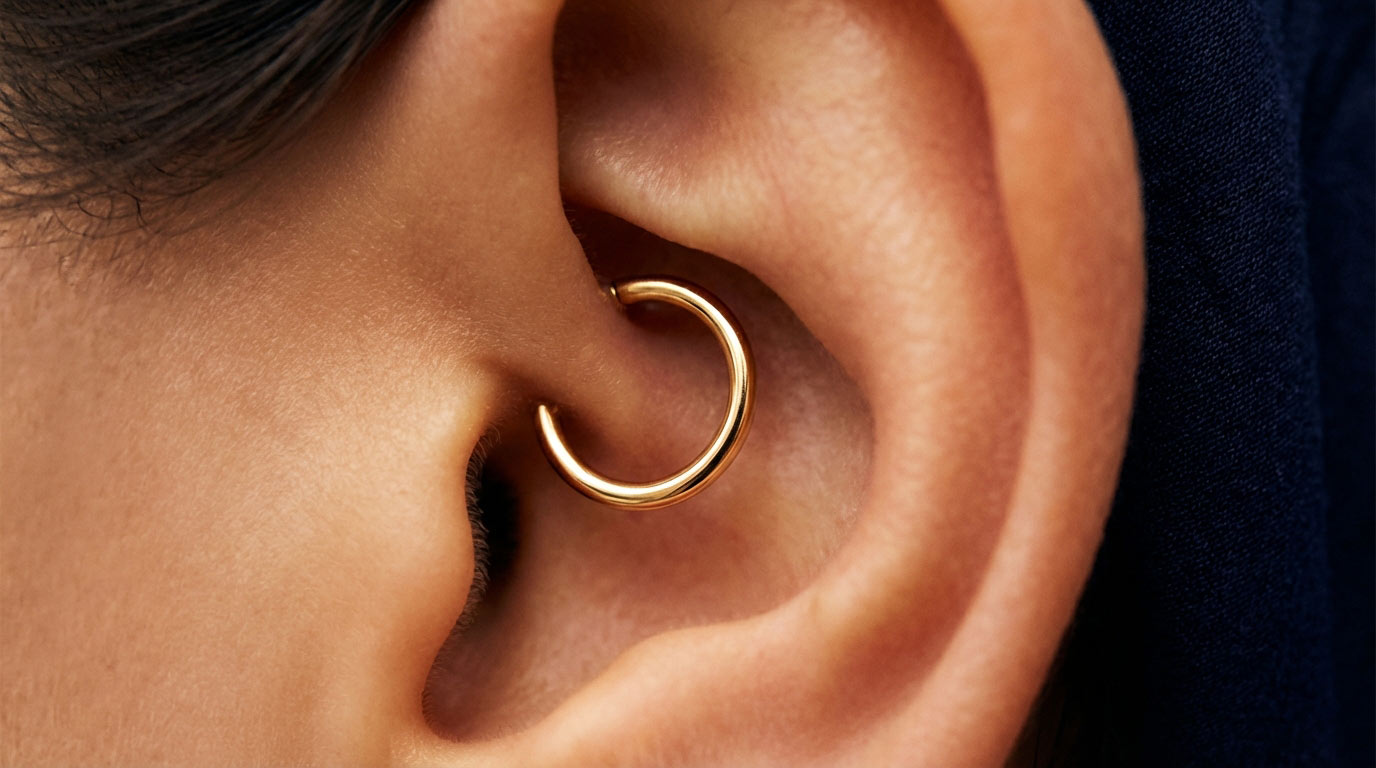
A daith piercing passes through the crux of the helix — the innermost cartilage fold of the ear, just above the ear canal opening. It is the small curved ridge of cartilage that sits between the outer bowl of the ear and the entrance to the ear canal. When correctly placed, the jewelry appears to emerge directly from within the ear canal itself.
The anatomy of the daith makes it both visually distinctive and technically demanding. The crux of the helix is curved, thicker than the outer rim, and harder to access than most ear piercings. A correctly placed daith requires a specifically curved hollow needle. The bottom of the ring should appear to emerge directly from the ear canal — if both entry and exit holes are visible from the front, it is not a correctly placed daith.
Daith vs Rook vs Conch: The daith is at the innermost fold just above the ear canal. The rook is the anti-helix ridge above it. The conch is the large bowl below it. See our Cartilage Piercing Guide for the full inner-ear comparison.
History & Origin of the Daith Piercing
The Name
Named “da'at” — Hebrew for knowledge (דעת). A client of professional piercer Erik Dakota who was studying Hebrew gave it the name because the piercer must have been very knowledgeable to figure out how to do it. The name evolved to “daith” in common usage.
The Creator
Erik Dakota co-created the daith in 1992. His technical standard: the bottom of the ring must appear to come directly from the ear canal. The technique requires a specifically curved needle not used in standard ear piercings — placing this piercing correctly is still considered an advanced skill.
First Appearance
First appeared in Fakir Musafar's Body Play magazine issue #4 in 1992 — the same issue that introduced the industrial piercing. The daith remained a niche placement for two decades before the migraine claim brought it into mainstream popularity.
Daith Piercing & Migraines — What the Science Says
The migraine claim is the single most-searched aspect of daith piercings. Here is the most complete and accurate answer based on current medical research:
The Medical Research — NCBI PMC7075511 (2020)
A peer-reviewed study published in Cureus and indexed in the US National Library of Medicine by researchers at Southern Illinois University School of Medicine examined daith piercing as a potential migraine treatment.
The hypothesis: The daith sits at a pressure point associated with the vagus nerve — an area used in auricular acupuncture. The postulated mechanism is vagal neuromodulation, which could theoretically reduce migraine frequency.
The verdict: A review of 186 non-clinical studies found that while some patients reported lower pain after the piercing, symptoms returned within weeks or months. The authors concluded current evidence does not support daith piercing for migraine treatment. A placebo effect cannot be ruled out.
Citation: Bhandari P et al. Daith Piercing: Wonder Treatment or Untested Fad? Cureus. 2020 Feb 13;12(2):e6978. PMC7075511
What People Report
Many migraine sufferers report real short-term reduction in migraine frequency. These anecdotal accounts are considerable in volume. The anecdotal evidence is real — the clinical proof is not.
Why It Might Work for Some
Vagus nerve stimulation devices are already medically used for epilepsy and depression. Whether a piercing provides sufficient stimulation is unproven. Placebo effect, lifestyle changes, and natural migraine cycling may all contribute.
Our Recommendation
If you want a daith for the look — go for it. If solely for migraines, consult a neurologist for evidence-based options first. A daith carries the full risks of cartilage piercing regardless of any potential benefit.
The daith piercing is not a medically approved migraine treatment. No clinical trials have confirmed its efficacy. If you suffer from chronic migraines, please work with a qualified healthcare provider and do not delay evidence-based treatment in favour of piercing.
Daith Piercing Pros & Cons
An honest assessment from a purely piercing perspective, separate from any migraine claims:
PROS
- Unique inner-ear placement that looks unlike any outer-ear piercing
- The ring appears to emerge from the ear canal when correctly placed
- Less visible than outer-ear piercings at a distance — more subtle for professional environments
- Anatomy naturally cradles the jewelry once healed — low snagging risk
- Stunning clicker jewelry variety from minimalist to ornate
- Pairs beautifully with helix and conch in a curated ear
CONS
- Anatomy-dependent — not everyone has sufficient inner fold
- 6–9 months healing — one of the longer ear cartilage piercings
- More painful than helix — 5/10 for thicker inner cartilage
- Migraine benefits are not medically proven
- No in-ear earbuds for the full healing period
- Advanced technique — requires an experienced piercer
How Much Does a Daith Piercing Hurt?
The daith rates 5/10 — noticeably more than the outer helix because the crux of the helix is thicker inner cartilage. Here is how it compares across ear piercings:
What to expect: A sharp pressure as the curved needle passes through the inner cartilage fold — under 2 seconds. Throbbing warmth follows for several hours. Some people notice an unusual sensation near the ear canal from the proximity of the placement. Mild soreness when touched lasts 3–5 days. Less painful than a rook or industrial despite similar inner placement.
Daith Piercing Healing Times
The daith is one of the slower-healing ear cartilage piercings at 6–9 months. The inner cartilage fold has limited blood supply and the placement is harder to keep free from irritants:
| Milestone | Timeline | Action |
|---|---|---|
| Initial soreness & swelling | Week 1–2 | Saline twice daily — no touching, no earbuds |
| Crusties reduce significantly | Month 1–2 | Continue aftercare, avoid in-ear headphones entirely |
| Downsizing appointment | Week 4–6 | Critical — swap initial longer jewelry for fitted piece |
| Surface appears healed | Month 3–4 | Continue aftercare — do not change jewelry yet |
| Earliest jewelry change | Month 4–6 | Piercer confirms healing before any change |
| Full internal healing | 6–9 months | All styles safe — clickers and hoops now suitable |
Earbuds — the biggest daith healing mistake: In-ear earbuds go directly into the ear canal and physically contact the healing daith jewelry every single time. This constant movement disrupts the healing fistula and is the #1 cause of prolonged daith healing and irritation bumps. Switch to over-ear headphones for the full 6–9 month healing period. No exceptions.
Best Jewelry for a Daith Piercing
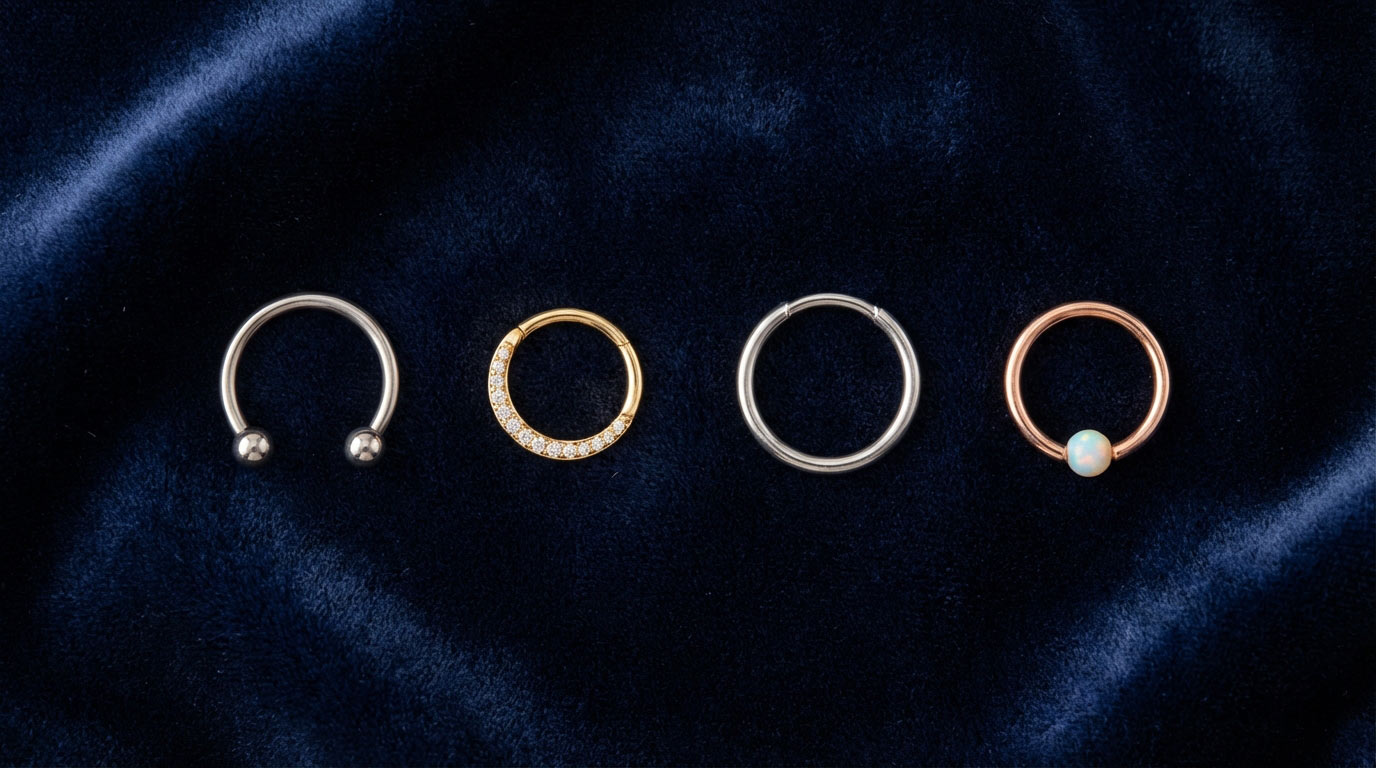
The daith's curved anatomy dictates specific jewelry shapes. Here is exactly what to wear and when:
Curved Barbell
Follows the natural curve of the crux of the helix perfectly. The most anatomically correct initial jewelry for a daith. Implant-grade titanium at 16g. Initial length longer to accommodate swelling — downsized at week 4–6.
Captive Bead Ring
A ring with a removable bead held by tension. Traditional daith jewelry and a solid starter option. Requires ball-capture tool or piercer to open safely. Gives the classic daith look where the ring appears to emerge from the ear canal.
Clicker Ring
The #1 healed daith style. Click-lock mechanism makes insertion and removal easy. Available in simple titanium through to ornate gold designs with CZ stones, crescent moons, and geometric shapes. Only for fully healed daiths.
Seamless Hoop
A continuous ring with no visible closure. Clean and minimal. Sits naturally in the daith curve. Must be professionally opened — bending repeatedly weakens the metal. Perfect for those who want the classic ring look without the clicker mechanism.
Decorative Clicker
Ornate hinged clickers with CZ pave, opal inlay, or crescent moon shapes. Fully healed daiths only. These sit beautifully in the inner ear — the curved daith anatomy frames elaborate jewelry naturally.
Sizing Reference
Standard gauge: 16g (1.2mm). Ring diameter: typically 8–10mm fitted to your anatomy by your piercer. Too small = pressure on healing tissue. Too large = snagging and movement. Always have your piercer size the first jewelry change.
Safe materials: Implant-grade titanium (ASTM F136) or steel (ASTM F138) for initial healing. Solid 14k/18k gold (nickel-free) once healed. Never sterling silver, plated metals, or unknown alloys during healing. See our Best Jewelry for New Piercings guide for the full materials breakdown.
Daith Piercing Aftercare
Daith aftercare follows the standard cartilage routine but has one critical unique rule: no in-ear earbuds for the full healing period. Everything else follows the APP-recommended approach:
1 — Wash Hands First
Every time before touching. The inner ear is harder to access and keep clean than outer-ear piercings — handle it as little as possible.
2 — Sterile Saline Twice Daily
Spray 0.9% NaCl sterile wound wash directly at the inner fold placement from both sides. Let sit 30–60 seconds. See our Saline Solution Guide for best brands.
3 — Shower Rinse
Tilt your head to let warm shower water flow into the inner ear area daily. This softens crusties from within the fold that are difficult to reach externally.
4 — No In-Ear Earbuds
The most critical daith-specific rule. Earbuds contact the healing placement directly. Use over-ear headphones only for the full 6–9 month healing period. This single rule prevents the majority of daith complications.
DAITH DO
- Return at 4–6 weeks for downsizing appointment
- Sleep on the opposite side — use a travel pillow if needed
- Use over-ear headphones only for the full healing period
- Tie hair back to prevent it catching the inner jewelry
- Clean after exercise or sweat exposure
- See a doctor same day for spreading redness or fever
DAITH DON'T
- Never use in-ear earbuds during healing — ever
- Don't rotate or move jewelry in the inner fold
- Don't use alcohol, hydrogen peroxide, or tea tree oil
- Don't swim in pools, hot tubs, or open water
- Don't change jewelry before 4–6 months minimum
- Don't attempt to treat any infection at home
Anatomy & Candidacy — Can You Get a Daith?
The daith is one of the most anatomy-dependent ear piercings. Book a consultation before your piercing appointment:
Sufficient Fold Depth
The crux of the helix must be prominent enough to pass a needle through and hold a ring or curved barbell. Very flat or small inner folds may not support a correctly placed daith piercing.
Jewelry Size Range
The ring diameter must match your crux fold size. If your anatomy only supports a 6mm ring, larger decorative clicker styles will not suit you even once healed. Your piercer will assess this.
Migration Risk
If the fold is thin or the jewelry too heavy, a daith can migrate or reject. An experienced piercer identifies high-risk anatomy before agreeing to pierce and advises on realistic jewelry options.
Book a consultation first: Unlike most cartilage piercings, it is worth booking a separate consultation appointment for a daith before the actual piercing. This is standard practice at reputable studios for inner-ear placements. A few minutes of anatomy assessment prevents months of potential complications.
Daith Piercing Cost 2025
The daith costs slightly more than outer-ear piercings due to the advanced technique and anatomy assessment involved:
| Venue | Price Range | Includes | Notes |
|---|---|---|---|
| Professional Studio — Titanium | $50–$90 | Needle + titanium curved barbell or CBR | Recommended minimum |
| Professional Studio — Gold | $90–$160 | Needle + 14k gold jewelry | Premium option |
| High-End / Specialist Studio | $120–$200 | Full anatomy assessment + premium jewelry | Best for complex anatomies |
| Downsizing Appointment | $15–$35 | Shorter or fitted jewelry | Critical at week 4–6 — do not skip |
| First Jewelry Change (clicker) | $25–$60 | Clicker fitted by piercer | In-studio recommended for daith |
Daith Styling & Trends 2025
The daith's inner placement makes it the natural focal point of any inner-ear curated build. Here is what is trending in 2025:
Crescent Moon Clickers
The most-saved daith jewelry style in 2025. Gold crescent moon hinged clickers sitting elegantly in the inner fold. Celestial aesthetic dominates the daith category.
Opal Pave Clickers
Clickers with opal inlay or CZ pave in rose gold titanium. The premium understated daith look — sophisticated and wearable every day.
Dainty Gold Hoop
Thin seamless 14k gold hoop in the daith — minimalist, every day wearable, the quiet luxury daith of 2025.
Daith + Helix + Conch
The inner-ear trio — daith, rook, and conch together. The most dramatic curated inner-ear build of 2025.
Asymmetric Inner Stack
Heavy inner stack (daith + rook) on one ear, minimal lobe on the other. The defining asymmetric aesthetic of 2025 curated ears.
Geometric Clickers
Diamond, triangle, and hexagon shaped clicker inserts. Architectural and modern — the avant-garde daith choice for 2025.
Frequently Asked Questions
Does a daith piercing help with migraines?
Current evidence does not support daith piercing as a migraine treatment. A 2020 NCBI peer-reviewed study (PMC7075511) by Southern Illinois University School of Medicine found that while some patients reported short-term pain reduction, symptoms returned within weeks or months. The vagal neuromodulation hypothesis is plausible but clinically unproven. Get a daith if you love the look — but consult a neurologist for evidence-based migraine treatment.
How much does a daith piercing hurt?
A daith rates 5/10 for pain. The crux of the helix is thicker inner cartilage requiring more pressure from the curved needle than the outer helix rim. The piercing moment lasts under 2 seconds. Throbbing warmth follows for several hours, then mild soreness for 3–5 days. Less painful than a rook or industrial.
How long does a daith piercing take to heal?
A daith takes 6–9 months for full internal healing. Surface healing occurs at 3–4 months but internal tissue continues longer. In-ear earbuds must be avoided for the entire healing period. Return at week 4–6 for a critical downsizing appointment. Have your piercer confirm full healing before any jewelry change.
What is the best jewelry for a new daith piercing?
A curved barbell in implant-grade titanium at 16g is the best initial daith jewelry. It follows the natural anatomy of the crux of the helix. Ring diameter is typically 8–10mm sized to your anatomy by your piercer. Clicker rings are the most popular style for healed daiths (4–6 months+). Never use hoops or clickers during initial healing.
What is the origin of the daith name?
Co-created in 1992 by piercer Erik Dakota. A client studying Hebrew named it “da'at” (Hebrew for knowledge, דעת) because the piercer must have been skilled to devise the technique. First appeared in Body Play magazine issue #4 in 1992. A true daith must be placed so the bottom of the ring appears to emerge directly from the ear canal.
Can I use earbuds with a daith piercing?
No — in-ear earbuds must be avoided entirely during the 6–9 month healing period. They physically contact the healing daith jewelry with every insertion and are the #1 cause of prolonged healing and irritation bumps. Use over-ear headphones during healing. Once fully healed, earbuds are generally fine but some adjustment of technique may be needed.
Is the daith anatomy-dependent?
Yes — the daith is one of the most anatomy-dependent ear piercings. It requires a sufficiently prominent crux of the helix fold. People with very flat or small inner folds may not be suitable candidates. Book a consultation appointment before your piercing appointment so the piercer can assess your inner ear anatomy first.
What are the pros and cons of a daith piercing?
Pros: Unique inner-ear placement. Beautiful clicker jewelry. Subtler than outer-ear piercings. Anatomy cradles jewelry once healed. Pairs well with helix and conch. Cons: Anatomy-dependent. 6–9 month healing. 5/10 pain. No in-ear earbuds during healing. Migraine benefits unproven. Requires experienced piercer.
Questions about your daith piercing?
Drop them in the comments — we answer every one!