
Complete Guide · Conch Piercing
Conch Piercing:
The Complete Guide
Everything about conch piercing — inner vs outer, orbital conch, needle vs dermal punch, pain level, healing time, hoop placement planning, best jewelry, aftercare, and 2026 curated ear trends.
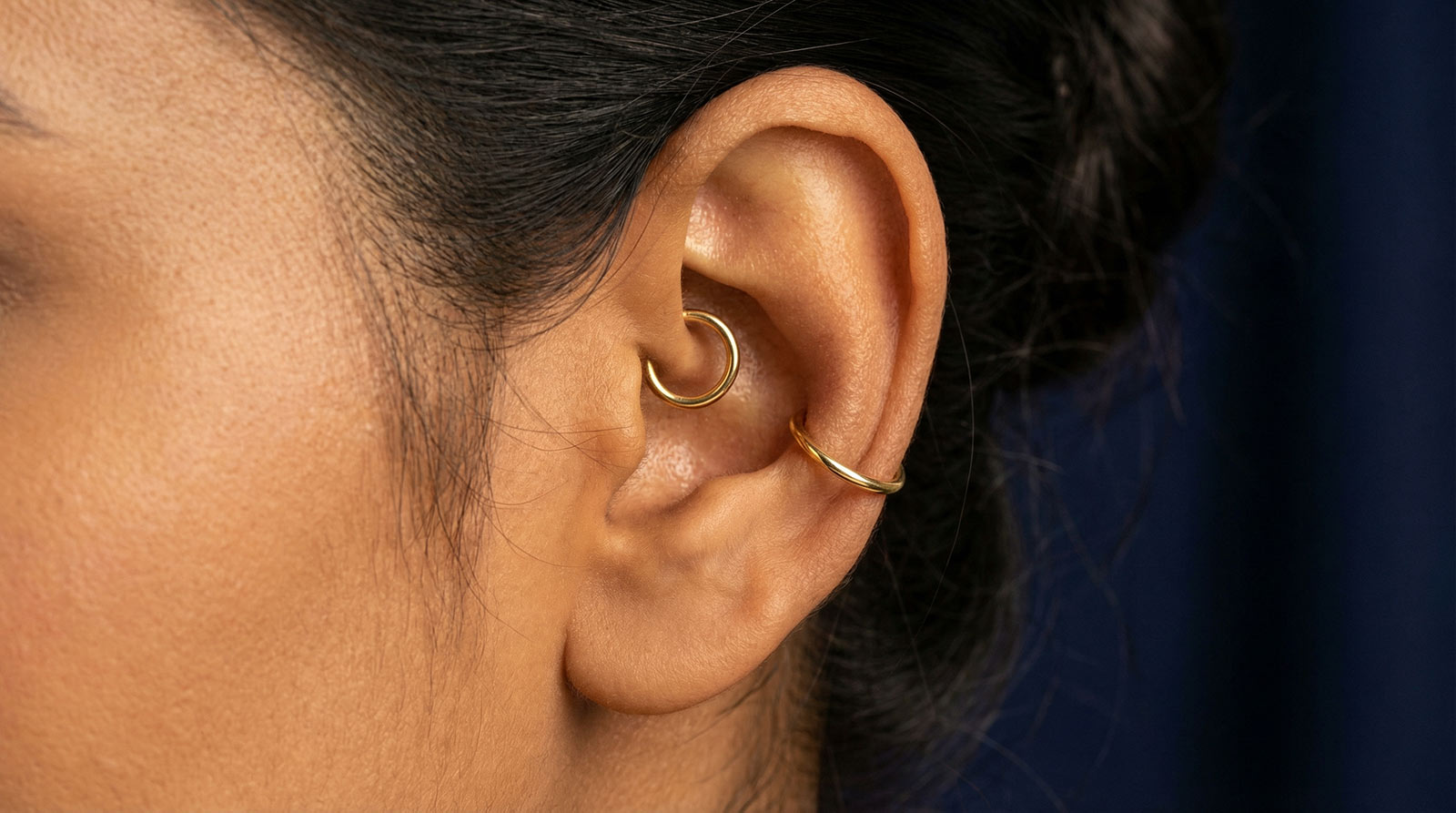
Pain rating — thick central cartilage with strong pressure sensation
Main types — inner conch and outer conch (contra conch)
Months for full internal cartilage healing
Jewelry goal first — placement differs for studs vs hoops
Standard needle gauge — flat-back labret stud recommended
The conch is the most versatile cartilage piercing available — the large canvas of the central ear bowl accommodates everything from a dainty 3mm gem stud to a bold orbital hoop that wraps the entire ear. The key to a great conch piercing is a decision made before you ever sit in the chair: which jewelry style do you ultimately want? That answer determines where the piercing goes.
What Is a Conch Piercing?
A conch piercing passes through the concha — the large, curved bowl-shaped cartilage in the centre of the ear. The name comes from the conch shell, which the inner ear anatomy resembles. The conchal cartilage is divided into two regions: the inner conch (lower, deeper bowl closest to the ear canal) and the outer conch (the upper, flatter cartilage between the helix rim and the inner bowl).
Unlike the helix which sits on the thin outer rim, the conch passes through significantly thicker and denser cartilage — making it one of the more intense cartilage piercings for sensation, but also one of the most dramatic in terms of the visual space it occupies. The central location of the conch means it is visible from both the front and the side of the ear, and the large flat cartilage surface accommodates a wider variety of jewelry sizes and styles than most ear piercings.
The conch vs other cartilage piercings: The helix is on the outer rim. The daith is the inner fold above the ear canal. The tragus is the small flap over the ear canal. The conch is the large bowl in between all of these — the most prominent single canvas in the ear. See our Cartilage Piercing Guide for the full ear anatomy map.
Inner vs Outer Conch — Key Differences
These are not the same piercing. The placement, jewelry options, anatomy requirements, and even the names differ significantly:
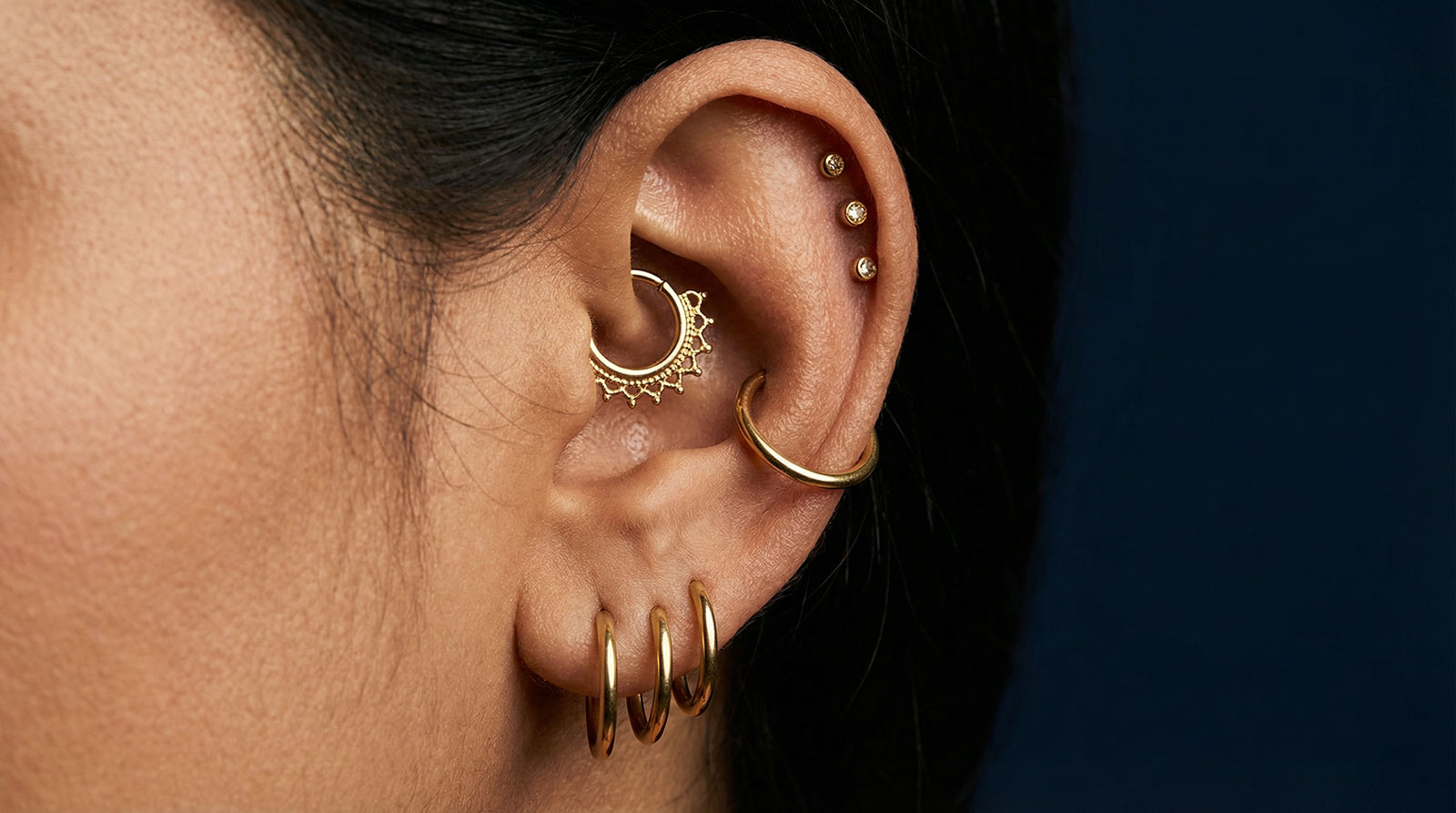
Inner Conch
- Through the deep central bowl of the ear, closest to the ear canal
- Most common placement — works on most anatomies
- Best for flat-back studs and statement gems
- Can accommodate a large hoop once healed if positioned correctly
- Pain: 5–6/10 — thick cartilage at centre
- Healing: 6–12 months
Outer Conch (Contra Conch)
- On the flat cartilage between helix rim and inner bowl
- Anatomy-dependent — ridge must be thin and pliable enough
- Also called: contra conch, high conch, snonch
- Ideal for orbital hoops that wrap the outer ear edge
- Less jewelry versatility than inner conch
- Healing: 6–12 months
| Feature | Inner Conch | Outer Conch |
|---|---|---|
| Placement | Deep central bowl, near ear canal | Flat cartilage near helix rim |
| Also called | Conch, inner conch | Outer conch, contra conch, high conch, snonch |
| Anatomy dependence | Works on most ears | Requires pliable ridge — not everyone suitable |
| Pain level | 5–6/10 | 5/10 |
| Best initial jewelry | Flat-back labret stud | Flat-back labret stud |
| Best healed jewelry | Large hoop or stud | Orbital hoop (anatomy allowing) |
| Hoop possible? | Yes — if positioned near rim | Yes — orbital style only |
All Conch Piercing Types
There are five distinct conch piercing variations. Knowing all of them helps you plan your curated ear properly:
Standard Inner Conch
Through the deep central bowl of the ear. The most popular conch choice. Works on virtually all anatomies. The go-to starting point for anyone new to conch piercings. Best with flat-back statement studs.
Orbital Conch
Two holes pierced through the outer conch connected by a single large hoop that wraps around the outer rim of the ear. Dramatic and striking. Requires precise placement planning so the hoop sits flush. Both holes heal independently before the orbital hoop is worn.
Outer Conch (Contra Conch)
Also called snonch, high conch, or contra conch. Through the flat cartilage ridge between helix and inner bowl. Anatomy-dependent — the ridge must be thin and pliable. Suits orbital hoops beautifully but has less jewelry versatility than inner conch.
Double Conch
Two conch piercings stacked horizontally or vertically in the conchal bowl. Double studs for a gem constellation effect or two hoops for maximum impact. Anatomy-dependent. Plan both piercings together so placement is coordinated from the start.
Dermal Punch Conch
Instead of a needle creating a channel, a dermal punch removes a disc of cartilage entirely for a much larger gauge hole (8g–12g). Permanently changes the cartilage. Allows larger, heavier statement jewelry. Significantly more painful and non-reversible. For experienced piercing enthusiasts only.
Plan Your Jewelry Goal Before Booking
This is the most important conch piercing advice that most articles bury at the end or skip entirely: where your conch is pierced depends on what jewelry you ultimately want to wear in it.
If You Want a Stud
Your piercer has more flexibility in placement. The stud can sit anywhere in the conchal bowl that suits your anatomy and looks proportional. Ideal for a constellation cluster or a single statement gem.
If You Want a Hoop
The piercing must be positioned close enough to the outer rim of the ear so the hoop wraps flush without gapping or pulling. Tell your piercer the hoop size you want — the ring diameter determines exactly how close to the rim the hole needs to be.
If You Want an Orbital
Two holes are required and both must be positioned precisely to match the diameter of the orbital hoop you want. The holes need to be the exact same distance from the rim and the correct distance from each other. Book a consultation specifically for orbital planning.
A stud-positioned conch cannot become an orbital or large hoop later without moving the piercing location. If you decide you want a hoop after being pierced for a stud position, you may need to retire the original piercing and start over. This is the most common and preventable conch piercing regret.
How Much Does a Conch Piercing Hurt?
The conch rates 5–6/10 for pain — one of the more intense ear cartilage piercings because it passes through the thickest, densest cartilage in the ear. Here is how it compares:
What to expect: Strong pressure and a sharp pinch as the needle passes through the thick central cartilage — under one second. Throbbing warmth follows for 2–4 hours. The conch is often described as feeling like strong pressure rather than sharp pain. Most people rate the experience as more manageable than they expected. The dermal punch is a substantially different and more intense experience.
Needle vs Dermal Punch — The Conch-Specific Decision
The conch is one of the few piercings where a dermal punch is sometimes offered as an alternative to a standard needle. This is an important and often misunderstood distinction:
| Feature | Standard Hollow Needle | Dermal Punch |
|---|---|---|
| What it does | Creates a channel through cartilage | Removes a disc of cartilage entirely |
| Gauge range | 16g or 18g (standard) | 8g–12g (large gauge) |
| Pain level | 5–6/10 | 7–8/10 — significantly more intense |
| Reversible? | Yes — closes over time if retired | No — removed cartilage does not grow back |
| Jewelry type | Standard flat-back studs, hoops | Large gauge plugs, tunnels, heavy statement pieces |
| Who it is for | Everyone getting a conch piercing | Experienced piercing enthusiasts only — permanent commitment |
| APP recommendation | Standard — always recommended | For specific gauge goals only — not routine |
Only choose a dermal punch if you specifically want large-gauge conch jewelry and understand it is a permanent, irreversible modification. A standard needle piercing gives you a beautiful conch with full jewelry versatility and is the right choice for the vast majority of people. Never let a piercer talk you into a dermal punch if you had not already planned and decided on it.
Conch Piercing Healing Times
The conch takes 6–12 months for full internal healing. The thick central cartilage has limited blood supply, making healing slower than outer-rim piercings like the helix:
| Milestone | Timeline | Action |
|---|---|---|
| Initial swelling and soreness | Week 1–3 | Saline twice daily, travel pillow, no earbuds |
| Crusties reduce | Month 1–2 | Continue aftercare — avoid pressure on the ear |
| Downsizing appointment | Week 4–6 | Critical — swap longer initial post for fitted shorter one |
| Surface appears healed | Month 3–5 | Continue aftercare — internal healing ongoing |
| Earliest jewelry change | Month 6–9 | Piercer confirms healing before any change |
| Hoop / orbital ready | 9–12 months | Full healing confirmed by piercer — hoops now safe |
Downsizing is critical for the conch. The initial longer post (8–10mm) sways inside the conchal bowl with every head movement, snags on headphone pads and pillows, and creates constant micro-trauma. A properly fitted shorter post (6–8mm) at week 4–6 resolves the majority of conch irritation bumps within weeks of the appointment.
Best Jewelry for a Conch Piercing
The conch offers the most jewelry variety of any ear cartilage piercing. Here is what to wear and when:
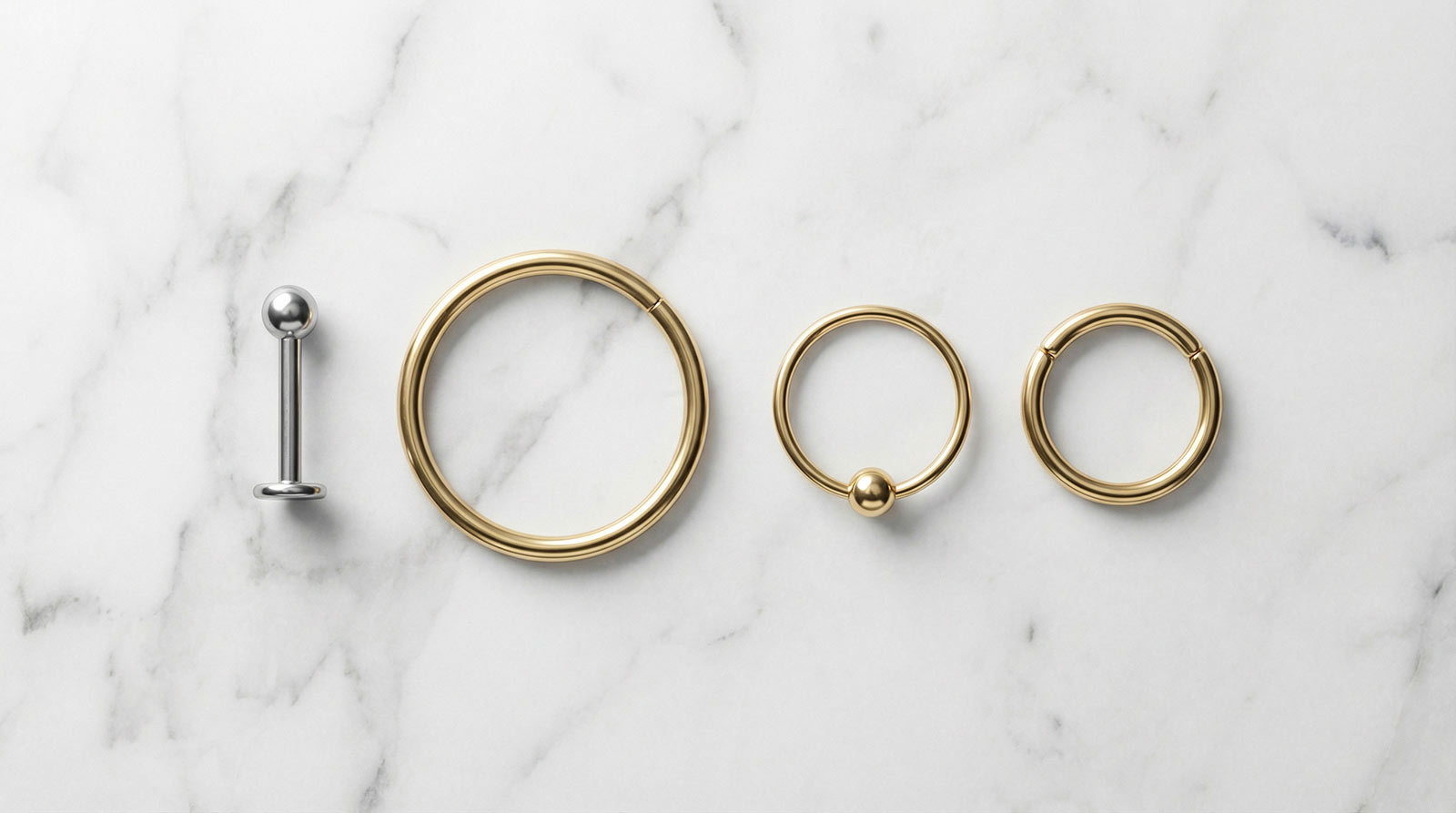
Flat-Back Labret Stud
The best initial jewelry for any conch piercing. The flat disc back sits flush against the back of the ear with nothing to snag inside the conchal bowl. Implant-grade titanium at 16g. Initial post 8–10mm, downsized to 6–8mm at week 4–6. Threadless or internally threaded.
Large Cartilage Hoop
A hoop that wraps around the outer edge of the ear — the classic bold conch look. Only works if the piercing was positioned near the rim at time of piercing. Available in 10mm–16mm diameter. Seamless, clicker, or hinged styles. Only safe once fully healed at 9–12 months.
Orbital Hoop (Double Hole)
A single hoop threaded through two separate piercing holes in the outer conch. The most dramatic conch jewelry style. Both holes must be precisely placed and fully healed before wearing. Requires careful planning at the initial piercing appointment.
Threadless Push-Pin
A decorative top on a bent post — no threads. Ultra-smooth inside the conchal bowl during healing. The decorative top can be changed for different styles without removing the post. Very popular with premium studios for initial conch jewelry.
Clicker / Hinged Hoop
A hinged hoop with a click-lock closure. Easy to insert and remove in the deep conchal position. Available in 8mm–14mm diameter with ornate gem settings, crescent shapes, and geometric designs. Popular for the inner conch once fully healed.
Plugs & Tunnels
Only for dermal punch conch piercings at larger gauges (8g+). Plugs sit flat inside the punched hole creating a unique look. Lightweight titanium or stone plugs work best for the conch. Not appropriate or compatible with standard needle piercings.
Material rule: Implant-grade titanium (ASTM F136) for initial healing. Solid 14k/18k gold (nickel-free) once healed. Never plated jewelry, sterling silver, or unknown metals during the 6–12 month healing period. See our Best Jewelry for New Piercings guide for full materials reference.
Conch Piercing Aftercare
Conch aftercare follows the standard cartilage routine. The unique challenges are: the deep bowl position is harder to reach, and headphones/hats that press the conchal area are a persistent irritant:
1 — Wash Hands First
Every time before touching. The conchal bowl's depth makes it harder to keep clean — minimise every unnecessary touch.
2 — Sterile Saline Twice Daily
Spray 0.9% NaCl sterile wound wash directly into the conchal bowl to reach front and back of the piercing. Let sit 30–60 seconds. See our Saline Solution Guide for best products.
3 — Shower Rinse
Tilt your head so warm water flows into the conchal bowl daily. This clears debris from inside the bowl and both sides of the piercing without aggressive touching.
4 — Protect from Pressure
Sleep opposite side or use a travel pillow. Avoid over-ear headphones that cup the conch. Avoid hats and headbands that press the conchal area. Even gentle sustained pressure on healing conch cartilage causes irritation bumps.
CONCH DO
- Return at week 4–6 for downsizing — non-negotiable
- Sleep on the opposite side — use a travel pillow
- Keep shampoo and conditioner out of the conchal bowl
- Change pillowcases twice weekly throughout healing
- Tell your piercer if the jewelry feels too tight or too loose
- See a doctor same day for spreading redness or fever
CONCH DON'T
- Don't wear over-ear headphones that press the conch
- Don't rotate or move the jewelry during healing
- Don't change from stud to hoop before piercer confirms healing
- Don't swim in pools, hot tubs, or sea water during healing
- Don't use alcohol, hydrogen peroxide, or tea tree oil
- Don't wear hats or tight headbands over the conchal area
Conch Piercing Cost 2026
| Venue | Price Range | Includes | Notes |
|---|---|---|---|
| Professional Studio — Titanium | $50–$90 | Needle + titanium flat-back stud | Recommended standard |
| Professional Studio — Gold | $90–$160 | Needle + 14k gold flat-back stud | Premium option |
| High-End / Specialist | $120–$200 | Full anatomy assessment + placement planning | Best for orbital / hoop planning |
| Dermal Punch Conch | $80–$150 | Punch + initial large-gauge jewelry | Permanent — consider carefully |
| Downsizing Appointment | $15–$30 | Shorter post fitted to anatomy | Critical at week 4–6 — do not skip |
| Stud to Hoop Change | $20–$50 | Hoop fitted by piercer | In-studio recommended for first conch hoop |
Conch Styling & Trends 2026
The conch is the focal centrepiece of every serious curated ear build. Here is what is dominating ear styling in 2026:
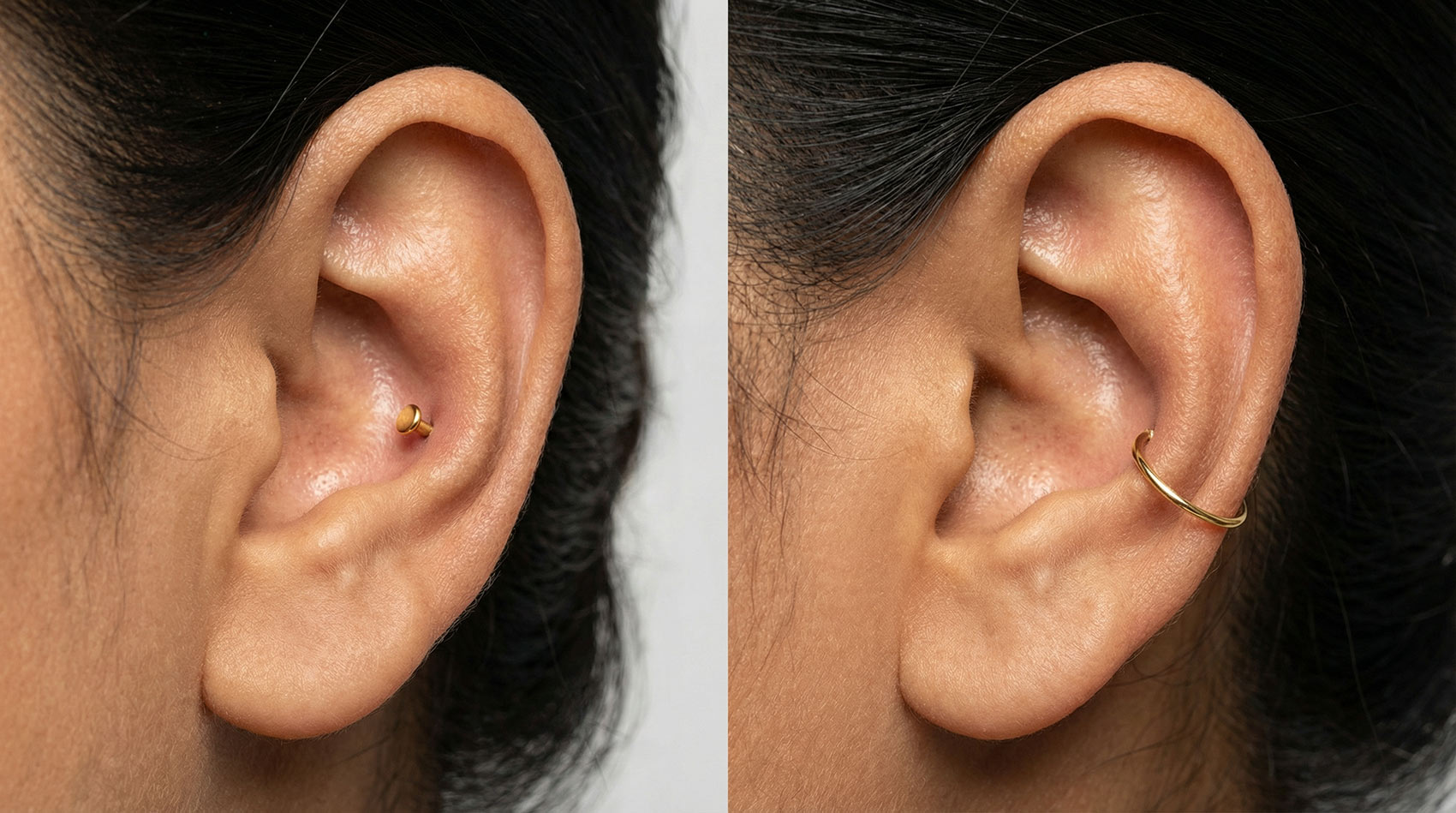
Orbital Hoop
A large gold or titanium hoop wrapping the outer ear through two outer conch holes. The most dramatic single-ear statement of 2026 — bold, architectural, and immediately recognisable.
Statement Inner Stud
A large CZ or opal flat-back in the inner conch bowl — 5mm–8mm decorative top. The centrepiece of a curated ear cluster. Opal and pastel CZ are the 2026 colour choices.
Conch + Daith + Helix
The full inner-ear trio. Conch stud as the centrepiece, daith clicker below, helix studs above. The most comprehensive curated ear build — requires 12+ months of phased piercing.
Double Conch Constellation
Two matched gem studs in the conchal bowl — one inner, one slightly higher. Creates a constellation effect unique to the large conch canvas. The stand-alone earscape for minimalists who want impact.
Gold Clicker Hoop
A mid-size 10mm–12mm gold clicker hoop in a well-positioned inner conch. Easier to wear daily than a large orbital, with more drama than a stud. The wearable everyday conch upgrade for healed piercings.
Asymmetric Stacks
Full conch + daith + rook build on one ear, single lobe stud on the other. The defining asymmetric ear aesthetic of 2026 — one side tells the whole story.
Frequently Asked Questions
What is the difference between inner and outer conch piercing?
An inner conch is through the deep central bowl of the ear, closest to the ear canal. It works on most anatomies and is best for flat-back studs and large hoops. An outer conch (also called contra conch, high conch, or snonch) is through the flatter cartilage between the helix and inner bowl. It is more anatomy-dependent and best for orbital hoops. These are different placements with different jewelry options — not interchangeable names.
How much does a conch piercing hurt?
A standard needle conch piercing rates 5–6/10 — one of the more intense ear cartilage piercings because it passes through the thickest cartilage in the ear. Most people describe strong pressure and a sharp pinch lasting under a second, followed by throbbing warmth for 2–4 hours. A dermal punch is significantly more painful at 7–8/10 as it removes tissue rather than creating a channel.
How long does a conch piercing take to heal?
A conch piercing takes 6–12 months for full internal healing. The thick central cartilage has limited blood supply, making it slower to heal than outer-rim piercings. Return at week 4–6 for a critical downsizing appointment. Do not switch from stud to hoop before your piercer confirms full healing at 9–12 months.
Can I wear a hoop in my conch piercing?
Yes — but only once fully healed at 9–12 months, and only if the piercing was positioned correctly for hoop wear. Tell your piercer you want to wear a hoop before they mark the placement — the position must account for the hoop diameter. A stud-positioned conch cannot accommodate an orbital hoop without a new piercing. Never use a hoop during initial healing.
What is an orbital conch piercing?
An orbital conch uses two piercing holes through the outer conch cartilage connected by a single hoop that wraps around the outer rim of the ear. Both holes must be precisely planned and placed so the hoop sits flush. Each hole heals independently over 9–12 months before the orbital hoop is worn. It is the most dramatic ear piercing style available.
What is the difference between a needle and dermal punch for conch piercings?
A needle creates a channel through cartilage at 16g or 18g — standard for most conch piercings, reversible, and appropriate for all flat-back studs and hoops. A dermal punch removes a disc of cartilage entirely for large-gauge holes (8g–12g). Significantly more painful, not reversible (removed cartilage does not grow back), and only appropriate if you specifically want large-gauge statement jewelry. Always start with a needle unless you have specifically planned for large gauge.
How much does a conch piercing cost?
A conch piercing at a professional studio costs $50–$90 including implant-grade titanium starter jewelry. High-end studios with 14k gold charge $90–$160. A dermal punch costs $80–$150 due to the specialist technique. Always budget for a downsizing appointment at week 4–6 ($15–$30) which is critical for conch healing.
What is the best jewelry for a new conch piercing?
A flat-back labret stud in implant-grade titanium at 16g is the best initial conch jewelry. Standard post length 8–10mm to accommodate swelling, downsized to 6–8mm at week 4–6. Never use a hoop or clicker during initial healing — they rotate inside the conchal bowl and delay healing significantly. Hoops are only appropriate once full healing is confirmed by your piercer.
Questions about your conch piercing?
Drop them in the comments — we answer every one!